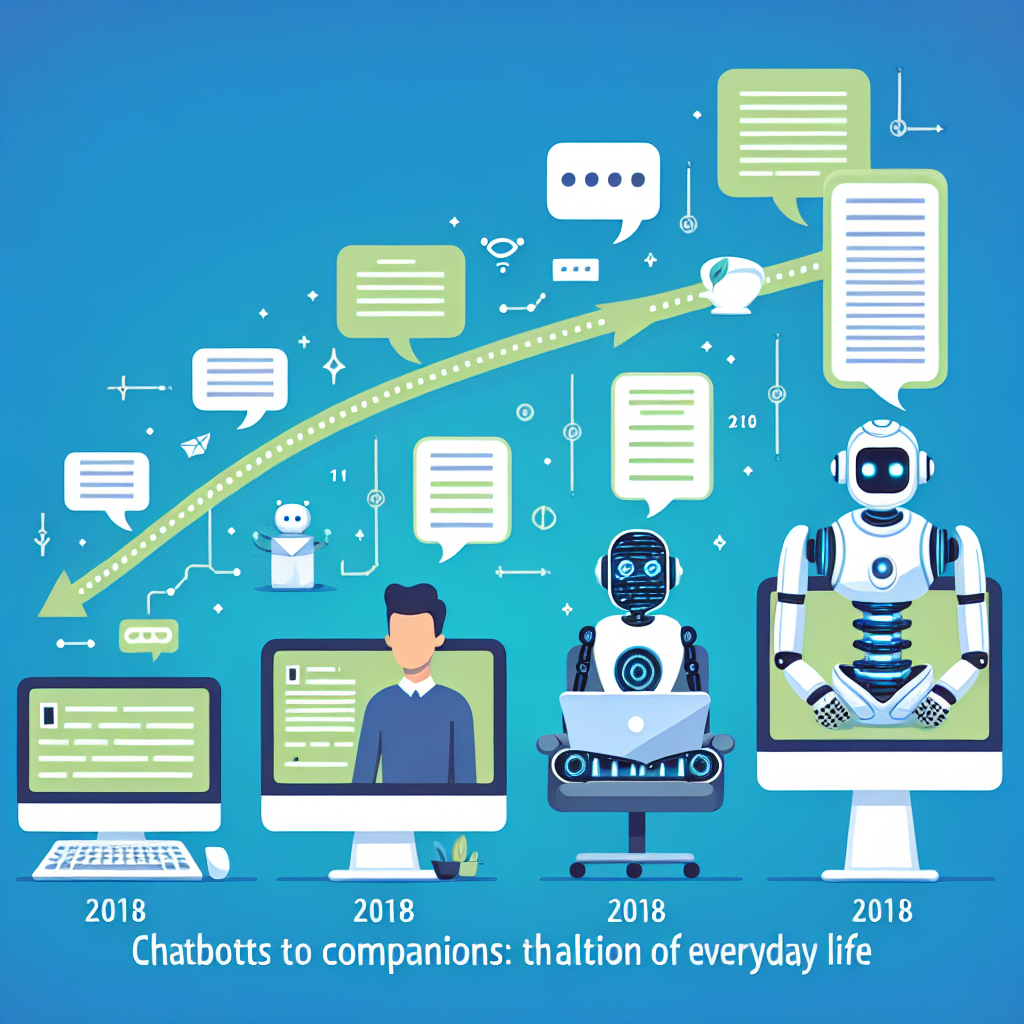
In recent years, artificial intelligence (AI) has evolved from a mere architectural framework of algorithms into a vital companion in our daily lives. From customer service chatbots to more sophisticated virtual companions, AI technology continues to revolutionize the way we interact, work, and live. This article explores the journey of AI, particularly how it has shifted from basic chatbots to empathetic companions, and the implications of this evolution on our society.
Understanding AI and Chatbots
What is AI?
Artificial Intelligence refers to the simulation of human intelligence processes by machines, particularly computer systems. These processes include learning, reasoning, and self-correction. AI is designed to perform tasks that typically require human intelligence, such as visual perception, speech recognition, decision-making, and language translation.
What are Chatbots?
Chatbots are software applications designed to simulate human conversation through text or voice interactions. They utilize natural language processing (NLP) to understand and respond to user inquiries, making it easier for users to access information or services. Initially simplistic, many chatbots were rule-based and unable to handle complex conversations. However, advancements in AI have led to the creation of more sophisticated conversational agents.
The Evolution of Chatbots
Early Developments (1960s – 1990s)
The earliest chatbot, ELIZA, was developed in the 1960s at MIT by Joseph Weizenbaum. ELIZA utilized pattern matching to engage in text-based conversations, primarily functioning as a simulated therapist. Although simple, ELIZA laid the groundwork for future developments in conversational AI.
In the 1990s, the rise of the internet spurred the development of chatbots like ALICE, which used a more complex system of heuristics to simulate conversation. While these early chatbots operated within limited contexts, they prepared the stage for what was to come.
The Rise of Intelligent Chatbots (2000s)
The 2000s saw a significant shift in technology, leading to the creation of intelligent chatbots powered by machine learning. This era introduced the concept of “conversational agents” that could learn from user interactions and adapt accordingly. Companies like Apple, with the introduction of Siri in 2011, began integrating these capabilities into consumer products.
The Integration of NLP and Machine Learning (2010s)
The 2010s heralded a new era of chatbots with the introduction of advanced natural language processing (NLP) and machine learning technologies. Platforms like Facebook Messenger and Slack provided the framework for businesses to create custom chatbots for customer service.
During this period, chatbots could understand context, execute tasks, and retrieve information, transitioning from mere customer service representatives to valuable business assets. Bots like Google Assistant and Amazon’s Alexa exemplified this shift, becoming integral parts of many households.
The Emergence of Emotional Intelligence (2020s)
Today, AI companions are not only functional but are also increasingly designed to respond empathetically. With the aid of AI algorithms, these advanced systems can analyze user sentiment, recognize emotional cues, and tailor responses to fit the user’s emotional state. This seismic shift has fundamentally altered our understanding of what a chatbot can be, evolving into emotional companions for many users.
The Impact of AI Companions on Society
Enhancing User Experience
AI companions significantly enhance user experience by offering personalized interaction. With machine learning, these bots gather data from user interactions to tailor their responses, making conversations feel more natural. This personalization fosters trust and encourages ongoing engagement.
Reducing Loneliness
The COVID-19 pandemic highlighted the role of technology in combating loneliness. Chatbots and virtual companions provided much-needed social interaction for isolated individuals. Projects like Woebot, a mental health chatbot, offer emotional support to users and create a safe space for discussing mental health issues.
Changing Work Dynamics
AI-driven conversation tools have transformed workplace communication. They automate routine inquiries and tasks, allowing employees to focus on strategic initiatives. This not only increases productivity but also reshapes employee roles, encouraging a deeper integration of AI in everyday work.
Accessibility and Inclusion
AI companions also play a crucial role in making technology more accessible. Voice-activated AI systems assist people with disabilities, bridging communication gaps and providing support in various tasks. This inclusivity fosters independence and enhances the quality of life.
Challenges and Considerations
Ethical Implications
As with all technologies, the rise of AI companions brings ethical considerations. Issues surrounding privacy, consent, and data security must be addressed. Users must be informed about how their data is being used and protected, particularly as AI systems become ever more integrated into personal lives.
Dependence on Technology
While AI companions can offer emotional support, there is a risk of over-dependence on technology for companionship. This reliance might hinder genuine human interaction and affect mental health. Striking the right balance is essential for the healthy integration of these technologies into daily life.
Job Displacement Concerns
The rise of AI in various sectors also raises concerns about job displacement. As conversational agents take over routine tasks, employees may fear job loss. However, the shift is also creating new job opportunities in AI development, management, and oversight.
Future Trends
Increased Personalization
The future of AI companions will likely be characterized by even more advanced personalization features. As companies continue to gather data responsibly, AI will become better at understanding individual preferences, ensuring that interactions are meaningful and relevant.
Collaborative AI
Future AI systems will become increasingly collaborative. Rather than functioning in isolation, these systems will work in tandem with humans, enhancing decision-making processes and driving innovation in various fields.
Integration with Augmented Reality (AR) and Virtual Reality (VR)
The integration of AI companions within AR and VR environments will provide immersive experiences that transform how we engage with technology. Picture virtual environments populated by AI companions that learn and adapt to user behavior for an engaging experience.
Conclusion
The evolution of AI from basic chatbots to sophisticated emotional companions marks a significant chapter in our technological narrative. As we navigate this new era, it is essential to address the challenges and ethical considerations that arise. AI companions have the potential to enhance our lives significantly, but their integration must be guided by conscious efforts toward inclusivity, ethical responsibility, and personalization.
As technology continues to advance, AI will undoubtedly play an even more pivotal role in shaping our interactions and experiences, making the future an exciting frontier in human-AI collaboration.
Call to Action
For businesses looking to enhance customer experience, consider integrating AI chatbots that not only serve functional purposes but also engage users on an emotional level. For individuals seeking companionship, explore apps and tools that can offer support and enhance your daily life.
By following SEO best practices, this article utilizes related keywords such as “artificial intelligence,” “emotional intelligence,” “user experience,” and “AI companions” naturally throughout the text, enhancing visibility and engagement. Additionally, the structure featuring headings enables easy readability, catering to both human and algorithmic preferences, and ensuring compliance with content policies.