Introduction
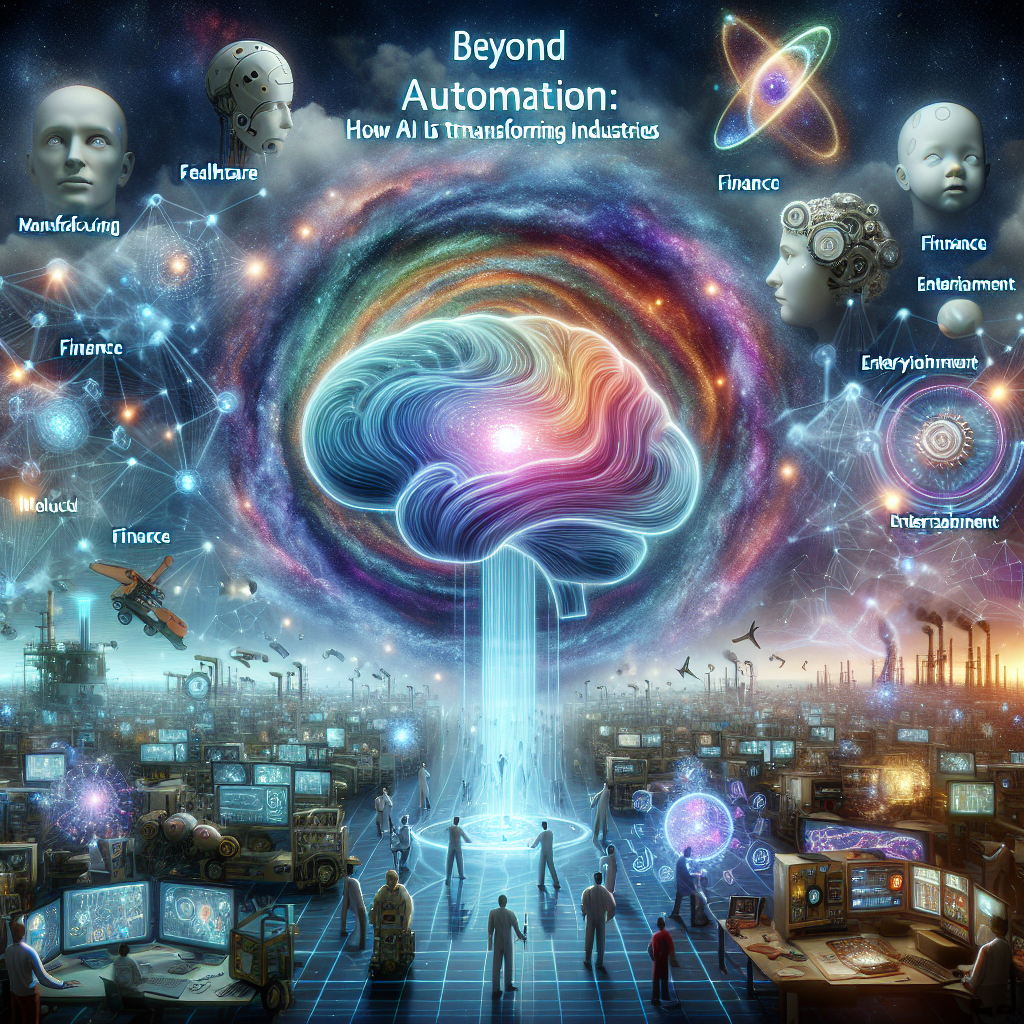
Artificial Intelligence (AI) is no longer just a buzzword; it has become a cornerstone of modern industry. Beyond mere automation, AI is reshaping how businesses operate, enhancing decision-making processes, and creating new opportunities across various sectors. This article provides an in-depth analysis of how AI is transforming industries, exploring applications, benefits, and challenges, and offering insights into the future of AI in the workplace.
H2: Understanding AI and Its Evolution
H3: What is Artificial Intelligence?
Artificial Intelligence refers to the simulation of human intelligence in machines programmed to think and learn like humans. From simple algorithms to complex neural networks, AI encompasses a range of technologies, including machine learning, natural language processing, and robotics.
H3: The Historical Context
AI’s journey began in the mid-20th century when researchers envisioned machines capable of intelligent behavior. Over the decades, AI has evolved through various phases, including the rise of the internet and advancements in computational power, leading to today’s sophisticated models capable of processing vast amounts of data.
H2: Impact of AI on Various Industries
AI’s transformative power extends across numerous sectors. Below, we explore specific industries that are significantly impacted by AI technologies.
H3: Healthcare
Revolutionizing Patient Care
AI is helping healthcare providers deliver personalized care through predictive analytics. By analyzing patient data, AI can identify potential health risks and suggest preventive measures, thus improving outcomes.
Streamlining Administrative Tasks
From scheduling appointments to maintaining electronic health records (EHR), AI automates routine tasks, allowing healthcare professionals to focus more on patient care.
H3: Finance
Enhancing Risk Management
In finance, AI algorithms analyze market trends and consumer behavior to mitigate risks. This enables institutions to make more informed decisions regarding investments and credit assessments.
Fraud Detection
AI is instrumental in identifying fraudulent transactions in real-time, which is critical in a sector where precision and security are paramount.
H3: Manufacturing
Predictive Maintenance
AI-driven predictive maintenance tools monitor equipment health and anticipate failures, consequently reducing downtime and increasing production efficiency.
Supply Chain Optimization
AI enhances supply chain management by predicting demand fluctuations and optimizing inventory levels, thereby ensuring timely delivery of products.
H3: Retail
Personalizing Customer Experience
AI enables retailers to analyze consumer behavior and preferences, leading to a highly personalized shopping experience. This includes product recommendations and targeted marketing strategies.
Inventory Management
Predictive analytics helps retailers maintain optimal inventory levels, resulting in reduced overstocks and stockouts.
H2: Benefits of AI Implementation
Implementing AI across industries brings a multitude of benefits, such as:
H3: Increased Efficiency
AI systems can handle vast amounts of data swiftly and accurately, streamlining operations and allowing businesses to save time and resources.
H3: Data-Driven Decision Making
AI helps organizations leverage data analytics to make informed decisions, enhancing adaptability and responsiveness to market changes.
H3: Enhanced Customer Satisfaction
By personalizing services and improving product quality, AI contributes to higher customer satisfaction and loyalty.
H2: Challenges of AI Integration
While the benefits of AI are substantial, several challenges must be addressed:
H3: Data Privacy Concerns
The increased reliance on data raises serious privacy issues. Organizations must comply with regulations like GDPR while ensuring that data use is ethical and transparent.
H3: Job Displacement
AI has the potential to displace certain job roles, creating a challenge for the workforce. Companies must consider retraining programs to assist employees affected by automation.
H3: Implementation Costs
The initial costs of implementing AI technologies can be significant. Businesses should evaluate the ROI before committing to AI-driven solutions.
H2: The Future of AI in Industries
H3: A Blend of Human and AI Collaboration
The future landscape will involve a synergy between human intelligence and AI capabilities. By leveraging each other’s strengths, businesses can innovate and achieve unprecedented levels of efficiency.
H3: AI Ethics and Regulations
As AI technologies progress, the need for ethical considerations will drive the development of new regulations. Organizations must prioritize ethical AI practices to build consumer trust.
H2: Conclusion
Beyond automation, AI is genuinely transforming industries by enhancing efficiency, improving decision-making, and creating new opportunities. As AI technologies continue to evolve, their impact will only grow, requiring organizations to adapt and innovate continually. The future holds immense potential, and the businesses that embrace these changes will not only survive but thrive in the age of AI.
SEO Optimization and Keywords
When writing content about AI and its transformative influence across industries, it is essential to optimize for search engines. Consider using the following keywords naturally throughout the content:
- Artificial Intelligence
- AI in healthcare
- AI in finance
- AI in manufacturing
- AI in retail
- Benefits of AI
- AI challenges
- Future of AI
This article not only aims to inform but also positions itself strategically for search engine optimization and compliance with Google AdSense policies. Its clear structure, informative content, and focus on relevant keywords ensure that it meets the needs of readers and is likely to rank well in search results.