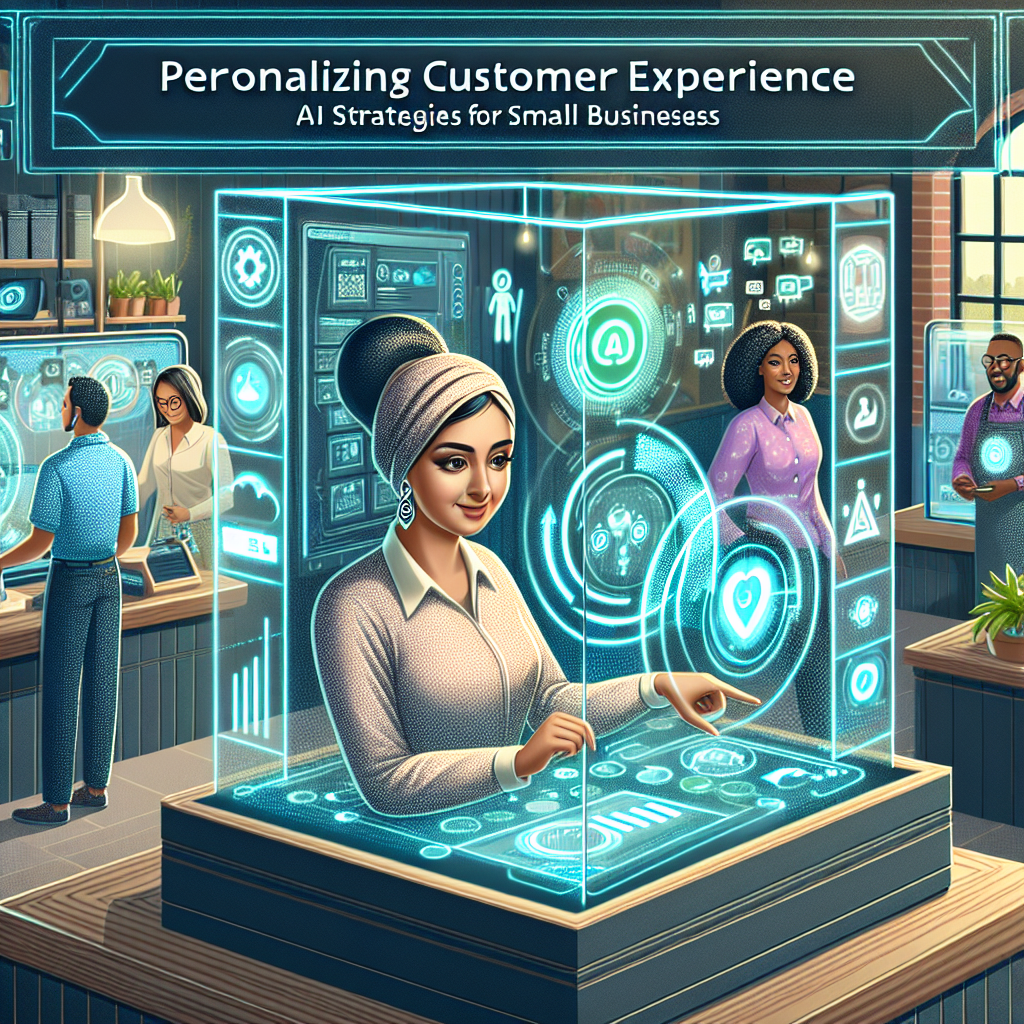
In today’s digital age, the expectation for personalized customer experiences has never been higher. Small businesses, often limited in budget and resources, can leverage artificial intelligence (AI) to deliver tailored experiences that resonate with their customers. This article explores effective strategies for small businesses to personalize customer experience using AI, enhancing customer satisfaction and fostering brand loyalty.
Table of Contents
- Introduction
- Understanding Customer Personalization
- How AI Enhances Customer Experience
- AI Strategies for Small Businesses
- 1. Data Collection
- 2. Customer Segmentation
- 3. Predictive Analytics
- 4. Chatbots and Virtual Assistants
- 5. Personalized Marketing Campaigns
- 6. Recommendation Systems
- Implementation Challenges and Solutions
- Measuring Success in Personalization
- Conclusion
Introduction
Personalization in customer experience is a significant driver of engagement and loyalty. Small businesses often struggle to compete with larger corporations that have vast resources dedicated to customer experience management. However, through AI, even small enterprises can harness the power of data to create personalized customer interactions, ultimately driving sales and nurturing relationships.
Understanding Customer Personalization
Customer personalization refers to tailoring products, services, and communications to meet individual customer preferences and behaviors. It creates a more relevant experience, leading to increased customer satisfaction and loyalty. According to research, 80% of consumers are more likely to make a purchase when brands offer personalized experiences.
Why Personalization Matters
- Increased Customer Loyalty: Personalized experiences help customers feel valued and understood, which can lead to repeat business.
- Enhanced Conversion Rates: Personalized recommendations can directly impact sales. Customers are more likely to buy products that align with their interests.
- Improved Customer Insights: Personalization allows businesses to gather valuable data on customer preferences, enhancing future strategies.
How AI Enhances Customer Experience
AI offers various tools and techniques to facilitate personalization, including machine learning, natural language processing, and predictive analytics. These technologies enable small businesses to analyze customer behavior and preferences, providing insights that inform personalized strategies.
Key Benefits of Using AI for Personalization
- Efficiency: AI can process vast amounts of data quickly, identifying trends and preferences without extensive manual effort.
- Scalability: AI solutions can grow with your business, adapting to increasing data inputs and evolving customer needs.
- Cost-Effectiveness: Many AI tools are available on subscription models, making advanced technology accessible for small businesses.
AI Strategies for Small Businesses
Employing AI for personalized customer experiences involves several actionable strategies. Below, we explore essential approaches that small businesses can implement.
1. Data Collection
To personalize customer experience effectively, the first step is to collect relevant data. Data sources include:
- Customer Profiles: Basic demographic information, purchase history, and preferences can be gathered through sign-up forms and surveys.
- Behavior Tracking: Monitoring customer interactions on your website or app can provide insights into preferences and habits.
Tips for Effective Data Collection:
- Always ask for consent before collecting customer data to comply with regulations like GDPR.
- Use user-friendly surveys to collect information that can improve customer interactions.
2. Customer Segmentation
Once the data is collected, segmentation is critical for targeted marketing efforts. AI can analyze patterns in customer data to group them based on shared characteristics such as:
- Demographics: Age, gender, and income level.
- Behavioral Traits: Purchase frequency and item preferences.
Benefits of Segmentation:
- Enables targeted marketing campaigns that resonate with specific audiences.
- Helps small businesses allocate resources efficiently by focusing on high-value segments.
3. Predictive Analytics
Predictive analytics uses historical data to forecast future customer behavior. AI can identify buying patterns, enabling small businesses to tailor recommendations and communications effectively.
How to Implement Predictive Analytics:
- Utilize AI Software: Several platforms, such as Google Analytics and HubSpot, offer predictive modeling tools suitable for small businesses.
- Continually Update Data: Regularly refresh data inputs to improve accuracy and relevance in predictions.
4. Chatbots and Virtual Assistants
AI-powered chatbots can provide immediate, personalized assistance based on customer inquiries. These tools can enhance customer service by:
- Offering 24/7 support and answering common questions.
- Gathering data during interactions to refine customer profiles.
Benefits of Chatbots:
- Reduces operational costs associated with customer service.
- Provides a consistent availability that caters to customer needs any time of the day.
5. Personalized Marketing Campaigns
AI can help develop targeted marketing campaigns based on customer preferences, previous interactions, and browsing history.
Strategies for Effective Campaigns:
- Email Personalization: Use AI to tailor email content, subject lines, and send times based on individual customer preferences.
- Social Media Targeting: Leverage AI to discover trending topics among your customer base and create content that aligns with those interests.
6. Recommendation Systems
Implementing AI-driven recommendation systems can significantly enhance the shopping experience. These systems analyze customer behavior and preferences to suggest products most likely to interest them.
Implementing Recommendation Systems:
- Use Platforms like Shopify or WooCommerce: These platforms often have built-in capabilities for product recommendations.
- Focus on Real-Time Data: Offer suggestions based on recently viewed products to capture user interest effectively.
Implementation Challenges and Solutions
While the benefits of AI in personalizing customer experiences are clear, challenges exist, particularly for small businesses. Here are common obstacles and strategies to overcome them.
1. Budget Constraints
Challenge: Implementing AI can be costly and might require upfront investment.
Solution: Choose cost-effective AI tools or solutions with subscription models. Begin with basic tools and gradually scale up as your business grows.
2. Data Management
Challenge: Small businesses may struggle with effectively managing and analyzing data.
Solution: Use user-friendly AI platforms that simplify data management. Seek training resources to enhance your data literacy.
3. Integration with Existing Systems
Challenge: Integrating AI tools with existing platforms may pose technical difficulties.
Solution: Look for AI solutions that offer seamless integration with your current systems, minimizing the technical burden.
Measuring Success in Personalization
To determine the effectiveness of your AI-driven personalization strategies, it’s essential to establish KPIs (Key Performance Indicators). Consider tracking:
- Customer Satisfaction Scores: Use surveys or NPS (Net Promoter Score) to gauge customer satisfaction.
- Conversion Rates: Monitor the rate of sales per personalized campaign.
- Customer Retention Rates: Measure how many customers return after their initial purchase.
Utilizing analytics dashboards can help visualize these metrics, making it easier to adjust strategies as needed.
Conclusion
Personalizing customer experiences through AI isn’t just a trend; it’s a necessity for small businesses aiming to thrive in a competitive landscape. By employing data collection, customer segmentation, predictive analytics, and more, small enterprises can enhance customer satisfaction and build loyalty. While challenges exist, these strategies are within reach for small businesses willing to invest time and resources. As technology continues to evolve, those who adapt will not only survive but thrive.
By adopting these AI strategies, small businesses can not only set themselves apart from competitors but genuinely connect with their customers on a more personal level, driving lasting relationships and future success.
SEO Optimization Notes
- Main Keyword: Personalizing Customer Experience
- Related Keywords: AI Strategies, Small Businesses, Customer Personalization, Customer Satisfaction, Predictive Analytics
- Meta Description: Learn how small businesses can leverage AI strategies to create personalized customer experiences, enhancing satisfaction and fostering loyalty.
- Internal/External Links: Consider linking to related blog posts or authoritative sources on AI technologies and customer experience.
By utilizing these SEO practices and optimizing your content as outlined, you can increase visibility and drive traffic to your article on personalizing customer experience through AI strategies.