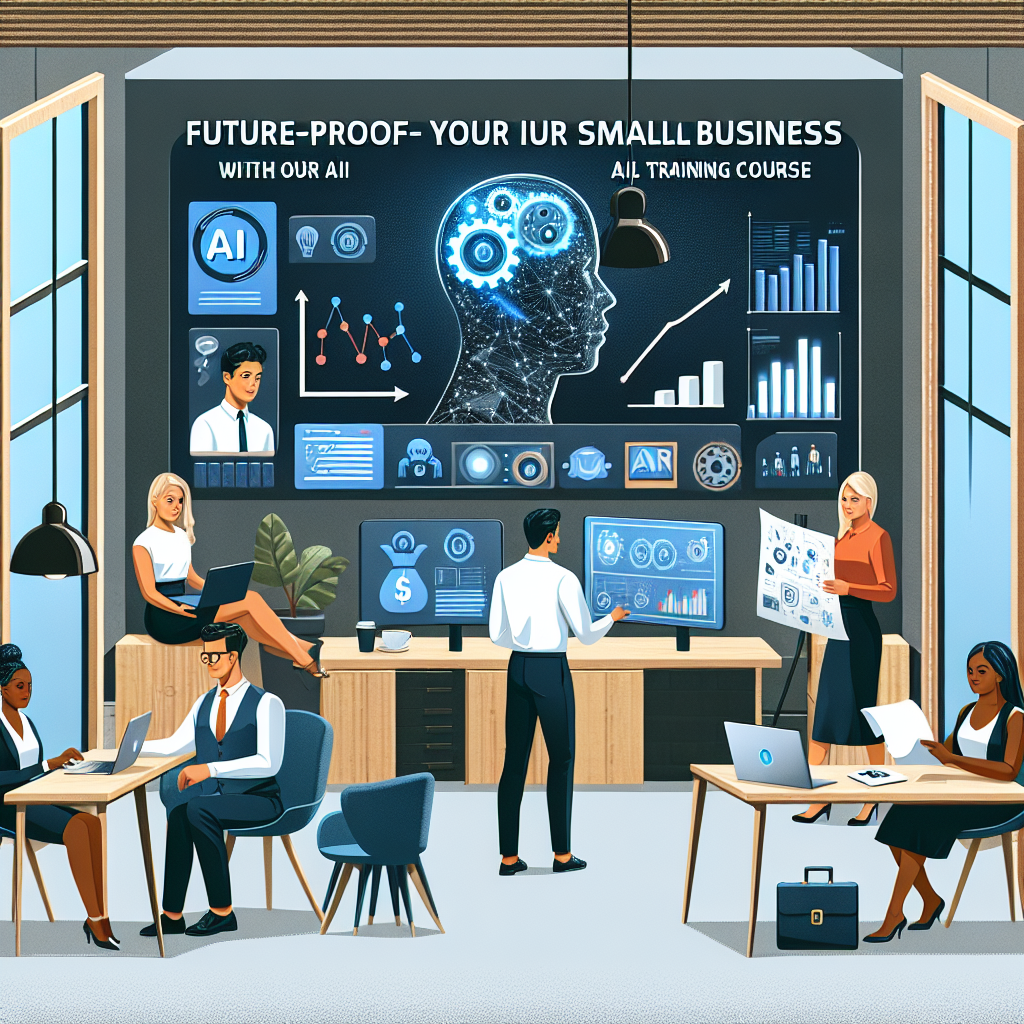
In today’s fast-paced digital landscape, small businesses face an array of challenges, from efficient resource management to staying ahead of industry trends. One effective way to ensure your business thrives is through education, particularly in the realm of artificial intelligence (AI). This article delves into how our AI training course equips small businesses to navigate the future confidently.
Table of Contents
- Understanding AI and Its Importance
- The Growing Demand for AI Skills
- Why Small Businesses Should Invest in AI Training
- What Our AI Training Course Offers
- Format and Structure of the AI Training Course
- Key Benefits of Completing Our AI Training Course
- Success Stories: Transforming Small Businesses with AI
- How to Enroll in Our AI Training Course
- Conclusion
Understanding AI and Its Importance
What Is Artificial Intelligence?
Artificial Intelligence (AI) refers to computer systems that can simulate human intelligence processes such as learning, reasoning, and self-correction. AI serves as a powerful tool for data analysis, decision-making, and improving operational efficiencies. Its capabilities range from simple task automation to complex machine-learning algorithms that analyze patterns and optimize outcomes.
The Role of AI in Small Business
As small businesses increasingly adopt AI tools, they can leverage these technologies to streamline operations, enhance customer experiences, and drive growth. Implementing AI can significantly reduce costs and time, providing a competitive edge in an evolving market.
The Growing Demand for AI Skills
The Shift in Job Requirements
According to a recent report by the World Economic Forum, automation and AI are projected to replace 85 million jobs globally by 2025. However, they will also create 97 million new roles that demand advanced skill sets, particularly in AI and data analysis.
The Importance of Lifelong Learning
Amidst this technological transformation, small business owners and employees must embrace lifelong learning. Investing in AI training is essential not just to remain relevant but also to seize new opportunities as they arise.
Why Small Businesses Should Invest in AI Training
Enhancing Efficiency and Productivity
AI can automate mundane tasks, freeing up valuable employee time for strategic initiatives. This enhancement in productivity allows small businesses to operate more efficiently and focus on growth.
Improving Customer Experience
AI enables businesses to analyze customer data and offer personalized experiences. From chatbots providing 24/7 customer service to AI-driven product recommendations, customer engagement and satisfaction can significantly improve.
Staying Competitive
In a landscape where larger corporations are utilizing AI extensively, small businesses that invest in AI training can level the playing field. Understanding AI technologies can equip small business owners with the tools necessary to innovate and improve their market position.
What Our AI Training Course Offers
Comprehensive Curriculum
Our AI training course covers essential topics tailored for small businesses, including:
- Introduction to AI: Basic concepts, history, and applications.
- Machine Learning Basics: Understanding algorithms and their applications.
- Data Management and Analysis: How to leverage data for insights.
- Practical Applications: Real-world examples specific to small businesses.
Tailored Learning Experience
Designed for various experience levels, our course accommodates absolute beginners while offering advanced modules for seasoned professionals. This flexibility ensures that everyone in your organization benefits from AI knowledge.
Format and Structure of the AI Training Course
Online Learning Modules
Our training course is structured into engaging online modules, making it accessible regardless of where you are located. Each module includes:
- Video Lectures: Expert-led sessions for in-depth understanding.
- Interactive Quizzes: Assess comprehension and reinforce learning.
- Case Studies: Real-world applications to illustrate concepts.
Live Q&A Sessions
Participants will have access to live Q&A sessions with industry experts. This interactive format fosters collaboration and allows learners to clarify doubts and gain deeper insights.
Certification
Upon successful completion, participants will receive a certification that demonstrates their newfound proficiency in AI. This credential can enhance career prospects and show commitment to ongoing professional development.
Key Benefits of Completing Our AI Training Course
Improved Decision-Making
With a strong understanding of AI technologies, small business owners can make data-driven decisions, leading to better outcomes and increased efficiency.
Increased Innovation
Learn how to leverage AI not just for automation but also for innovation. The skills acquired will empower teams to think creatively and implement solutions that can lead to successful new products or services.
Better Team Collaboration
As employees gain familiarity with AI concepts, collaboration can improve across teams. A unified understanding fosters a culture of innovation, enabling diverse departments to work together effectively.
Success Stories: Transforming Small Businesses with AI
Case Study 1: Retail Store Automation
A small retail store implemented AI-driven inventory management, leading to a 30% reduction in excess stock. This training empowered staff to understand data analytics, enabling better stock decisions based on purchasing trends.
Case Study 2: Enhanced Customer Engagement
Another small business in the service industry adopted AI chatbots. After undergoing our training course, employees could optimize these chatbots, resulting in a 50% reduction in response time and higher customer satisfaction ratings.
How to Enroll in Our AI Training Course
Step-by-Step Enrollment Process
- Visit Our Website: Go to [insert website link].
- Select the Course: Browse our offerings and select the AI training course.
- Create an Account: Sign up for an account to access course materials.
- Payment: Complete the payment process to gain full access.
- Start Learning: Begin your AI journey at your own pace!
Special Promotions
Stay tuned for seasonal discounts or corporate packages that can make the course even more accessible for small business owners.
Conclusion
The future teems with uncertainty, especially for small businesses. However, the adoption of AI stands out as a formidable strategy for overcoming challenges and igniting growth. By enrolling in our AI training course, you’ll not only be investing in your business’s future but also equipping yourself and your team with the skills needed to thrive in today’s market. Embrace AI, and future-proof your small business now.
Call to Action
Are you ready to embrace the future and enhance your business’s competitive edge? Visit our website to enroll in our AI training course today and take the first step towards transforming your small business!
By adhering to structured headings, short paragraphs, and offering valuable, easily digestible information, this article should appeal to both readers and Google’s SEO standards, while also being compliant with AdSense policies.