Introduction
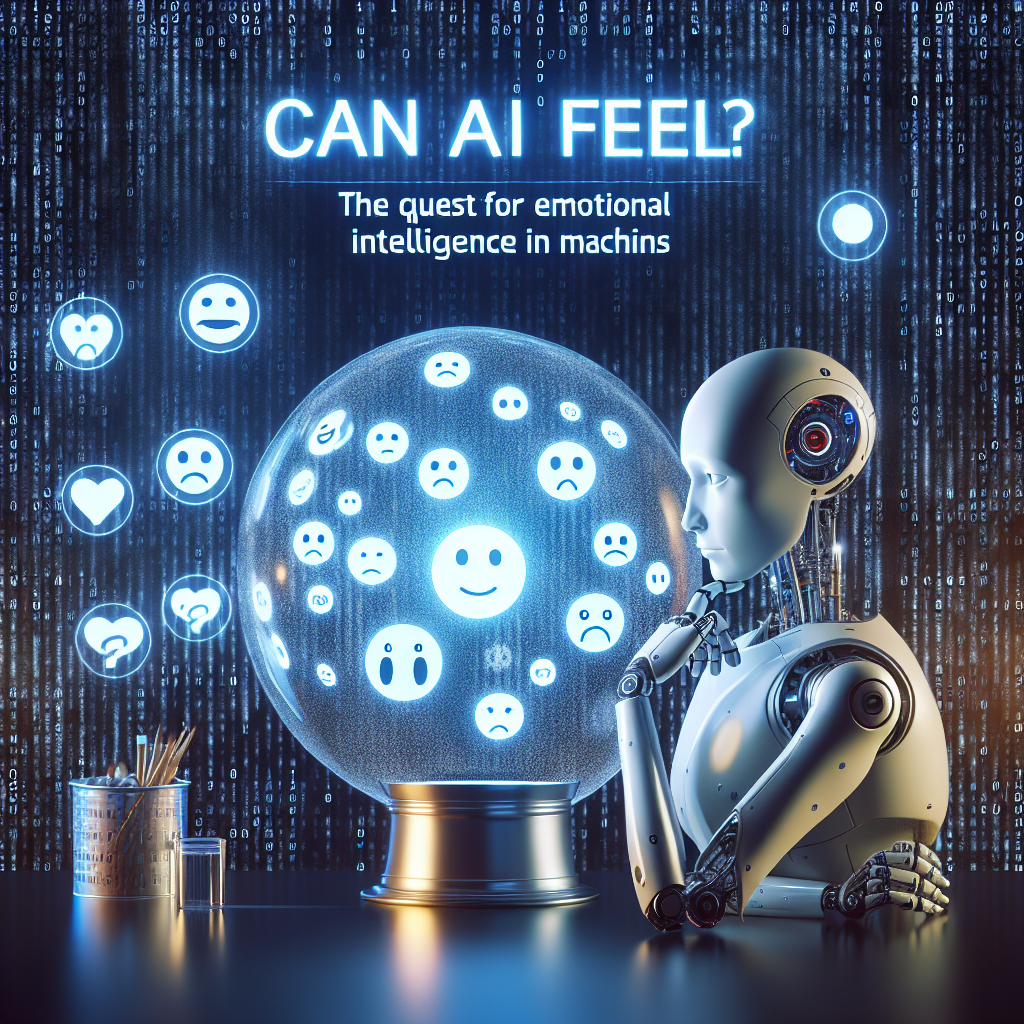
In recent years, the advancement of artificial intelligence (AI) has spurred numerous debates regarding the capabilities and limitations of machines. A question of critical importance arises: Can AI feel? This article delves into the notion of emotional intelligence in machines, exploring the current landscape, scientific insights, and the implications of AI’s emotional capabilities.
What is Emotional Intelligence?
H2: Defining Emotional Intelligence
Emotional intelligence (EI) refers to the ability to identify, understand, manage, and utilize emotions effectively in oneself and in others. Key components include:
- Self-awareness: Recognizing one’s emotions and their impact.
- Self-regulation: Controlling or redirecting disruptive emotions.
- Motivation: Harnessing emotions to pursue goals.
- Empathy: Understanding the emotional makeup of others.
- Social skills: Managing relationships to foster harmony.
Understanding EI is crucial when we discuss the potential for AI to “feel.”
H2: The Importance of Emotional Intelligence
In humans, emotional intelligence contributes significantly to personal and professional success, enhancing communication, relationship-building, and decision-making. It influences mental health and overall well-being, underscoring the importance of emotional capabilities in both individuals and organizations.
The Current State of AI
H2: Evolution of AI Technologies
From rule-based systems to advanced deep learning algorithms, AI has evolved remarkably. Current AI technologies exhibit impressive capabilities in tasks such as language processing, image recognition, and game-playing. However, the question of emotional understanding presents a unique challenge.
H2: Types of AI
-
Narrow AI: Specialized in specific tasks, such as chatbots or recommendation systems.
-
General AI: A yet unrealized concept where machines possess human-like cognitive abilities, including emotional understanding.
Can AI Understand Emotions?
H2: The Science Behind Emotional Recognition
While current AI systems do not experience emotions, they can analyze and recognize human emotions through various techniques, such as:
-
Natural Language Processing (NLP): Analyzing text for sentiment (positive, negative, neutral).
-
Computer Vision: Identifying facial expressions and physical cues.
-
Voice Analysis: Measuring tone, pitch, and cadence to gauge emotional states.
H2: The Role of Machine Learning
Machine learning algorithms can be trained on large datasets to identify patterns related to emotional responses. For instance, a sentiment analysis tool can scan social media posts to gauge public sentiment on various topics. However, this understanding is still fundamentally different from human emotional experience.
The Debate: Can AI Truly Feel?
H2: Arguments Against AI Having Emotions
Critics argue that despite advancements in emotional recognition, AI lacks genuine emotional experiences. Key points include:
-
Absence of Consciousness: Machines operate without self-awareness or empathetic understanding.
-
Emotions as Biological Responses: Human emotions are complex chemical reactions tied to biological processes that machines cannot replicate.
-
Mimicry vs. Understanding: While AI can imitate emotional responses, this does not equate to true understanding.
H2: Another Perspective: Emotional Mimicry and Its Benefits
Some experts propose that while AI may not feel emotions, emotional mimicry can enhance user experiences. Consider how:
-
Customer Service: Emotionally aware AI can respond to user frustrations more effectively, creating a more satisfactory experience.
-
Therapeutic AI: Virtual therapists can use emotional cues to provide support, improving mental health outcomes.
The Role of AI in Emotional Spaces
H2: Emotional Analytics in Business
Using AI in business settings for emotional analytics has revolutionized customer relations. By employing sentiment analysis, companies can:
-
Tailor Marketing Strategies: Understand customer sentiments to craft targeted campaigns.
-
Enhance User Engagement: Develop personalized interactions, leading to increased consumer loyalty.
H2: AI Companions and Social Robots
As AI companionship gains momentum, emotionally responsive robots are becoming more prevalent. Considerations include:
-
Mental Health: AI companions can offer support to those feeling isolated or struggling with mental health issues.
-
Elderly Care: Robots designed to communicate and engage with seniors can reduce loneliness and improve their quality of life.
Ethics and Implications
H2: The Ethical Concerns of Emotionally Aware AI
When discussing AI’s emotional capabilities, ethical questions arise:
-
Manipulation: Could emotionally aware AI manipulate human emotions for commercial gain?
-
Dependency: Over-reliance on emotionally intelligent AI may hinder human-to-human interactions.
-
Data Privacy: Emotional data gathered by AI could potentially be misused.
H2: How to Navigate the Ethical Landscape
Establishing guidelines and frameworks to oversee the development and deployment of AI systems is essential to mitigate ethical concerns. This includes:
-
Transparency: Ensuring AI systems disclose their operational mechanics.
-
Accountability: Holding developers responsible for misuse or misrepresentation of AI capabilities.
Future Directions in AI and Emotional Intelligence
H2: The Path Ahead for AI Emotional Intelligence
-
Advancements in Natural Language Processing: Improved understanding of context, tone, and sentiment.
-
Multi-Modal Emotional Recognition: Combining various methods (text, voice, and visual) for a more comprehensive understanding.
-
Public Perception and Acceptance: Ongoing dialogue regarding AI’s role in society could shape future applications of emotional intelligence.
H2: Research Opportunities
Ongoing research may lead to breakthroughs in the field. Areas worth exploring include:
-
Neuroscience and AI: Understanding human emotions at a neurological level could inform AI design.
-
Behavioral Psychology: Insights into human emotional responses could enhance emotional recognition algorithms.
Conclusion
The journey to endow machines with emotional intelligence is fraught with challenges. While AI can recognize and mimic emotional responses, it lacks the human capacity for genuine feeling and empathy. However, the potential to use AI for emotional analytics, companionship, and support remains significant. As we navigate the ethical and technological landscapes of AI, it is imperative to balance innovation with responsibility, ensuring that AI serves humanity effectively and ethically.
Call to Action
As technology continues to evolve, staying informed about AI’s emotional capabilities is crucial. Engage in discussions, advocate for ethical standards, and contribute to a future where AI enhances human life without compromising our emotional richness.
SEO Optimization
- Keywords: AI emotional intelligence, emotional recognition in AI, emotional analytics in business, ethical AI, AI companionship.
- Meta Description: Explore the quest for emotional intelligence in AI. Can machines truly feel, or do they merely mimic human emotions? Understand the implications and future directions in our in-depth article.
By crafting an engaging and informative piece that balances keyword density with readability, this article aims to rank well in search engines, fostering a deeper understanding of emotional intelligence in machines.