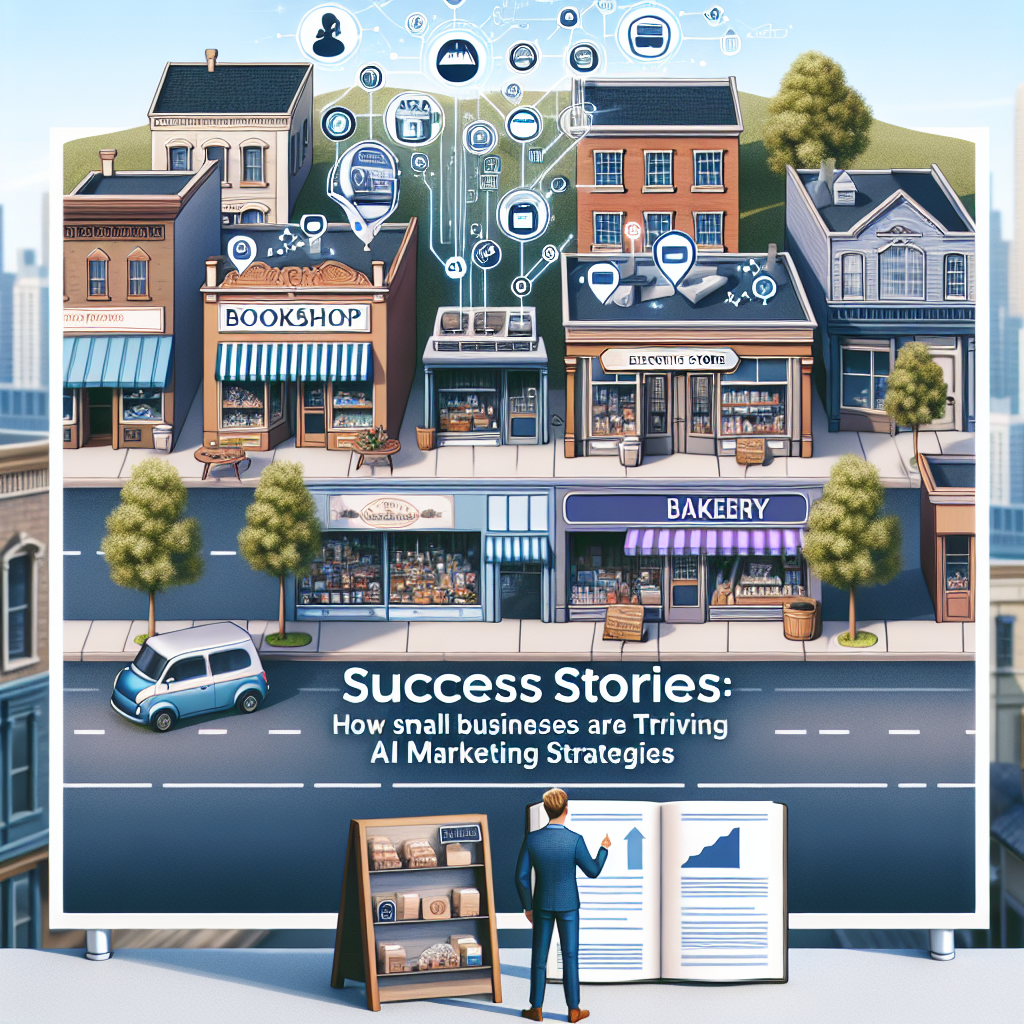
The small business landscape is evolving at an unprecedented pace, driven by rapid technological advancements. Among these advancements, Artificial Intelligence (AI) stands out as a game-changer in marketing strategies. In this in-depth article, we will explore success stories of small businesses that have harnessed AI marketing strategies to enhance their performance, improve customer engagement, and increase profitability.
Table of Contents
- Introduction
- Understanding AI in Marketing
- 2.1 What is AI Marketing?
- 2.2 Why Small Businesses Should Embrace AI
- Success Stories of Small Businesses Using AI Marketing
- 3.1 Case Study 1: The Local Bakery That Used Chatbots
- 3.2 Case Study 2: The Boutique Fashion Store and Predictive Analytics
- 3.3 Case Study 3: The Landscaping Company and AI-Driven SEO
- How to Implement AI Marketing Strategies
- 4.1 Step 1: Identify Your Goals
- 4.2 Step 2: Choose the Right Tools
- 4.3 Step 3: Train Your Team
- Challenges and Considerations
- Future of AI in Small Business Marketing
- Conclusion
- FAQs
1. Introduction
AI is not just for multinational corporations; it is also reshaping the way small businesses approach marketing. From personalized customer experiences to optimizing marketing campaigns, AI tools empower small business owners to engage with their customers more effectively. This article dives deep into the success stories of small businesses that have leveraged AI marketing strategies to stand out in the crowded market.
2. Understanding AI in Marketing
2.1 What is AI Marketing?
AI marketing refers to the strategies and technologies that utilize artificial intelligence to analyze data, automate marketing tasks, and deliver personalized experiences to customers. From chatbots to recommendation engines, AI tools can process vast amounts of data to help businesses make informed marketing decisions.
2.2 Why Small Businesses Should Embrace AI
- Cost-Effective Solutions: AI tools can automate repetitive tasks, reducing labor costs.
- Enhanced Customer Insights: Businesses can gather valuable data on customer preferences and behaviors.
- Improved Customer Engagement: Personalized marketing campaigns increase customer loyalty and retention.
3. Success Stories of Small Businesses Using AI Marketing
3.1 Case Study 1: The Local Bakery That Used Chatbots
Background: A local bakery struggled with managing customer inquiries while keeping up with orders.
AI Solution: By implementing a chatbot, they could handle common questions about menu items, allergens, and hours of operation.
Results:
- Increased Customer Satisfaction: The bakery reported a 25% increase in positive customer feedback due to quicker response times.
- Higher Sales: With more time to focus on baking, they increased their product offerings, leading to a 15% rise in sales.
3.2 Case Study 2: The Boutique Fashion Store and Predictive Analytics
Background: A small fashion boutique faced challenges in inventory management.
AI Solution: The store used AI-powered predictive analytics to analyze buying patterns and adjust inventory accordingly.
Results:
- Reduced Overstocks: They lowered unpurchased inventory by 30%, freeing up cash flow.
- Tailored Marketing: Personalized recommendations based on customer behavior led to a 40% increase in direct sales from email marketing campaigns.
3.3 Case Study 3: The Landscaping Company and AI-Driven SEO
Background: A community landscaping service wanted to improve its online visibility.
AI Solution: By utilizing an AI-driven SEO tool, they optimized their website content for local search terms and improved targeting.
Results:
- Enhanced Online Presence: Their website traffic increased by 50%, leading to a significant uptick in inquiries.
- More Qualified Leads: The business saw a 35% increase in leads supported by improved local search rankings.
4. How to Implement AI Marketing Strategies
4.1 Step 1: Identify Your Goals
Before implementing AI tools, clearly define what you aim to achieve. Whether it’s improving customer service or increasing sales, having a clear goal will guide your strategy.
4.2 Step 2: Choose the Right Tools
Several AI marketing tools cater to small businesses. Some popular choices include:
- Chatbots: Tools like ManyChat or Drift help in automating customer service.
- Email Marketing: Platforms like Mailchimp offer AI-driven features to enhance personalization.
- SEO Tools: Services like SEMrush and Ahrefs can refine your website content for better visibility.
4.3 Step 3: Train Your Team
Invest in training to ensure your team understands how to use the chosen AI tools effectively. This might include online courses or in-house workshops.
5. Challenges and Considerations
While AI marketing offers numerous benefits, small businesses should consider several challenges:
- Initial Costs: There may be upfront expenses associated with purchasing tools or training employees.
- Data Privacy: Compliance with regulations like GDPR is critical when handling customer data.
- Integration: Ensuring that new tools integrate seamlessly with existing systems can be complex.
6. Future of AI in Small Business Marketing
As technology continues to evolve, AI’s role in marketing is set to grow. Future trends may include:
- Voice Search Integration: More customers are using voice commands; optimizing for voice search will become essential.
- Hyper-Personalization: AI will enable even more granular customer segmentation for tailor-made marketing.
- Real-time Analytics: Small businesses will benefit from real-time data to make on-the-fly marketing decisions.
7. Conclusion
AI marketing strategies are no longer a luxury; they are a necessity for small businesses looking to thrive in a competitive environment. The success stories detailed here illustrate how AI tools can transform challenges into opportunities for growth. By embracing AI, small businesses can not only enhance customer engagement but also optimize operations and increase sales.
8. FAQs
Q1: Is AI marketing only for large businesses?
A1: No, AI marketing tools are accessible and beneficial for small businesses, enabling them to compete effectively.
Q2: What are some low-cost AI marketing tools?
A2: Tools like Mailchimp for email marketing and ManyChat for chatbots offer cost-effective AI solutions perfect for small businesses.
Q3: How can I start using AI in my marketing strategy?
A3: Begin by identifying your business goals, selecting appropriate AI tools, and training your team to harness the capabilities of these technologies effectively.
Q4: Are there any risks associated with AI marketing?
A4: Yes, risks include data privacy concerns and potential integration challenges with existing systems.
Q5: How can I measure the success of AI marketing strategies?
A5: Monitor key performance indicators (KPIs) such as increased sales, improved customer satisfaction, and enhanced website traffic to gauge the effectiveness of your AI marketing efforts.
By taking the leap into AI marketing, small business owners are not just keeping pace with trends; they are setting themselves up for sustainable success in an ever-evolving digital landscape.