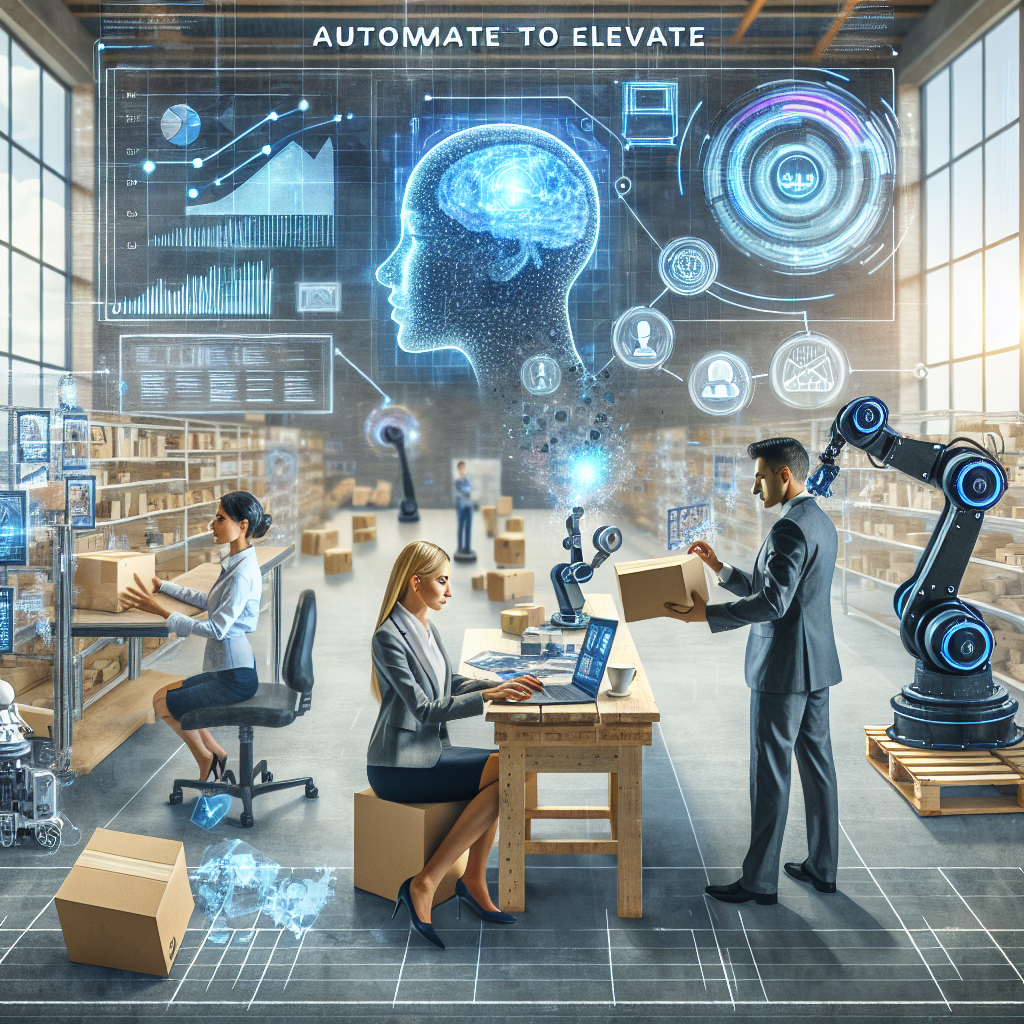
In today’s fast-paced digital landscape, small businesses are faced with both challenges and opportunities. With the advent of Artificial Intelligence (AI), businesses of all sizes are finding innovative ways to streamline operations, boost efficiency, and enhance customer experiences. In this comprehensive guide, we will delve into how small businesses can effectively leverage AI technologies to automate processes and, ultimately, elevate their operations.
H2: Understanding AI and Its Relevance to Small Businesses
H3: What is AI?
Artificial Intelligence refers to the simulation of human intelligence in machines designed to think and act like humans. AI systems can analyze data, identify patterns, and make decisions with minimal human intervention. As AI technology evolves, its applications in business are becoming increasingly profound.
H3: Why is AI Important for Small Businesses?
The significance of AI for small businesses lies in its ability to streamline operations and enhance productivity. With limited resources, small businesses can leverage AI to automate repetitive tasks, minimize human errors, and make data-driven decisions.
H2: The Benefits of AI in Small Business Operations
H3: 1. Increased Efficiency
AI applications can automate mundane tasks, allowing employees to focus on higher-value activities. For instance, AI can automate data entry, inventory management, and email responses, freeing staff to concentrate on customer relationships and strategic initiatives.
H3: 2. Better Decision-Making
AI tools analyze vast amounts of data quickly and effectively, providing insights that support smart decision-making. Businesses can use AI to evaluate market trends, customer behavior, and financial performance, enabling more informed strategies.
H3: 3. Enhanced Customer Experience
By harnessing AI technologies, small businesses can personalize customer interactions at scale. For example, chatbots can provide instant customer support, while AI-driven recommendations enhance shopping experiences.
H3: 4. Cost Savings
Implementing AI may require initial investments, but the long-term savings are substantial. With automation, businesses can reduce labor costs, minimize errors, and improve resource allocation.
H2: Key Areas of AI Implementation in Small Businesses
H3: 1. Customer Service Automation
Chatbots and Virtual Assistants
AI-powered chatbots can handle customer inquiries 24/7, providing immediate responses that enhance customer satisfaction. Virtual assistants can manage appointment scheduling and FAQs, reducing the burden on your customer service team.
H3: 2. Marketing Automation
AI can transform marketing strategies through data analysis and targeting. Tools like AI-driven analytics help businesses identify their target audience, create personalized marketing campaigns, and measure success effectively.
H3: 3. Sales Forecasting
AI systems can analyze past sales data, market trends, and customer behavior to predict future sales. This capability allows businesses to adjust inventory levels, optimize staffing, and refine their sales strategies.
H3: 4. Inventory Management
With AI, small businesses can automate inventory tracking and forecasting. AI can predict when stock will run low based on data trends, helping to ensure that businesses don’t face shortages or overstock issues.
H2: Implementation Steps for AI in Small Businesses
H3: 1. Identify Your Needs
Before delving into AI, assess your business needs. Determine which tasks could benefit from automation and where AI can provide the most value.
H3: 2. Research Available Tools
There’s a wide range of AI tools tailored for small businesses. Research options conducive to your operational needs. Popular categories include AI for customer service, marketing, sales, and data analysis.
H3: 3. Start Small
Implement AI gradually. Select a pilot project to test AI applications, measure results, and learn from any challenges encountered before scaling up.
H3: 4. Train Your Team
Employee training is crucial for successful AI adoption. Ensure that your team understands how to use AI tools effectively and how to integrate them into existing workflows.
H3: 5. Monitor and Optimize
Continually assess the impact of AI on your business. Use analytics to track performance and identify areas for further improvement.
H2: Challenges of Implementing AI in Small Businesses
H3: 1. Cost and Budget Constraints
Although AI can save costs in the long run, the initial investment can be daunting for small businesses. It’s essential to budget strategically and consider scalable solutions.
H3: 2. Technological Integration
Integrating AI into existing systems can pose challenges. Ensure compatibility with your current software solutions to avoid disruptions.
H3: 3. Employee Resistance
Change can be difficult. Employees might be resistant to adopting new technologies. Engage your team early in the process and emphasize the benefits of AI to foster a positive mindset.
H2: Case Studies: Success Stories of AI Implementation
H3: 1. XYZ Retailer: Customer Experience Enhancement
XYZ Retailer implemented a chatbot for 24/7 customer service, which led to a 30% increase in customer satisfaction ratings. The AI tool also decreased customer service response times from hours to seconds.
H3: 2. ABC Services: Improved Marketing Efficiency
ABC Services adopted AI-driven analytics to target their marketing more effectively. This led to a 25% increase in conversion rates and a remarkable ROI on their advertising spend.
H3: 3. DEF E-commerce: Inventory Management
DEF E-commerce utilized AI for inventory forecasting, resulting in a 40% reduction in overstock. The AI system helped them optimize stock levels based on predictive analytics.
H2: Conclusion
The landscape of small businesses is rapidly evolving, and the incorporation of AI into everyday operations can pave the way for success. By understanding the benefits and strategically implementing AI solutions, small businesses can automate processes, reduce costs, and enhance customer experiences.
Small business owners must be vigilant and proactive in embracing technology to remain competitive. “Automate to Elevate” isn’t just a slogan; it’s a roadmap for success in the digital age.
H2: FAQs on AI for Small Businesses
H3: 1. What type of AI tools are available for small businesses?
AI tools vary greatly, from customer service chatbots and marketing automation platforms to inventory management systems and analytics tools. Researching your options based on your specific needs is crucial.
H3: 2. Is AI suitable for all types of small businesses?
While there are AI solutions for various industries, not every business may need AI. Assess your specific situations, such as customer volume and operational complexity, before investing.
H3: 3. How much does implementing AI typically cost?
Costs can vary significantly based on the complexity of the AI solution. Simple chatbot implementations can start from a few hundred dollars per month, while more sophisticated systems may require significant upfront investment.
H3: 4. Can AI completely replace human employees?
AI is designed to augment human capabilities, not replace them entirely. While it can automate repetitive tasks, human intuition, creativity, and relational skills remain invaluable.
By understanding the potential of AI and starting on the right foot, small businesses can harness this powerful technology to position themselves for future growth and competitiveness.