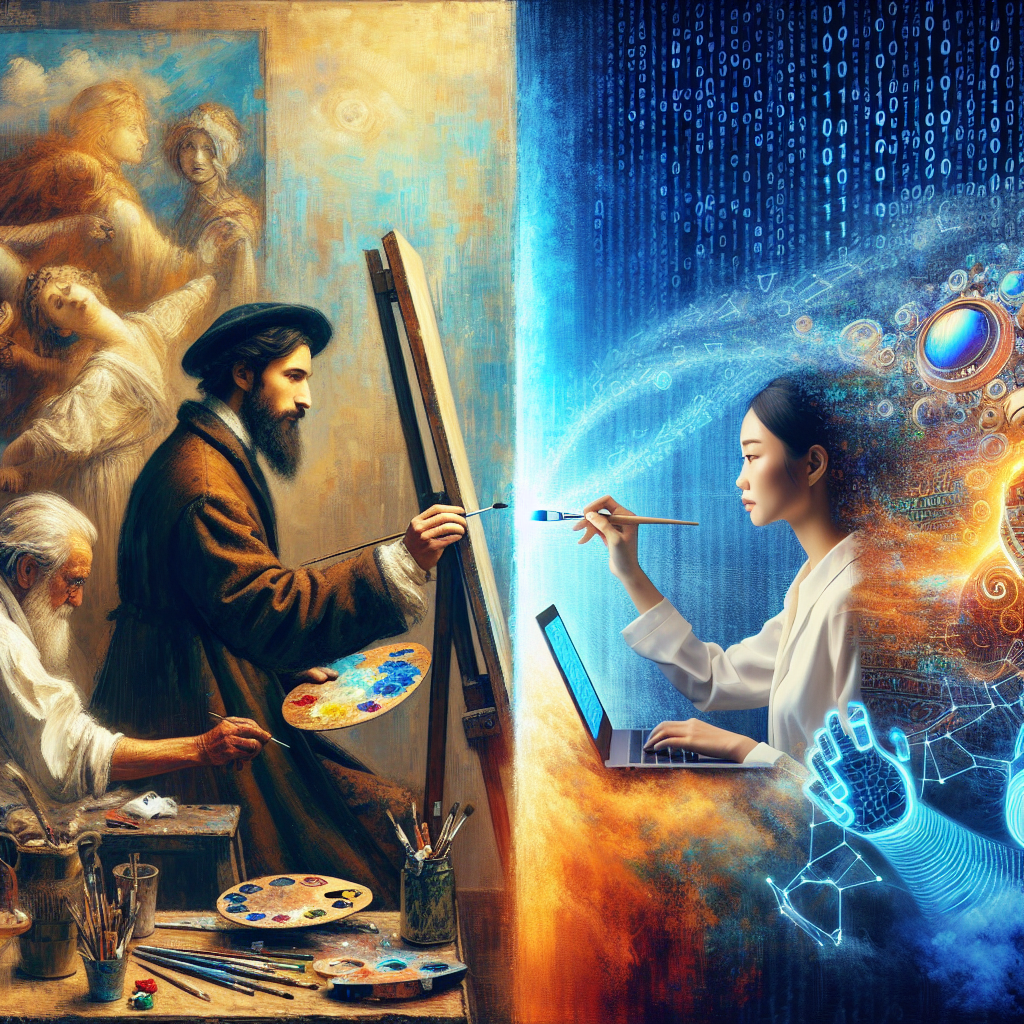
Artificial Intelligence (AI) isn’t just a buzzword; it’s a transformative force that is re-shaping creative industries. From visual arts to music, literature, and design, AI is redefining what it means to be creative. In this article, we’ll explore how AI is influencing various creative sectors, the opportunities and challenges it presents, and whether it is enhancing human creativity or simply replicating it.
The Rise of AI in Creative Industries
As technology continues to evolve, so does our understanding of creativity. AI’s capabilities in learning, adapting, and generating new content have brought forth a new era in the creative realm. Data-driven algorithms and machine learning techniques are now integral tools for artists, musicians, writers, and designers.
Understanding AI and Its Functionality
AI can be divided into two categories: narrow AI and general AI. Narrow AI, which is commonly used in creative industries, specializes in specific tasks, such as generating images or composing music. These systems use algorithms trained on vast datasets to produce outputs that mimic human creativity.
Machine Learning and Neural Networks
At the core of AI’s functionality is machine learning, particularly deep learning through neural networks. These networks analyze patterns in data to create output that mimics artistic styles or genre conventions. For instance, OpenAI’s DALL-E uses neural networks to generate images from textual descriptions, showcasing how effectively AI can translate concepts into visual art.
AI in Visual Arts
Generative Art
Generative art is an artistic practice characterized by the use of autonomous systems, such as algorithms, to produce intricate works. Artists like Refik Anadol and Casey Reas have leveraged AI to create dynamic artworks that can evolve in real-time.
-
Algorithmic Design: Algorithms can design patterns, shapes, and colors that were previously unimaginable. This not only expands the horizons for artists but also introduces new visual languages into the art world.
-
AI Collaborations: Artists are now collaborating with AI, allowing for an interplay between human intuition and machine creativity. These collaborative efforts often yield artwork that is innovative and surprising, as the AI introduces elements that the artists may not have conceived independently.
AI-Generated Artworks
The surge of AI-generated artworks has prompted debate over authenticity and value. Programs like DeepArt and Artbreeder can produce art that competes with human-made pieces, raising questions: Does AI art have the same cultural significance? How do we attribute authorship?
AI in Music
Composing with AI
The music industry is witnessing AI’s influence primarily through composition and production. Companies like AIVA and MuseNet use neural networks to compose music across various genres.
-
Real-time Composition: AI can analyze existing music and produce new compositions instantaneously. This is particularly useful in industries like gaming, where developers need seamless compositions that adapt to gameplay dynamics.
-
Personalization: AI technologies enable the personalization of music experiences. Services like Spotify use AI algorithms to curate playlists that align with individual user preferences, redefining how we consume music.
AI in Music Production
Beyond composition, AI is revolutionizing the production process, making music creation accessible to a broader audience.
-
Automated Mixing and Mastering: Tools like LANDR use machine learning to provide automated mixing and mastering services, allowing independent artists to produce quality music without overwhelming costs.
-
Sample Generation: AI can generate samples, beats, and soundscapes that artists can incorporate into their work, expanding their creative toolbox.
AI in Literature
Writing Assistance and Content Creation
AI writing tools, such as GPT-3 by OpenAI, are rewriting the rules of content creation. These systems can generate prose, poetry, and even complex articles, making them valuable tools for writers.
-
Idea Generation: AI can assist writers by brainstorming ideas, suggesting plot developments, or even creating character profiles, sparking creativity in ways that sometimes elude human authors.
-
Content Personalization: Content creation platforms can now employ AI to tailor articles to specific audiences, enhancing engagement and relevance.
Ethical Concerns
The use of AI in literature raises ethical questions surrounding authenticity and plagiarism. If a significant portion of a piece is generated by an AI, to what extent does the human writer retain ownership?
AI in Design
Revolutionizing Graphic Design
The graphic design industry is also reaping the benefits of AI. Through advanced algorithms, designers can automate repetitive tasks, allowing them to focus on creativity.
-
Automated Branding Tools: Platforms like Looka and Canva are integrating AI-driven design templates that allow users to create visually appealing branding materials without extensive design skills.
-
Dynamic Adjustments: AI can analyze design performance and adapt elements (like colors or layouts) to optimize user engagement. This is particularly useful in e-commerce, where conversions are paramount.
Predictive Design Trends
AI’s ability to analyze data enables it to predict design trends that resonate with audiences. By analyzing social media posts, imagery, and other user-generated content, AI can suggest design elements that are likely to succeed based on current trends.
The Benefits and Challenges of AI in Creative Fields
While AI presents numerous benefits to creative industries, it also poses challenges that need to be addressed.
Benefits of AI in Creative Industries
-
Efficiency: AI can significantly reduce the time taken to create or produce content. Tasks that once took days can now be accomplished in hours, allowing for more iterations and refinements.
-
Accessibility: AI tools democratize creativity, allowing those without formal training or resources to produce high-quality work and share it widely.
-
Innovation: By analyzing vast amounts of data and learning from it, AI fosters innovation by introducing new ideas and styles into the creative process.
Challenges of AI in Creative Industries
-
Job Displacement: The rise of AI tools raises concerns about job displacement within creative fields. As tasks become automated, the traditional roles of artists, musicians, and writers may be threatened.
-
Quality vs. Quantity: While AI can produce content rapidly, the quality may suffer. The uniqueness and emotional depth that human creators infuse into their work can sometimes be absent in machine-generated output.
-
Ethics and Ownership: The use of AI in creative processes opens ethical questions around authorship and ownership. Determining who owns AI-generated content remains a pressing issue.
The Human Touch: Enhancing Creativity Through Collaboration
Despite the advancements in AI, it’s essential to remember that human creativity is irreplaceable. AI should be viewed as a collaborator rather than a competitor.
The Future of AI and Creative Industries
As we look ahead, it becomes evident that the most successful creative professionals will likely be those who can leverage AI to enhance their work rather than substitute it. Here are some potential directions for the future:
-
Hybrid Creators: Artists who master the interplay between technology and creativity might emerge as a new breed of creator, combining technological prowess with artistic vision.
-
Community Platforms: The future may witness the rise of collaborative platforms that bring together humans and AI, enabling a hybrid model of creation where both contribute uniquely.
-
AI Ethics Committees: The establishment of ethics committees to oversee AI in creative fields could help navigate the complex issues surrounding authorship, creativity, and authenticity.
Conclusion
AI is undoubtedly changing creative industries, offering tools and capabilities that can enhance the artistic process. While challenges regarding ethics, authenticity, and job displacement exist, the future looks promising for a collaborative approach where AI empowers human creativity. As artists, musicians, designers, and writers adapt to this new landscape, we may witness a renaissance in creativity—a hybrid world where algorithms and art converge to shape our cultural narrative.
In a future increasingly influenced by advanced technologies, the relationship between AI and creativity will continue to evolve. By engaging with AI thoughtfully and ethically, we can harness its potential to expand the horizons of human expression while celebrating the unique qualities that make art profoundly human.
SEO Keywords
- AI in creative industries
- AI art
- Machine learning in music
- Generative art
- AI writing tools
- Graphic design and AI
- Future of AI in creativity
This comprehensive overview outlines the intricate relationship between AI and creative industries, emphasizing the importance of adapting and innovating within this rapidly changing environment.