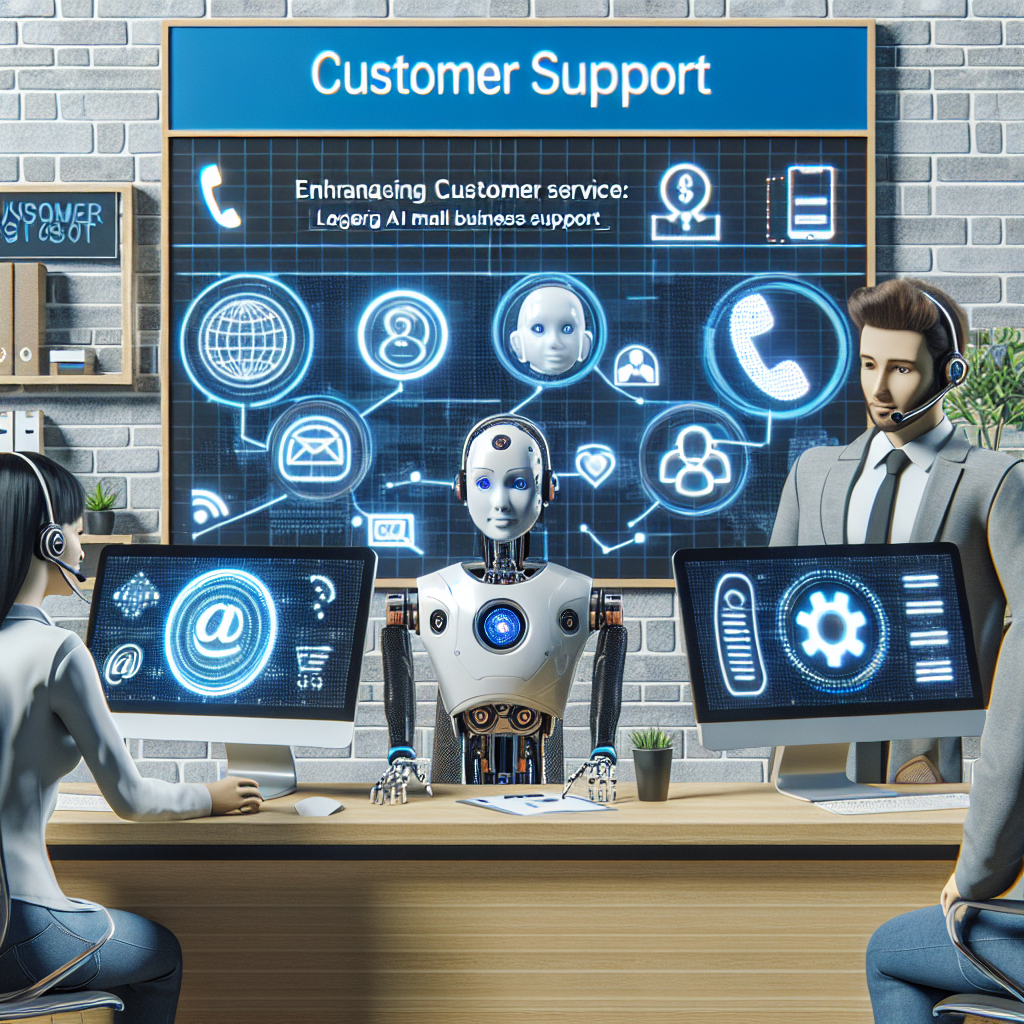
In the ever-evolving landscape of business, small enterprises face unique challenges—limited resources, tight budgets, and the need to juggle multiple responsibilities. Yet, one essential aspect remains constant: the need for exceptional customer service. With the advent of artificial intelligence (AI), small businesses have a powerful tool at their disposal to enhance customer service, streamline operations, and create lasting relationships. This article explores how small businesses can leverage AI to elevate their customer service and gain a competitive edge.
Table of Contents
- Introduction
- The Importance of Customer Service in Small Business
- Understanding AI and Its Applications
- Benefits of AI in Customer Service
- 4.1 Improved Efficiency and Productivity
- 4.2 24/7 Availability
- 4.3 Personalized Customer Experiences
- 4.4 Data-Driven Insights
- Implementing AI Solutions in Small Businesses
- 5.1 Choosing the Right AI Tools
- 5.2 Training and Onboarding Staff
- 5.3 Integrating AI into Existing Systems
- Challenges and Considerations
- Case Studies: Success Stories of AI in Small Business Customer Service
- Future Trends in AI and Customer Service
- Conclusion
Introduction
Customer service is the heartbeat of any business. It shapes customer perceptions, influences buying decisions, and fosters brand loyalty. For small businesses, providing stellar customer service can differentiate them from larger competitors. However, maintaining high-quality service without overextending resources is a daunting task. Herein lies the promise of AI. By integrating AI technologies, small businesses can enhance customer service, reduce operational burdens, and ultimately drive growth.
The Importance of Customer Service in Small Business
Customer service is not merely a function but a strategic factor that can dictate the success of a small business. It plays a crucial role in customer retention and acquisition, impacting revenue and market positioning. Good customer service fosters trust and encourages repeat business. Additionally, word-of-mouth referrals can significantly amplify brand recognition, making excellent service not just desirable, but essential.
Key Benefits of Exceptional Customer Service:
- Increased Customer Loyalty: Satisfied customers are more likely to become repeat buyers.
- Higher Sales: Quality service often translates to increased purchasing.
- Positive Brand Reputation: Happy customers share their experiences, which can lead to organic growth.
Understanding AI and Its Applications
Artificial Intelligence refers to the simulation of human intelligence in machines programmed to think and learn. AI leverages data analysis, natural language processing, and machine learning algorithms to mimic cognitive functions and provide insights that can streamline operations.
What is AI?
AI encompasses a range of technologies that enable machines to perform tasks that typically require human intelligence. This includes understanding language, recognizing images, making decisions, and even predicting future outcomes. For small businesses, AI can optimize customer interactions and transform the service experience.
Common AI Applications in Customer Service
- Chatbots: Automated systems that simulate human conversations, providing instant responses to customer inquiries.
- Sentiment Analysis Tools: Software that analyzes customer feedback to gauge satisfaction levels.
- Virtual Assistants: AI-driven programs that help customers navigate services and access information with ease.
- Recommendation Engines: Systems that provide personalized product suggestions based on customer behavior and preferences.
Benefits of AI in Customer Service
Improved Efficiency and Productivity
AI can automate routine tasks, allowing customer service representatives to focus on complex queries that require a human touch. This not only saves time but also reduces the workload, enabling staff to handle a more extensive range of responsibilities efficiently.
24/7 Availability
Unlike traditional customer service frameworks, AI can provide support around the clock. This means customers can receive assistance anytime, enhancing their satisfaction and overall experience. It also allows businesses to tap into different time zones, capturing a broader audience.
Personalized Customer Experiences
AI algorithms can analyze data to understand customer behavior and preferences, enabling businesses to tailor interactions. Personalization can significantly enhance customer engagement, as it makes them feel valued.
Data-Driven Insights
AI can analyze vast amounts of data to derive actionable insights. By understanding customer preferences and purchase patterns, businesses can adapt their offerings and marketing strategies to better meet customer needs.
Implementing AI Solutions in Small Businesses
Choosing the Right AI Tools
When selecting AI tools for customer service, small businesses should consider:
- Scalability: Can the tool grow with your business?
- Integration Capability: Does it integrate well with existing systems?
- User-Friendliness: Is it easy for staff to use and administer?
Training and Onboarding Staff
Adequate training is essential to ensure that staff can leverage AI technologies effectively. Regular workshops and training sessions can help ease the transition and increase staff confidence.
Integrating AI into Existing Systems
Seamless integration is critical for the success of AI implementations. Businesses should focus on interoperability with current systems to avoid disruptions in service.
Challenges and Considerations
While AI offers numerous benefits, small businesses must also be aware of potential challenges:
- Cost Concerns: Initial investments in AI technology can be substantial.
- Data Privacy Issues: Compliance with data regulations is crucial to avoid legal complications.
- Over-Reliance on Technology: AI should complement human interactions rather than replace them entirely.
Case Studies: Success Stories of AI in Small Business Customer Service
Case Study 1: A Local Restaurant Chain
A local restaurant integrated an AI chatbot on its website to handle reservations and inquiries. The result was a 30% increase in customer engagement and a significant reduction in staff workload, allowing them to focus on in-restaurant experiences.
Case Study 2: E-Commerce Startup
An e-commerce startup utilized AI-powered recommendation engines, leading to a 20% increase in average order value. Personalized product suggestions based on browsing history significantly enhanced the customer shopping experience.
Future Trends in AI and Customer Service
As technology evolves, so too will the applications and capabilities of AI in customer service. Here are some anticipated trends:
- Advanced Natural Language Processing: Improved understanding of customer inquiries will lead to more human-like interactions.
- Predictive Analytics: Businesses will increasingly utilize AI to forecast customer needs and trends.
- AI-Centric Customer Relationship Management (CRM) Systems: These systems will become more intuitive, offering personalized insights for customer interactions.
Conclusion
Integrating AI into customer service is no longer a luxury; it’s becoming a necessity for small businesses aiming to thrive in competitive marketplaces. By harnessing the capabilities of AI, small businesses can improve efficiency, enhance customer satisfaction, and foster lasting relationships. While the path to implementation may present challenges, the long-term benefits far outweigh the initial hurdles. By focusing on tailored customer experiences and streamlined operations, small businesses can ensure a sustained competitive advantage in their respective markets.
Call to Action
Small business owners should consider evaluating their current customer service practices and exploring AI solutions that align with their specific needs and objectives. The journey towards elevated customer service might just be a few clicks away!