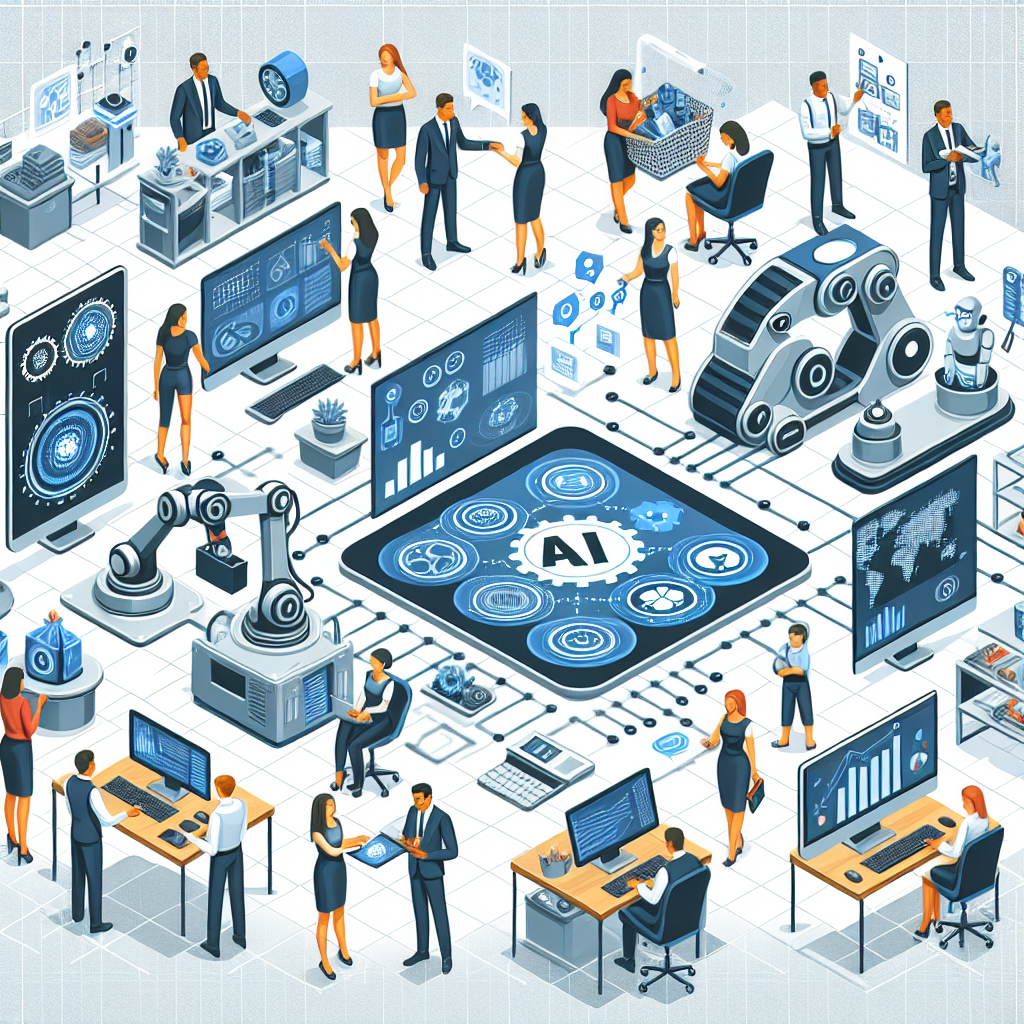
Artificial Intelligence (AI) has emerged as a transformative force in various sectors, including small businesses. The ability of AI to analyze vast amounts of data, automate processes, and enhance decision-making has opened new avenues for operational efficiency. This article explores how AI can streamline operations in small businesses, offering practical insights, tips, and examples to help you make smart decisions.
Table of Contents
- Introduction
- Understanding AI in Business
- What is AI?
- How AI Works
- Benefits of AI for Small Business Operations
- Enhanced Efficiency
- Cost Reduction
- Improved Customer Experience
- Key Areas Where AI Can Make a Difference
- Marketing and Sales
- Inventory Management
- Customer Support
- Financial Management
- Implementing AI Solutions
- Choosing the Right Tools
- Integration Challenges
- Training Staff
- Real-World Examples
- Case Study 1: AI in Retail
- Case Study 2: AI in Service Industry
- Future Trends in AI for Small Business
- Conclusion
- FAQs
1. Introduction
In an era where efficiency is paramount, small businesses are under constant pressure to outperform the competition. Leveraging Artificial Intelligence can be a game-changer, facilitating smarter decisions and optimizing operational workflows. This article will delve into the myriad ways AI can revolutionize your small business operations, making it not just viable but thriving in a competitive landscape.
2. Understanding AI in Business
What is AI?
Artificial Intelligence refers to computer systems programmed to perform tasks that typically require human intelligence. These include problem-solving, understanding natural language, and learning from experience. As technology continues to evolve, AI has become increasingly sophisticated, making it accessible to small businesses.
How AI Works
At its core, AI relies on algorithms and data to generate insights. Machine learning, a subset of AI, involves feeding large data sets to a system, allowing it to recognize patterns and improve its decision-making capabilities over time. This continuous learning basis makes AI tools increasingly efficient at tasks such as data analysis, market prediction, and customer interaction.
3. Benefits of AI for Small Business Operations
Enhanced Efficiency
AI-driven solutions facilitate automation in various tasks, freeing up valuable time for small business owners and employees. Streamlined workflows allow teams to focus on strategic decision-making rather than mundane tasks.
Cost Reduction
Investing in AI technologies can lead to significant long-term cost savings. By automating repetitive tasks and optimizing processes, businesses can reduce overhead costs and avoid operational pitfalls.
Improved Customer Experience
With AI, businesses can deliver personalized experiences, enhancing customer satisfaction and loyalty. For instance, chatbots provide 24/7 customer service, addressing queries instantly.
4. Key Areas Where AI Can Make a Difference
Marketing and Sales
AI can analyze customer behavior and preferences, allowing businesses to customize their marketing strategies. Predictive analytics can identify potential leads, enabling targeted advertising that yields better conversion rates.
Inventory Management
AI tools help small businesses manage inventory efficiently by forecasting demand, automating reordering processes, and thus reducing the chances of stockouts or overstock situations.
Customer Support
AI-powered chatbots and virtual assistants can handle common customer inquiries, thereby reducing wait times and increasing customer satisfaction.
Financial Management
AI can streamline financial operations by automating bookkeeping, generating forecasts, and identifying discrepancies, thus improving financial reporting and compliance.
5. Implementing AI Solutions
Choosing the Right Tools
Before opting for an AI solution, businesses must identify their specific needs. Options range from project management AI software to customer relationship management (CRM) tools. Research and reviews can guide these decisions.
Integration Challenges
While AI can significantly improve operations, integrating it with existing systems can be challenging. Businesses must ensure that the AI system is compatible with their current technology stack to avoid disruptions.
Training Staff
Implementing AI solutions necessitates training staff members. Providing employees with the necessary skills to leverage new technologies will maximize operational efficiency.
6. Real-World Examples
Case Study 1: AI in Retail
A small boutique retailer integrated an AI-driven inventory management system. As a result, the business saw a 30% reduction in holding costs and improved sales forecasting accuracy. Customer insights allowed the retailer to tailor product offerings, ultimately boosting profit margins.
Case Study 2: AI in Service Industry
A small consulting firm used an AI chatbot to streamline its customer inquiry process. The implementation reduced response times, increased engagement rates, and resulted in a 15% rise in client satisfaction scores in just three months.
7. Future Trends in AI for Small Business
As AI technology evolves, several trends are expected to have a dramatic impact on small business operations:
-
Augmented Analytics: Businesses will increasingly rely on AI to provide insights into data without needing a data scientist.
-
AI-Enhanced Decision Making: Predictive analytics will enable more informed decision-making based on historical data and market trends.
-
Voice and Conversational AI: Adoption of voice interfaces for customer service and operations is expected to grow, making interactions more natural and intuitive.
8. Conclusion
Artificial Intelligence presents a myriad of opportunities for small businesses looking to enhance operational efficiency. From marketing and sales to inventory and customer support, AI can significantly improve decision-making and streamline processes. By choosing the right tools, adequately training staff, and staying attuned to future trends, businesses can gain a competitive edge.
9. FAQs
What is the cost of implementing AI in small businesses?
The cost varies based on the technology and tools chosen. Many tools offer subscription-based models, making them accessible for small businesses.
Can all small businesses benefit from AI?
While the benefits of AI can apply broadly, each business must evaluate its specific needs and readiness to implement AI solutions effectively.
Is it challenging to train staff on AI tools?
It can be, but many AI tool providers offer comprehensive training and support, making the transition smoother.
What are the common misconceptions about AI in small businesses?
Many believe AI is only for large corporations. However, numerous affordable and user-friendly solutions are specifically designed for small businesses.
By leveraging AI effectively, your small business can navigate complexities with greater agility, paving the way for sustainable growth and success. Embrace these smart decisions today and transform your operational efficiency for a brighter tomorrow.