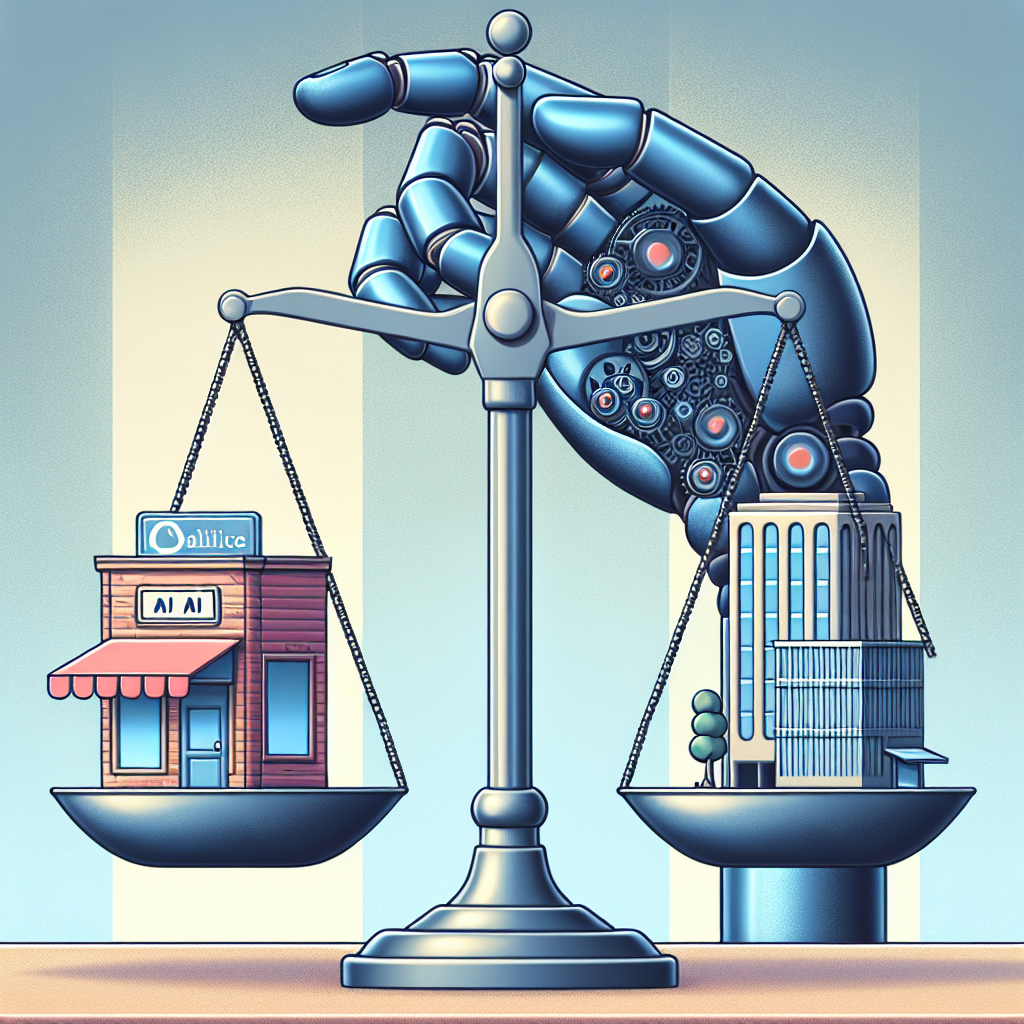
In today’s rapidly evolving digital landscape, artificial intelligence (AI) is no longer a luxury reserved for large corporations with deep pockets. Instead, it is a powerful tool that small businesses can leverage to level the playing field. This article explores the various ways small businesses can harness the advantages of AI to enhance their operations, compete effectively, and achieve sustained growth.
Understanding the AI Landscape
What is Artificial Intelligence?
Artificial Intelligence refers to the simulation of human intelligence in machines that are programmed to think and learn like humans. AI systems can process large amounts of data, recognize patterns, and make decisions with minimal human intervention.
Types of AI Technologies
- Machine Learning (ML): A subset of AI that enables systems to learn from data and improve their performance over time.
- Natural Language Processing (NLP): This technology allows computers to understand, interpret, and respond to human language, making customer interaction smoother and more efficient.
- Computer Vision: AI can analyze visual data from the world around us, opening doors for innovative applications in retail, manufacturing, and more.
- Robotic Process Automation (RPA): This involves using AI to automate routine tasks, improving overall efficiency.
Why Should Small Businesses Care About AI?
With limited resources, small businesses often find it challenging to compete with larger players. However, adopting AI can enable small businesses to streamline operations, enhance customer experiences, and make data-driven decisions.
The AI Advantage
Enhancing Customer Experience
Personalized Interactions
- Natural Language Processing enables chatbots and virtual assistants to provide personalized customer service, addressing queries instantly and improving customer satisfaction.
- By analyzing past customer interactions, AI systems can recommend products or services tailored to individual preferences.
Data-Driven Insights
- Small businesses can use machine learning to analyze customer data, identifying trends and preferences that inform product development and marketing strategies.
- Predictive analytics can anticipate customer needs, enabling businesses to proactively address them.
Optimizing Operations
Streamlined Processes
- Robotic Process Automation (RPA) can automate administrative tasks like invoicing, payroll, and data entry, freeing up employees’ time for more strategic work.
- AI-driven tools can optimize inventory management, predicting stock requirements based on historical data and seasonal trends.
Cost Reduction
- By automating repetitive tasks and improving efficiencies, businesses can significantly lower operational costs. For example, AI algorithms can minimize energy consumption across offices and manufacturing units.
Marketing Efficiency
Targeted Advertising
- AI algorithms can analyze consumer behavior and preferences, enabling small businesses to target their advertising efforts more effectively.
- Platforms like Google Ads and Facebook Ads offer AI-powered tools to optimize ad placement, increasing the chances of conversions.
Content Creation
- AI tools can assist in generating engaging content, from blog posts to social media updates, tailored to the target audience’s interests.
Competitive Analysis
Monitoring Competitors
- AI can track competitors’ activities and market trends, providing insights that help small businesses stay one step ahead.
- Tools like SEMrush and Ahrefs utilize AI to analyze keywords, backlinks, and other important metrics for competitive positioning.
Market Predictions
- AI can forecast market trends based on historical data, helping small businesses make informed decisions about product offerings and pricing strategies.
Overcoming Challenges
Initial Investment Concerns
Cost-Effective Solutions
While some AI solutions can be pricey, small businesses can start small. Many affordable or even free tools exist, such as Google Analytics for tracking website performance and Mailchimp for email marketing automation.
Incremental Implementation
Instead of overhauling the entire system, small businesses should consider integrating AI tools gradually. This gradual approach minimizes disruption and allows time to evaluate which technologies yield the best returns.
Data Privacy and Security
Compliance
Small businesses must ensure they adhere to regulations such as GDPR when collecting and utilizing customer data. AI can help manage compliance requirements while still enhancing customer experiences.
Cybersecurity
Investing in AI-driven cybersecurity solutions can protect sensitive data and build customer trust. These solutions continuously monitor for threats and respond in real-time.
Case Studies: Small Businesses Embracing AI
Case Study 1: Local Retailer Using AI for Inventory Management
A local clothing boutique adopted AI-driven inventory management software to analyze sales trends. This software predicted which styles were likely to sell best, optimizing stock levels. The boutique recorded a 20% increase in sales within the first year.
Case Study 2: Restaurant Enhancing Customer Engagement
A small restaurant implemented a chatbot on its website, allowing customers to make reservations and ask questions. This enhanced customer engagement led to a 15% increase in bookings and improved customer satisfaction ratings.
Case Study 3: E-commerce Store Optimizing Marketing Strategies
An online handmade crafts shop used machine learning algorithms to analyze customer purchase history. This allowed them to target customers with personalized email marketing campaigns, leading to a 30% increase in repeat customers.
Future Outlook for Small Businesses and AI
The landscape of AI is ever-evolving, and its potential applications for small businesses will continue to expand. Emerging trends include:
Augmented Reality (AR) & Virtual Reality (VR)
These technologies are being used in retail to create immersive shopping experiences, allowing customers to visualize products in their own environments.
Predictive Analytics
As data collection techniques become more sophisticated, AI will enable even more accurate predictive analytics, helping small businesses anticipate market fluctuations and customer preferences.
Enhanced Collaboration Tools
AI-driven collaboration tools will enhance remote working environments, allowing small teams to work efficiently from anywhere.
Conclusion
The advantages of AI are significant, especially for small businesses striving to compete against larger players. By leveraging AI technologies, these businesses can enhance customer experience, optimize operations, and execute efficient marketing strategies. Although challenges remain, the incremental integration of AI can provide transformative benefits, ensuring that small businesses not only survive but thrive in an increasingly competitive landscape.
Keywords: AI, Small Businesses, Customer Experience, Optimizing Operations, Marketing Efficiency, Competitive Analysis, Predictive Analytics, Data Privacy, Technology Implementation.
By strategically employing AI technologies, small businesses can redefine their operational capabilities and carve out a competitive edge in the market. The AI advantage is not just the future; it’s the present. Embrace it today.