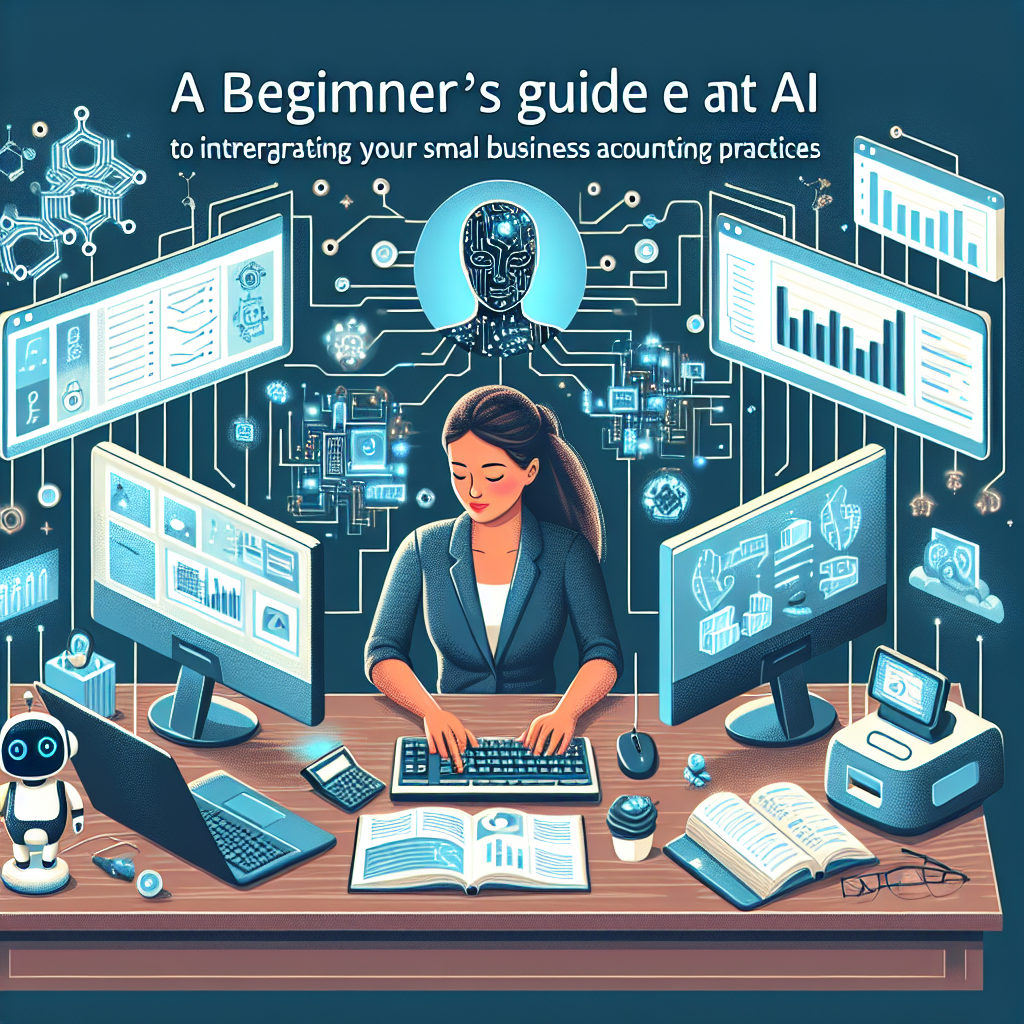
In today’s fast-paced digital landscape, small businesses are increasingly turning to technology to stay competitive. One of the most impactful technological advancements has been the integration of Artificial Intelligence (AI) into various business processes, particularly accounting. This guide aims to equip beginners with the knowledge they need to effectively incorporate AI into their small business accounting practices.
Table of Contents
- Understanding AI and Its Importance in Accounting
- The Benefits of Integrating AI into Small Business Accounting
- Common AI Applications in Accounting
- Choosing the Right AI Tools for Your Business
- Implementing AI in Your Accounting Practices
- 5.1 Assess Your Current Accounting Process
- 5.2 Training and Onboarding
- 5.3 Integration with Existing Software
- Addressing Challenges and Risks
- The Future of AI in Small Business Accounting
- Conclusion
Understanding AI and Its Importance in Accounting
What is Artificial Intelligence?
At its core, Artificial Intelligence mimics human cognitive functions. It aims to execute tasks such as problem-solving, learning, and data analysis, enabling systems to perform complex calculations and make data-informed decisions.
The Significance of AI in Accounting
The world of accounting has witnessed transformative changes due to AI. By automating repetitive tasks and facilitating predictive analytics, AI provides businesses with not just efficiency but also accuracy.
The Benefits of Integrating AI into Small Business Accounting
AI offers numerous advantages to small businesses, including:
-
Time Efficiency: Automation of mundane tasks allows accounting teams to focus on strategic activities.
-
Cost Savings: Reduced labor costs and improved accuracy can lead to significant savings.
-
Enhanced Accuracy: AI can reduce human errors in data entry and calculations.
-
Better Decision-Making: AI provides valuable insights and analytics for informed decision-making.
-
Scalability: As your business grows, AI solutions can scale alongside your accounting needs without requiring major overhauls.
Common AI Applications in Accounting
Automated Bookkeeping
AI can automate the bookkeeping process by managing transactions, categorizing expenses, and generating financial reports, ensuring that your books are always up to date.
AI-Powered Invoicing
AI tools can help in generating invoices automatically, tracking payments, and sending reminders.
Expense Management
With expense management AI tools, you can scan receipts, track spending, and even categorize expenses based on predefined rules.
Financial Forecasting
AI algorithms can analyze historical data to predict future financial trends, assisting businesses in budgeting and strategic planning.
Choosing the Right AI Tools for Your Business
When considering AI solutions, small business owners should evaluate their specific needs. Here are some criteria to consider:
-
User-Friendliness: Look for tools that are easy to use and require minimal training for employees.
-
Integration Capabilities: Ensure that the software can work seamlessly with your existing systems.
-
Customer Support: Choose a provider that offers robust customer service to help you troubleshoot any issues.
-
Security Features: Given the sensitive nature of financial data, security must be a top priority.
-
Cost: Analyze the ROI against the initial investment to ensure that the tool aligns with your budget.
Implementing AI in Your Accounting Practices
Assess Your Current Accounting Process
Before implementing AI, conduct a thorough assessment of your current accounting practices. Identify areas that require improvement or can benefit from automation.
Training and Onboarding
Invest in training sessions to familiarize your team with the new tools. Proper onboarding will help minimize resistance and foster a culture of technological acceptance.
Integration with Existing Software
While introducing AI tools, ensure that they seamlessly integrate with existing accounting software. Consult with IT professionals if necessary to ensure smooth integration.
Addressing Challenges and Risks
While integrating AI can be beneficial, small businesses must also be aware of potential challenges:
-
Initial Costs: The upfront investment may be significant, and businesses should conduct a cost-benefit analysis.
-
Resistance to Change: Employees may resist adopting new technology, fearing that it will replace their jobs.
-
Data Security: With AI systems handling sensitive financial information, the risk of data breaches is a concern that must be addressed.
-
Reliability of Technology: Dependence on AI may lead to issues if systems fail or produce incorrect outputs.
Mitigating these challenges requires careful planning and a proactive approach to training and communication.
The Future of AI in Small Business Accounting
As technology continues to advance, the role of AI in accounting will likely grow. Businesses can expect:
-
Greater Automation: More intricate tasks will become automated, allowing accountants to focus on strategy rather than routine work.
-
Improved Data Analytics: Enhanced AI capabilities will provide even more actionable insights, further aiding decision-making.
-
Personalized Financial Services: AI will enable tailored services based on individual business needs and financial situations.
-
Increased Focus on Compliance: AI can help manage tax compliance better by keeping track of changes in regulations and assessing their impact on your finances.
Conclusion
Integrating AI into your small business accounting practices is not merely an option; it is becoming a necessity in today’s digital world. By understanding the potential benefits, exploring common applications, and following the steps laid out in this guide, you can position your business for a more efficient and profitable future. As technology evolves, continually reassessing your accounting practices will be crucial to leverage AI’s full potential.
By taking the first step towards automation and intelligent financial management, you will not only save time and money but also create a more strategic approach to financial oversight that can lead your small business to success.
This comprehensive guide provides an insightful overview for small business owners looking to integrate AI into their accounting practices. For more information on AI applications, tools, and case studies, be sure to explore additional resources available online or consult with accounting and tech experts to guide your transition.