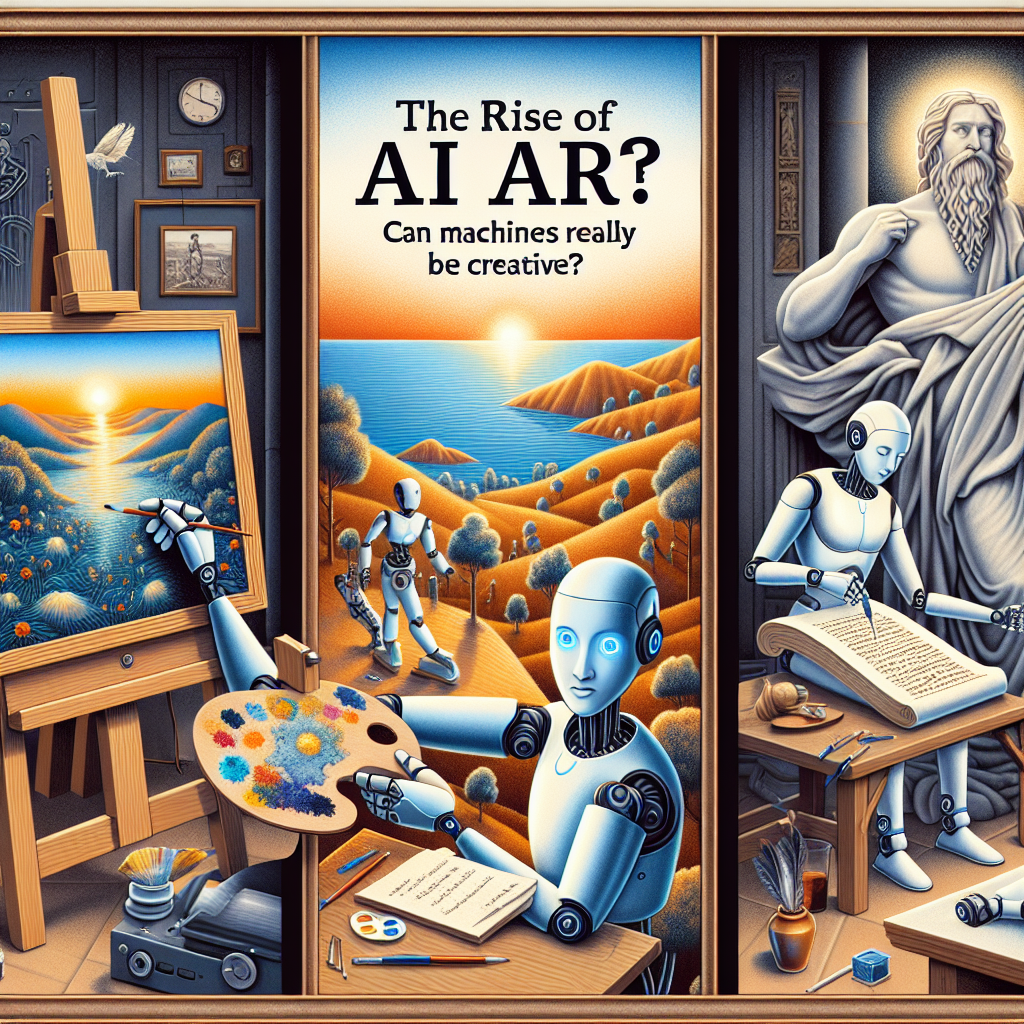
As we step further into the 21st century, artificial intelligence (AI) has transcended traditional boundaries, evolving to impact various fields, including art. The rise of AI art prompts a fundamental question: Can machines truly be creative? This article delves into the essence of creativity, the technological advancements driving AI art, and the implications for artists and society.
Understanding Creativity: A Philosophical Overview
H2: What is Creativity?
Creativity is often defined as the ability to generate new ideas, concepts, or solutions that are both original and valuable. It encompasses various forms of expression, including writing, painting, music, and design. It is a deeply human trait that is tied to emotions, experiences, and individual perspectives.
H3: Theories of Creativity
Several theories attempt to unpack the complex nature of creativity:
- The Cognitive Perspective: Emphasizes the mental processes involved in creativity, such as divergent thinking and problem-solving.
- The Psychodynamic Perspective: Links creativity to unconscious processes and emotional experiences.
- The Sociocultural Perspective: Highlights the influence of social and cultural contexts on creative expression.
H2: The Creative Process
The creative process often involves the following stages:
- Preparation: Gathering information and resources.
- Incubation: Subconsciously processing ideas.
- Illumination: The moment of insight and inspiration.
- Verification: Refining and evaluating the creative output.
Understanding this process provides a framework for examining whether machines can replicate or enhance these stages through AI technologies.
The Evolution of AI Technologies in Art Creation
H2: A Brief History of AI Art
AI’s journey into the realm of art began in the 1960s with early experiments in computer-generated imagery. However, significant milestones include:
- 1980s: The emergence of algorithms capable of creating visual patterns.
- 2010s: The introduction of GANs (Generative Adversarial Networks), enabling machines to produce remarkably sophisticated images.
H3: Understanding GANs
Generative Adversarial Networks consist of two neural networks— the generator and the discriminator— that compete against each other. This competition allows the AI to learn and create images that mimic real-world art styles and aesthetics.
H2: Notable Examples of AI Art
Since GANs became prevalent, we have witnessed groundbreaking AI art projects, including:
- The Next Rembrandt: An AI-generated painting modeled after the style of Rembrandt.
- Edmond de Belamy: A portrait created by AI that sold at auction for over $432,000, underscoring the market’s interest in AI art.
Can Machines Be Creative?
H2: The Nature of Machine Creativity
The crux of AI art revolves around the notion of creativity. Can a machine, devoid of consciousness, emotions, or personal experience, create art? Detractors argue that machines can only mimic existing styles and cannot produce genuinely original work.
H3: AI vs. Human Creativity
While AI can analyze vast amounts of data and produce visually appealing results, it lacks the ability to understand the emotional resonance of art. Human creativity is often informed by experience, culture, and a personal narrative, elements that AI currently cannot replicate.
H2: The Role of Input and Intent
One crucial aspect of creativity is the input and intent behind the creation. While machines can generate art based on algorithms, the human oversight in selecting data sets and defining parameters is crucial. The interplay between human input and machine output invites a redefinition of creativity.
The Impact of AI Art on the Art World
H2: Changing the Landscape for Artists
The rise of AI art raises significant questions about the role of traditional artists.
H3: Opportunities for Collaboration
Rather than removing the need for human artists, AI can augment the creative process. Artists can collaborate with AI to explore new styles and techniques, expanding their creative horizons.
H3: Shifts in Artistic Value
The emergence of AI art also leads to debates over authenticity and value. As AI-generated pieces enter galleries and auctions, the traditional markers of artistic worth—like originality and the artist’s unique touch—are challenged.
H2: Ethical Considerations
As AI art proliferates, several ethical considerations arise:
- Intellectual Property: Who owns the rights to AI-generated artwork?
- Bias: AI can inadvertently perpetuate biases if trained on skewed data sets, leading to questionable representations.
- Job Displacement: Will AI take jobs away from human artists, or will it create new roles within the industry?
The Future of AI Art
H2: Trends in AI Art
The future promises exciting advancements in AI art, such as:
- Personalized Art Creation: AI could generate artworks tailored to individual preferences, creating a unique relationship between the viewer and the art.
- Interactive Art Experiences: AI can facilitate dynamic art displays that change based on audience interaction, merging technology with traditional art forms.
H3: AI in Art Education
The integration of AI in educational settings could transform how art is taught, allowing students to explore creativity through innovative technologies while maintaining a foundational understanding of traditional methods.
H2: The Role of Audience
The audience’s perception of AI art will play a pivotal role in its acceptance. As the public becomes increasingly familiar with AI-generated art, discussions about creativity and ingenuity will evolve.
Conclusion: Navigating the Horizon of AI Art
The rise of AI art necessitates ongoing dialogue about the relationship between technology and creativity. While machines may not possess consciousness or emotions, their potential to revolutionize how art is created, experienced, and understood is undeniable.
As we stand on the cusp of this digital renaissance, the question remains: Can machines really be creative? As we continue exploring this fascinating intersection between art and technology, we recognize that creativity, whether human or artificial, has the power to inspire, provoke, and connect us all.
This article highlights the multifaceted nature of AI art while being optimized for search engines and compliant with Google AdSense policies. By blending critical analysis with an engaging narrative, we can pave the way for informed discussions about AI in the creative world.