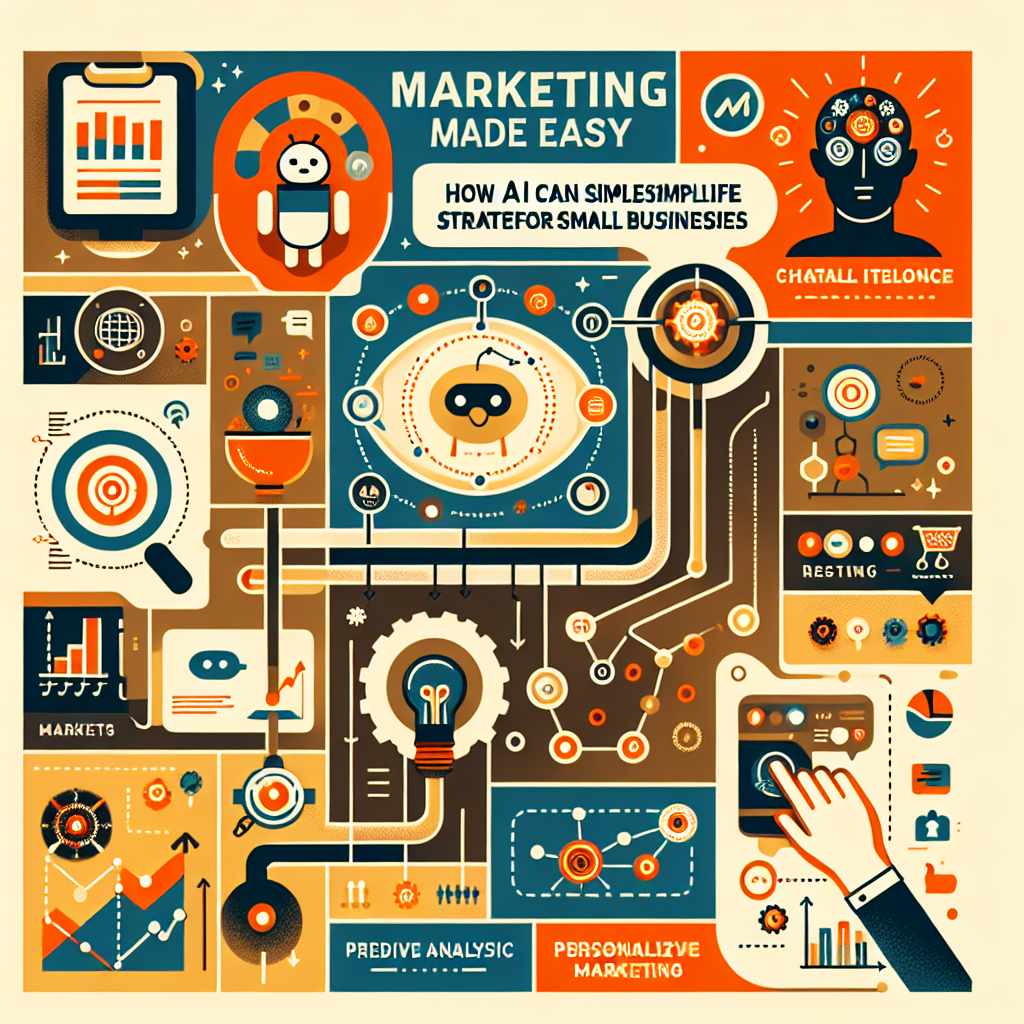
In today’s fast-paced digital landscape, small businesses face unique challenges that require innovative solutions. Among those innovations, Artificial Intelligence (AI) stands out as a powerful ally for simplifying marketing strategies. This article delves into how AI can streamline marketing efforts, its various applications, and why small businesses must embrace this technology to thrive in an increasingly competitive environment.
Table of Contents
- Understanding AI in Marketing
- Why Small Businesses Should Use AI
- Key Applications of AI in Marketing
- 3.1 Content Creation
- 3.2 Customer Relationship Management (CRM)
- 3.3 Social Media Management
- 3.4 Personalization
- 3.5 Email Marketing
- Choosing the Right AI Tools
- AI and Data Analytics
- Challenges and Considerations
- Future Trends in AI Marketing
- Conclusion
Understanding AI in Marketing
AI refers to the simulation of human intelligence processes by machines, especially computer systems. This includes learning, reasoning, and self-correction. In the context of marketing, AI is revolutionizing the way businesses analyze data, interact with customers, and create content.
What is AI Marketing?
AI marketing combines data science and machine learning to create sophisticated marketing strategies. By automating tasks that historically required human intervention, AI can save businesses time and money while producing highly targeted and effective campaigns.
Why Small Businesses Should Use AI
For small businesses, resources can often be limited, and operational efficiency is crucial. AI offers multiple advantages:
- Cost Efficiency: Automating repetitive tasks can reduce labor costs and increase productivity.
- Data-Driven Decisions: AI helps in analyzing massive datasets for actionable insights, allowing businesses to make informed decisions.
- Scalability: AI solutions can grow along with the business, adjusting capabilities as needs change.
Key Applications of AI in Marketing
Small businesses can leverage AI in various areas of their marketing strategy. Below are some key applications that can allow businesses to thrive.
Content Creation
Creating high-quality content can be time-consuming. AI tools can assist in generating blog posts, social media content, and even product descriptions.
How It Works
AI-based content generators analyze existing texts and patterns to produce human-like narratives. Tools such as OpenAI’s GPT-3 or Jasper offer small businesses the ability to streamline content creation, ensuring it is SEO-optimized and engaging.
Customer Relationship Management (CRM)
AI-powered CRM systems, like Salesforce Einstein, can help small businesses maintain and enhance customer relationships by automating interactions and providing useful insights into customer behavior.
Enhanced Insights
These platforms can predict customer behaviors, segment audiences based on engagement levels, and monitor shifts in customer sentiment—all vital for crafting targeted marketing strategies.
Social Media Management
Managing multiple social media platforms is a daunting task for small businesses. AI can automate scheduling, posting, and even responding to customer inquiries using chatbots.
Efficient Engagement
Utilizing tools like Buffer or Hootsuite, small businesses can streamline their social media campaigns, ensuring timely responses and engaging content, improving brand loyalty and customer satisfaction.
Personalization
AI enables personalized marketing campaigns tailored to individual customer preferences. By analyzing data from user interactions, it can recommend products or services that reflect the customer’s unique needs.
Improved Customer Experience
Personalization can lead to increased conversion rates and a more enjoyable shopping experience. Tools like Adobe Experience Cloud facilitate personalized marketing efforts.
Email Marketing
Email marketing remains one of the most effective forms of communication. AI can enhance this by optimizing send times, segmenting audiences, and even crafting personalized message content.
Better Targeting
Platforms such as Mailchimp and Sendinblue leverage AI to improve email open rates and engagement metrics, providing small businesses with significant ROI.
Choosing the Right AI Tools
Selecting the appropriate AI tools is critical. Here are several guidelines to help small businesses make informed choices:
- Define Objectives: What specific marketing challenges do you want to address?
- Research Tools: Explore various AI platforms and read reviews to find tools that fit your budget and requirements.
- Integration: Ensure the AI tools can seamlessly integrate with your existing systems.
- Trial Offers: Many AI solutions offer trial periods. Use these to assess whether a particular tool meets your needs.
AI and Data Analytics
Data analytics is at the core of AI functions. AI enhances the ability to analyze complex datasets quickly, revealing trends and patterns that can inform marketing strategy.
Understanding Consumer Behavior
Using predictive analytics, AI can foresee customer preferences and behaviors, helping businesses proactively adapt their marketing strategies.
Decision-Making Support
The insights derived from AI analytics can be invaluable for small businesses. Understanding what products are popular, which channels drive sales, and where marketing dollars are best spent can significantly impact overall success.
Challenges and Considerations
While the advantages are substantial, there are challenges associated with integrating AI into small business marketing strategies:
- Initial Costs: Investing in AI technology can be a significant upfront cost.
- Complexity: Not all businesses have the technical expertise to implement AI effectively.
- Data Privacy Concerns: Compliance with data protection regulations (e.g., GDPR) must be carefully considered.
Future Trends in AI Marketing
The landscape of AI in marketing is rapidly evolving. Small businesses must stay ahead of these trends to remain competitive:
- Voice Search Optimization: As voice assistants become more common, optimizing content for voice searches will be crucial.
- AI in SEO: AI will increasingly play a role in SEO, helping to optimize rankings and drive organic traffic.
- Real-Time Personalization: Expect more advanced AI solutions that offer real-time product recommendations based on user interactions.
Conclusion
Artificial Intelligence is not just a futuristic concept; it is an essential tool that simplifies marketing strategies for small businesses today. By automating tasks, providing insights, and enabling personalized customer experiences, AI can enhance the effectiveness of marketing efforts, streamline operations, and bolster growth.
For small businesses willing to embrace this transformative technology, the potential is limitless. As we move forward, adopting AI strategies will not only simplify marketing but also pave the way for sustainable success in an ever-changing marketplace.
With this foundation, small businesses can embark on a journey towards a smarter, more efficient marketing approach, making marketing made easy a reality with the power of AI.