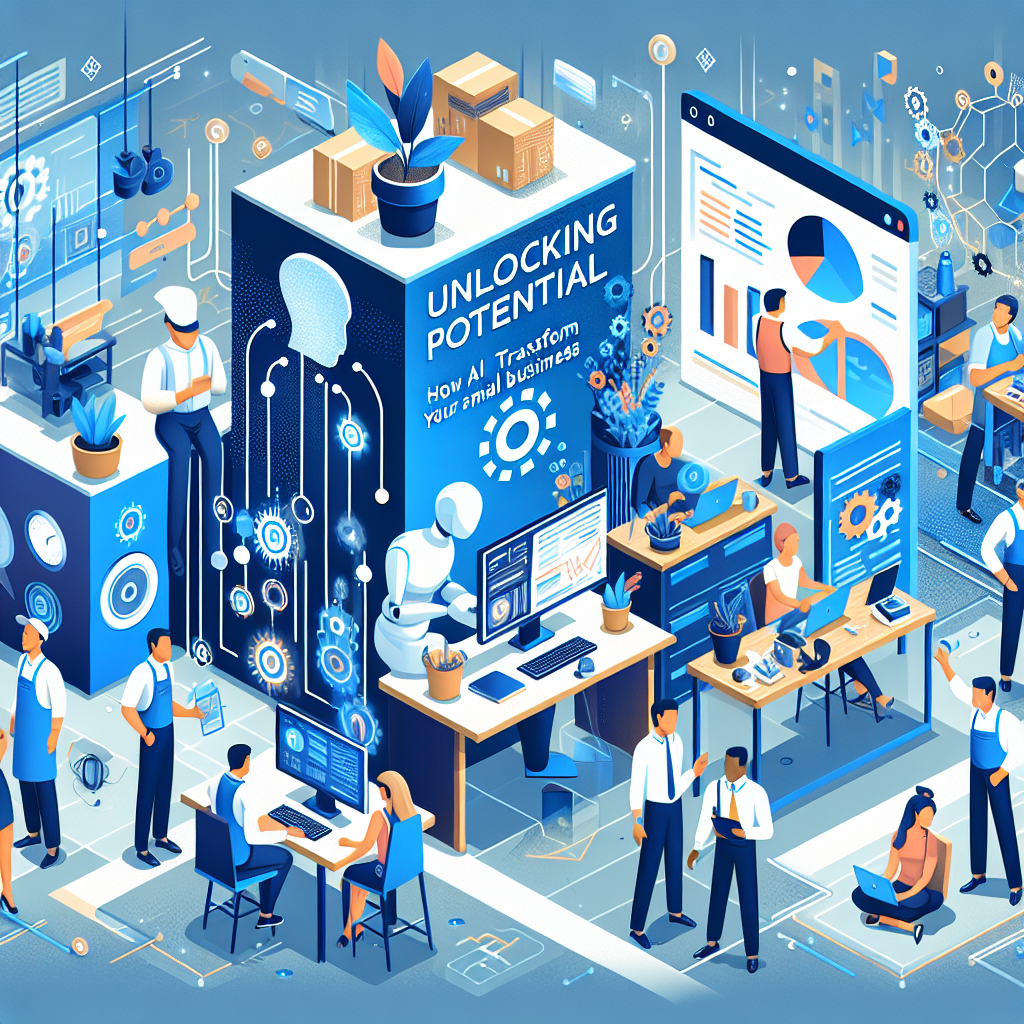
In the ever-evolving landscape of business, embracing technology is no longer optional for survival. For small businesses, artificial intelligence (AI) presents a unique opportunity to unlock potential, streamline operations, and enhance customer experiences. This article delves into how AI can transform small businesses by improving efficiency, driving growth, and fostering innovation.
Table of Contents
- Introduction
- Understanding AI and Its Importance
- Key Benefits of AI for Small Businesses
- 3.1 Enhanced Customer Service
- 3.2 Data Analysis and Insights
- 3.3 Automation of Routine Tasks
- 3.4 Cost Efficiency
- 3.5 Improved Marketing Strategies
- AI Tools for Small Businesses
- 4.1 Customer Relationship Management (CRM)
- 4.2 Chatbots and Virtual Assistants
- 4.3 Predictive Analytics
- 4.4 Inventory Management
- Overcoming Challenges in Implementing AI
- Case Studies: Successful AI Integration in Small Businesses
- The Future of AI in Small Business
- Conclusion
- FAQs
1. Introduction
In an age where technology reigns supreme, small businesses must leverage every tool available to stay competitive. Enter artificial intelligence (AI)—a powerful ally that can empower small businesses to streamline operations, enhance customer relations, and unlock untapped growth potential. This article explores how AI can revolutionize your small business, providing insights and tools to harness its capabilities effectively.
2. Understanding AI and Its Importance
Artificial Intelligence refers to the simulation of human intelligence processes by machines, particularly computer systems. These processes include learning (acquiring information and rules for using it), reasoning (using rules to reach approximate or definite conclusions), and self-correction. Understanding these fundamentals is key to recognizing why AI is becoming an indispensable tool for small businesses.
3. Key Benefits of AI for Small Businesses
3.1 Enhanced Customer Service
In today’s competitive landscape, high-quality customer service is crucial. AI-powered chatbots can handle customer inquiries around the clock, providing instant responses and freeing up human resources for more complex issues. Implementing AI chatbots not only improves response time but also increases customer satisfaction, fostering loyalty.
3.2 Data Analysis and Insights
AI excels in processing large amounts of data quickly. For small businesses, this means the ability to analyze customer behavior, market trends, and sales patterns efficiently. Tools like machine learning can provide insights that lead to well-informed business decisions. Understanding these patterns can guide strategies on product offerings and market positioning.
3.3 Automation of Routine Tasks
Routine tasks can drain time and resources. AI technology can automate repetitive processes such as scheduling, invoicing, and email marketing. This automation allows small business owners and employees to focus on higher-level strategic initiatives, enhancing productivity and efficiency.
3.4 Cost Efficiency
Investing in AI can lead to significant cost savings in the long run. By optimizing processes, reducing waste, and improving efficiency, businesses can streamline operations and reduce overhead costs. Automating customer service and administrative tasks often translates into lower labor costs and increased profitability.
3.5 Improved Marketing Strategies
AI can transform marketing strategies by analyzing customer data, segmenting audiences, and delivering personalized experiences. Utilizing AI-driven tools allows businesses to optimize marketing campaigns based on real-time data, making them more effective and efficient. Predictive analytics can help businesses identify potential customers before they enter the sales funnel, allowing for targeted outreach.
4. AI Tools for Small Businesses
Integrating AI into small business operations can be achieved through various tools and platforms:
4.1 Customer Relationship Management (CRM)
CRM systems like Salesforce and HubSpot utilize AI to help small businesses manage customer relationships effectively. These platforms analyze customer interactions, enabling businesses to tailor their approach and improve customer satisfaction.
4.2 Chatbots and Virtual Assistants
AI chatbots, such as those offered by Drift and Intercom, provide immediate assistance to customers. They can handle FAQs, schedule appointments, and even facilitate sales, significantly enhancing the customer journey.
4.3 Predictive Analytics
Tools like Google Analytics and Tableau use AI-driven predictive analytics to forecast future trends based on historical data. This information is invaluable for making informed business decisions and aligning marketing strategies with anticipated market conditions.
4.4 Inventory Management
AI solutions such as TradeGecko and Zoho Inventory assist with inventory management by predicting stock levels, minimizing waste, and improving order accuracy. This ensures that businesses meet customer demand without overstocking.
5. Overcoming Challenges in Implementing AI
While the benefits of AI are numerous, small businesses may face challenges when integrating this technology. Issues such as cost, complexity, and the need for staff training can deter business owners from adopting AI solutions. Here are strategies to overcome these challenges:
- Start Small: Implement AI in phases. For instance, begin with a chatbot and assess its impact before expanding to more comprehensive AI tools.
- Invest in Training: Equip employees with the necessary skills to understand AI tools and their benefits. This can enhance user adoption and effectiveness.
- Seek External Expertise: Consider hiring consultants or collaborating with tech-savvy partners who can guide you through the integration process.
6. Case Studies: Successful AI Integration in Small Businesses
Case Study 1: A Local Restaurant
A small restaurant integrated an AI-driven reservation system that allowed customers to book tables and receive reminders automatically. The result? A significant increase in customer retention and improved kitchen efficiency.
Case Study 2: E-Commerce Startup
An e-commerce company employed AI through predictive analytics to analyze purchasing behavior. This insight enabled them to tailor marketing campaigns effectively, leading to a 30% increase in sales over six months.
7. The Future of AI in Small Business
As technology continues to advance, the capabilities of AI will expand. Innovations such as natural language processing and image recognition will offer even more tools for small businesses to enhance operations and customer experiences. Embracing AI now will position small businesses to take full advantage of these future developments.
8. Conclusion
AI presents an array of opportunities for small businesses looking to grow and prosper in a competitive market. By enhancing customer service, automating routine tasks, and providing invaluable insights, AI can transform how small businesses operate. While challenges exist, careful planning and phased implementation can make AI integration a feasible and rewarding venture. The future of small business is bright, and AI is a pivotal part of that journey.
9. FAQs
Q: Is AI technology expensive for small businesses?
A: While there is an initial investment, AI can lead to long-term cost savings through automation and enhanced efficiency.
Q: Do I need technical skills to implement AI in my business?
A: Many AI tools are designed with user-friendliness in mind, requiring minimal technical expertise. Training resources are also widely available.
Q: How can I measure the success of AI implementation?
A: Track key performance indicators (KPIs) relevant to your business objectives, such as customer satisfaction, sales growth, and operational efficiency.
Q: What are the first steps to adopting AI?
A: Identify areas in your business that could benefit from AI, research relevant tools, and create a plan for gradual implementation.
By understanding AI’s capacities and actively engaging with its tools, small businesses can unlock new potential, ensuring they thrive in today’s digital marketplace. Implementing AI isn’t just a trend; it’s a strategic move that can yield transformative results.