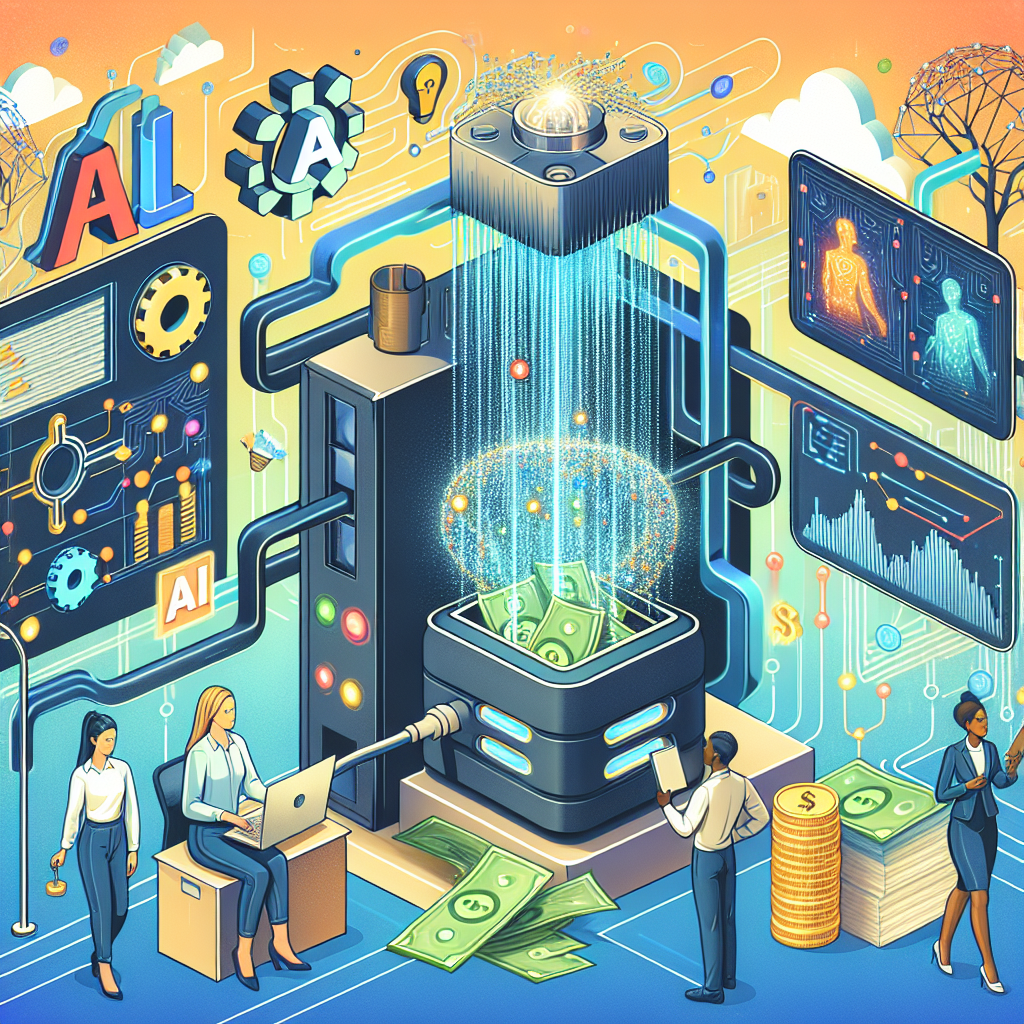
In today’s digital landscape, every click, interaction, and transaction generates a wealth of data. For small businesses, this data is not just a byproduct of operations; it’s a goldmine waiting to be tapped. By harnessing the power of Artificial Intelligence (AI), small businesses can transform this data into actionable strategies that drive revenue and efficiency. In this article, we’ll explore how AI can revolutionize your small business, turning data into dollars.
Table of Contents
- Introduction to AI in Small Business
- Understanding the Value of Data
- AI Technologies Transforming Small Businesses
- How AI Can Optimize Operations
- AI-Driven Marketing Strategies
- 5.1 Personalization
- 5.2 Predictive Analytics
- Case Studies of AI Success in Small Businesses
- Implementing AI in Your Small Business
- Overcoming Challenges in AI Implementation
- Conclusion: The Future of AI in Small Business
Introduction to AI in Small Business
The integration of AI technologies in small businesses is no longer a futuristic concept; it’s a current reality. Small businesses are leveraging AI to streamline operations, enhance customer engagement, and increase profitability. With the ability to analyze big data and execute complex algorithms quickly, AI offers solutions that were once reserved for large corporations.
Whether it’s customer interactions, inventory management, or targeted marketing, the impact of AI is reaching all facets of small business operations. Understanding how AI can be implemented is essential for any small business owner looking to thrive in today’s competitive market.
Understanding the Value of Data
Types of Data Small Businesses Generate
Small businesses generate various data types, each with its unique potential:
- Customer Data: This includes customer demographics, purchasing behavior, feedback, and interaction history.
- Transactional Data: Sales, refunds, and inventory levels provide insights into financial health and operational efficiency.
- Operational Data: Information about business processes, employee performance, and supply chain dynamics.
- Marketing Data: Data from campaigns, social media engagement, and website analytics.
The challenge lies in effectively extracting insights from this data, where AI comes into play.
AI Technologies Transforming Small Businesses
Machine Learning
Machine Learning (ML) algorithms analyze historical data to identify patterns and generate predictions. For instance, an online retail store can implement ML algorithms to predict which products will be in demand based on previous sales data and seasonal trends.
Natural Language Processing
Natural Language Processing (NLP) enables machines to understand and interact using human language. Small businesses can utilize NLP in chatbots to provide customer support, engage in automated conversations, and analyze customer feedback from reviews and surveys.
Computer Vision
Computer Vision allows systems to interpret and process visual data. Retailers can use this technology to analyze customer behavior in-store, optimizing layout and inventory based on the observed shopping patterns.
How AI Can Optimize Operations
Automating Routine Tasks
AI can significantly reduce the time spent on mundane tasks. For example, invoicing, data entry, and payroll processing can be automated with AI, freeing your team to focus on strategic initiatives rather than routine chores.
Enhancing Customer Service
AI-powered chatbots can handle common customer inquiries 24/7, providing immediate responses and freeing your support team to focus on more complex issues. Implementing these solutions can lead to increased customer satisfaction and loyalty.
AI-Driven Marketing Strategies
Personalization
AI enables hyper-personalized marketing strategies, helping businesses tailor their offerings to individual preferences. Using data analytics, AI can determine the best products to present to a customer based on their past behavior and preferences, leading to higher conversion rates.
Predictive Analytics
Predictive analytics uses historical data to forecast future trends. Small businesses can leverage this technology to anticipate customer needs, optimize stock levels, and refine marketing strategies, ultimately resulting in increased sales and improved customer retention.
Case Studies of AI Success in Small Businesses
To illustrate the real-world impact of AI, let’s look at several examples:
- Retail: A local fashion boutique implemented AI-driven inventory management, allowing it to optimize stock levels based on predicted trends, resulting in a 30% reduction in excess inventory.
- Service Industry: A small cleaning service used AI chatbots to streamline booking and inquiries, enhancing customer satisfaction and decreasing operational costs by 20%.
Implementing AI in Your Small Business
Identifying Suitable AI Tools
Before implementation, small business owners should evaluate their needs. Consider your business’s size, industry, and unique challenges when choosing AI tools. Research various platforms that align with your operational goals.
Training Your Team
A successful AI implementation requires that your team understand how to use new systems effectively. Invest in training programs to ensure your employees can leverage AI tools, maximizing their benefits.
Overcoming Challenges in AI Implementation
While AI offers numerous advantages, challenges remain. These include:
- Cost: Some AI solutions can be expensive. Small businesses should look for scalable tools that allow for gradual adoption.
- Data Privacy: Ensure compliance with data protection regulations to maintain customer trust and avoid legal issues.
- Integration: Integrating AI with existing systems can be complex. Work with experienced IT professionals to smooth the transition.
Conclusion: The Future of AI in Small Business
The future of AI in small business is bright. As technology continues to evolve, its applications will become more accessible, affordable, and beneficial for small businesses. By embracing AI, small businesses can transform data into dollars, driving growth and enhancing competitiveness in their respective markets.
In summary, the journey from data to dollars is not just a possibility but a necessity for small businesses today. The integration of AI can provide the tools needed to analyze data effectively, optimize operations, and create personalized customer experiences. For small business owners looking to stay ahead, the time to act is now. Embrace AI, and watch your business thrive.
By strategically aligning the integration of AI with your operational goals and equipping your team with the necessary skills, you will not only support your immediate business objectives but also lay the groundwork for sustainable growth in the future.