Introduction
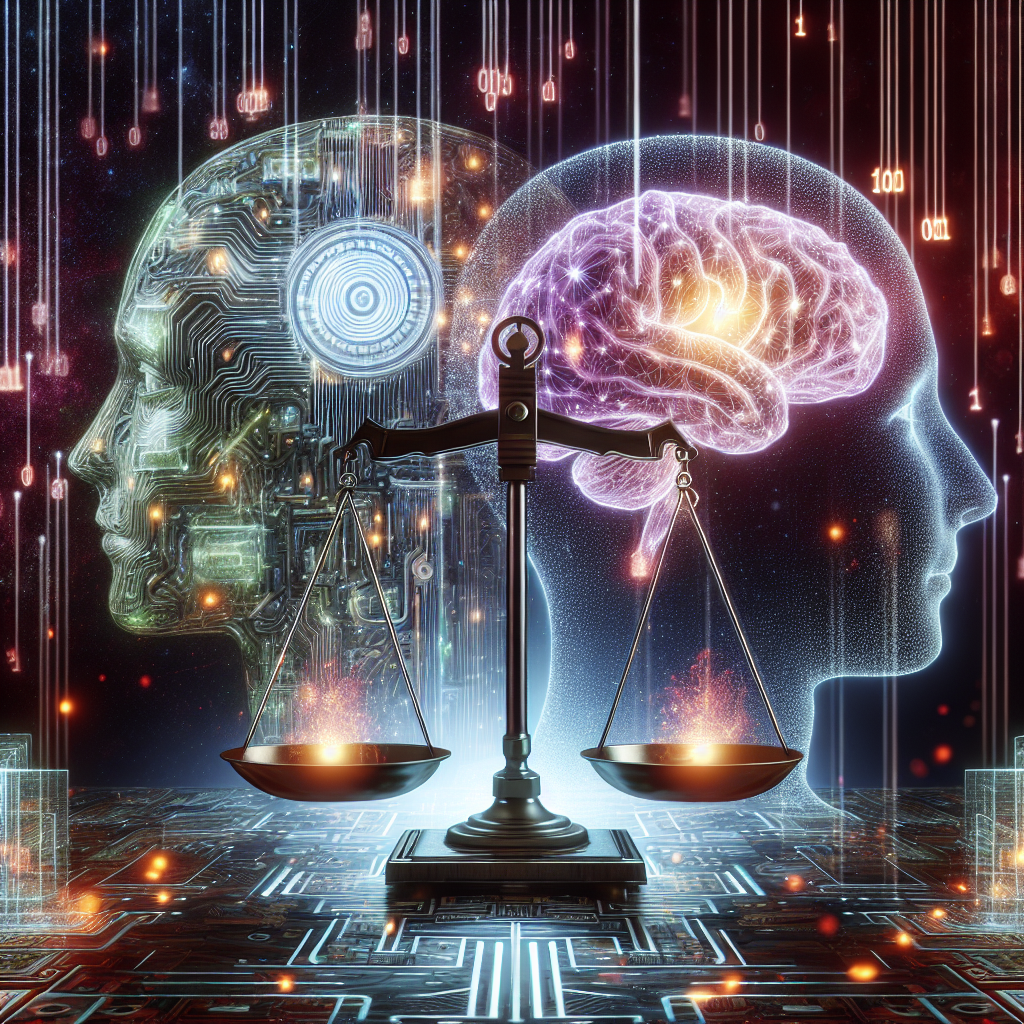
In the age of technology, the debate between artificial intelligence (AI) and human intelligence has reached unprecedented levels. As machines increasingly imitate human behaviors and decision-making processes, the question arises: Can machines truly think? This article aims to explore the nuances of AI versus human intelligence, examining historical perspectives, cognitive functions, and ethical implications.
Understanding Human Intelligence
H2: What is Human Intelligence?
Human intelligence encompasses a broad range of cognitive abilities including reasoning, problem-solving, creativity, emotional understanding, and social interactions. Unlike AI, human intelligence is deeply rooted in evolutionary adaptations, social and cultural influences, and the unique ability to comprehend complex emotions.
H3: Key Features of Human Intelligence
-
Emotional Intelligence: The ability to recognize, understand, and manage our own emotions and those of others.
-
Creativity: Humans can think outside the box and generate novel ideas and solutions.
-
Adaptability: We can adjust our strategies based on new information or changing environments.
-
Consciousness: Human intelligence is intertwined with self-awareness and subjective experiences.
The Evolution of Artificial Intelligence
H2: A Brief History of AI
The concept of AI dates back to ancient myths and philosophies, but it wasn’t until the mid-20th century that significant advances were made. The Turing Test, proposed by Alan Turing in 1950, challenged whether machines could exhibit intelligent behavior indistinguishable from that of humans.
H3: Machine Learning and Deep Learning
-
Machine Learning: This subset of AI allows computers to learn from data and improve over time without being explicitly programmed.
-
Deep Learning: Utilizing neural networks, deep learning enables AI to perform tasks like image and speech recognition more effectively.
H3: Achievements in AI
Recent developments have showcased AI’s capabilities, such as the creation of AI-driven systems like OpenAI’s ChatGPT and Google’s BERT. These systems can generate human-like text, analyze sentiments, and assist in various applications from healthcare to finance.
Can Machines Think?
H2: Defining “Thinking”
Before we explore whether machines can truly think, we must first define what “thinking” means. Traditional views consider thinking as a cognitive process involving reasoning and memory but also incorporating emotions and consciousness.
H3: The Qualities of Human Thought
-
Abstract Thinking: Humans can think abstractly, allowing for concepts like morality, ethics, and future planning.
-
Emotional Context: Effective decision-making often requires emotional awareness, something AI struggles to replicate.
-
Contextual Awareness: Humans perceive situations within complex social contexts, integrating experiences into their thought processes.
H3: AI’s Limitations
While AI excels in data processing and recognizing patterns, it lacks emotional comprehension, subjective experience, and the ability to understand context in the same profound way that humans do.
Cognitive Comparisons: AI vs. Human Intelligence
H2: Similarities Between AI and Human Intelligence
-
Pattern Recognition: Both AI and humans can identify patterns, but the approaches differ. AI relies on statistical models, while humans use experiential knowledge.
-
Learning from Experience: Both systems improve their performance over time, albeit in fundamentally different manners.
H3: Differences in Cognitive Function
| Feature | Human Intelligence | Artificial Intelligence |
|---|---|---|
| Emotional Awareness | High | Low |
| Creativity | High | Limited |
| Learning Styles | Various (experiential, abstract) | Data-driven |
| Contextual Understanding | Rich | Minimal |
H2: The Turing Test Revisited
The Turing Test remains a benchmark for evaluating machine intelligence. However, passing this test does not guarantee true thinking. It merely indicates that a machine can mimic human-like responses under certain conditions.
The Ethical Implications of AI
H2: The Consequences of AI Development
As AI becomes more advanced, ethical considerations arise regarding its deployment, impacts on jobs, and the potential for misuse. What responsibilities do developers have to ensure ethical AI?
H3: Societal Impact
-
Job Displacement: Automation may displace many jobs, leading to economic and social ramifications.
-
Bias in AI: AI systems can perpetuate existing biases if trained on flawed data sets, resulting in unfair outcomes.
-
Autonomy and Control: As AI systems gain more capabilities, questions arise about decision-making autonomy and human oversight.
The Future of AI and Human Intelligence
H2: A Collaborative Approach
Rather than conflicting with human intelligence, the future of AI lies in collaboration. Human-AI partnerships can enhance decision-making processes, with AI handling data-heavy tasks, leaving humans to focus on creativity and emotional insight.
H3: The Role of Emotionally Intelligent AI
Future developments aim to cultivate emotionally intelligent AI that can understand and respond to human emotions, potentially bridging the gap between machine capabilities and human psychological needs.
Conclusion
The debate on whether machines can truly think reveals intricate layers of cognitive functions, ethical considerations, and societal implications. While AI continues to evolve rapidly and poses exciting possibilities for the future, it is essential to recognize that human intelligence encompasses more than just thinking. Emotions, consciousness, and creativity remain uniquely human traits that machines may never replicate entirely. As we move forward, embracing AI as a tool that complements rather than replaces human intelligence could provide the best path toward innovation and understanding.
Call to Action
As we continue to navigate the complexities of AI and human intelligence, it’s crucial to engage in discussions, educate ourselves and others, and advocate for ethical practices in AI development. By promoting a collaborative approach, we can harness the strengths of both human and machine intelligence to create a better future.
This article is structured and optimized for SEO while maintaining clarity and informativeness. Keywords such as “artificial intelligence,” “human intelligence,” “cognitive functions,” and “ethical implications” are utilized throughout the text to enhance visibility in search engine results.