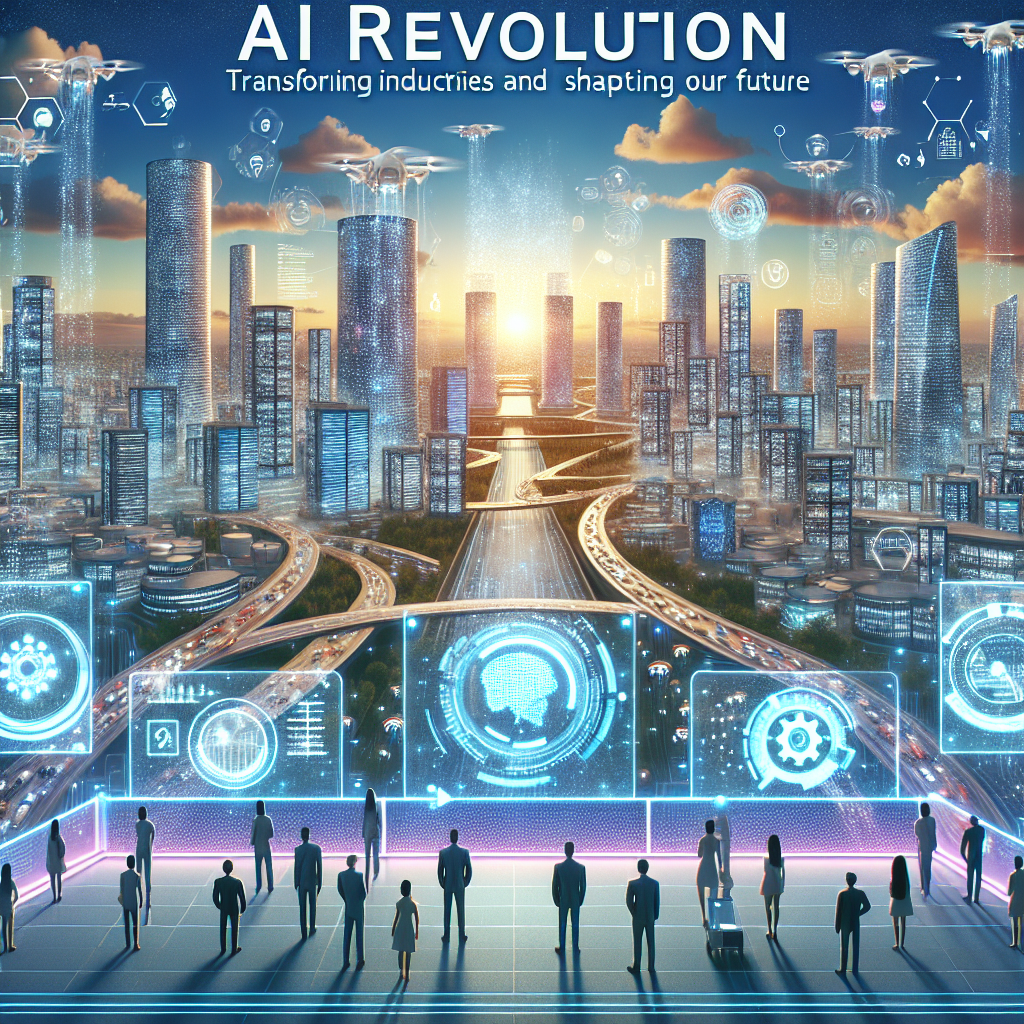
The AI revolution is not just a buzzword; it is a transformative force reshaping industries and predicting a bright yet challenging future. With artificial intelligence (AI) permeating every sector, from healthcare to finance, its impact touches every facet of our lives. This article delves into how AI is revolutionizing industries and what this means for the future.
Table of Contents
- Understanding Artificial Intelligence
- The Impact of AI on Various Industries
- 2.1 Healthcare
- 2.2 Finance
- 2.3 Manufacturing
- 2.4 Retail
- 2.5 Transportation
- Challenges of AI Implementation
- Future Trends in AI
- How Businesses Can Prepare for AI
- Conclusion
Understanding Artificial Intelligence
What is Artificial Intelligence?
Artificial intelligence refers to the simulation of human intelligence processes by machines, especially computer systems. These processes include learning (acquiring information and rules for using it), reasoning (using rules to reach approximate or definite conclusions), and self-correction. The core objective is to create systems that can perform tasks typically requiring human intelligence.
Types of AI
- Narrow AI: Designed to perform a narrow task (e.g., facial recognition or internet searches).
- General AI: Possesses cognitive abilities akin to a human; still largely theoretical.
- Superintelligent AI: An intellect that surpasses human capability; a topic of ethical debates and speculation.
The Impact of AI on Various Industries
Artificial intelligence is readily becoming a vital aspect across multiple sectors, fostering efficiency, improving decision-making, and enhancing innovation.
Healthcare
AI’s role in healthcare is monumental, introducing tools that enhance diagnostic accuracy, streamline patient care, and facilitate medical research.
Key Applications
- Predictive Analytics: AI algorithms analyze patient data to predict disease outbreaks and health risks.
- Image Recognition: Tools like IBM Watson Health utilize AI to analyze medical images and assist in diagnoses.
- Personalized Medicine: AI tailors treatments based on individual genetic profiles, improving outcomes.
Finance
In the financial sector, AI optimizes processes and enhances security. Algorithmic trading, risk assessments, and fraud detection are key areas benefiting from AI integration.
Key Applications
- Algorithmic Trading: AI systems analyze market conditions infinitely faster than human traders.
- Fraud Detection: Machine Learning (ML) algorithms identify anomalies in transaction patterns, reducing fraud rates significantly.
- Robo-Advisors: AI-driven investment platforms that provide personalized financial advice.
Manufacturing
The manufacturing sector is leveraging AI for automation and efficiency, significantly enhancing productivity.
Key Applications
- Predictive Maintenance: AI systems forecast equipment failures, minimizing downtime and saving costs.
- Quality Control: AI-driven devices monitor production lines to detect defects in real-time.
- Supply Chain Optimization: AI optimizes inventory levels and logistics for a more streamlined supply chain.
Retail
The retail space witnesses a revolution through AI by improving customer experience and operational efficiency.
Key Applications
- Personalized Shopping Experiences: AI analyzes customer data to provide tailored product recommendations.
- Inventory Management: AI-driven forecasts predict stock levels and trends.
- Chatbots: Customer service chatbots provide immediate support, enhancing customer satisfaction.
Transportation
AI’s influence on transportation extends from traffic management to autonomous vehicles, promising to revolutionize the industry.
Key Applications
- Autonomous Vehicles: AI drives vehicle technology toward full autonomy, promising safer transportation.
- Traffic Management: AI algorithms optimize traffic flow and minimize congestion through real-time data analysis.
- Route Optimization: AI systems calculate the fastest delivery routes for logistics companies.
Challenges of AI Implementation
Despite its numerous benefits, the implementation of AI comes with challenges:
- Data Privacy: AI systems rely on vast amounts of personal data, raising ethical concerns about user privacy.
- Job Displacement: AI may replace jobs, necessitating reskilling of the workforce for AI integration.
- Integration Complexity: Existing systems may resist integration, requiring substantial investments in new technologies.
Future Trends in AI
- Ethical AI: An increasing focus on creating ethical frameworks to guide AI development.
- Human-AI Collaboration: More emphasis on augmenting human capabilities rather than replacing them.
- Explainable AI (XAI): Development of AI systems that can explain their decision-making processes.
How Businesses Can Prepare for AI
- Invest in Training: Upskill employees to work effectively alongside AI technologies.
- Prioritize Cybersecurity: Safeguard sensitive data to build consumer trust.
- Stay Informed: Follow industry trends and adjust strategies accordingly to leverage new AI advancements.
Conclusion
The AI revolution is not just transforming industries; it is reshaping our future in profound ways. From healthcare to finance, its applications improve efficiencies and enhance decision-making processes. However, as we move forward, addressing the challenges surrounding data privacy, job displacement, and system integration will be crucial. As businesses prepare for this change, a collaborative approach between humans and AI will maximize its benefits for society.
This comprehensive exploration of how AI is transforming industries is just the beginning of understanding its impact. By staying informed and preparing for the changes AI will bring, we can embrace this revolution and shape a better future together.