Introduction
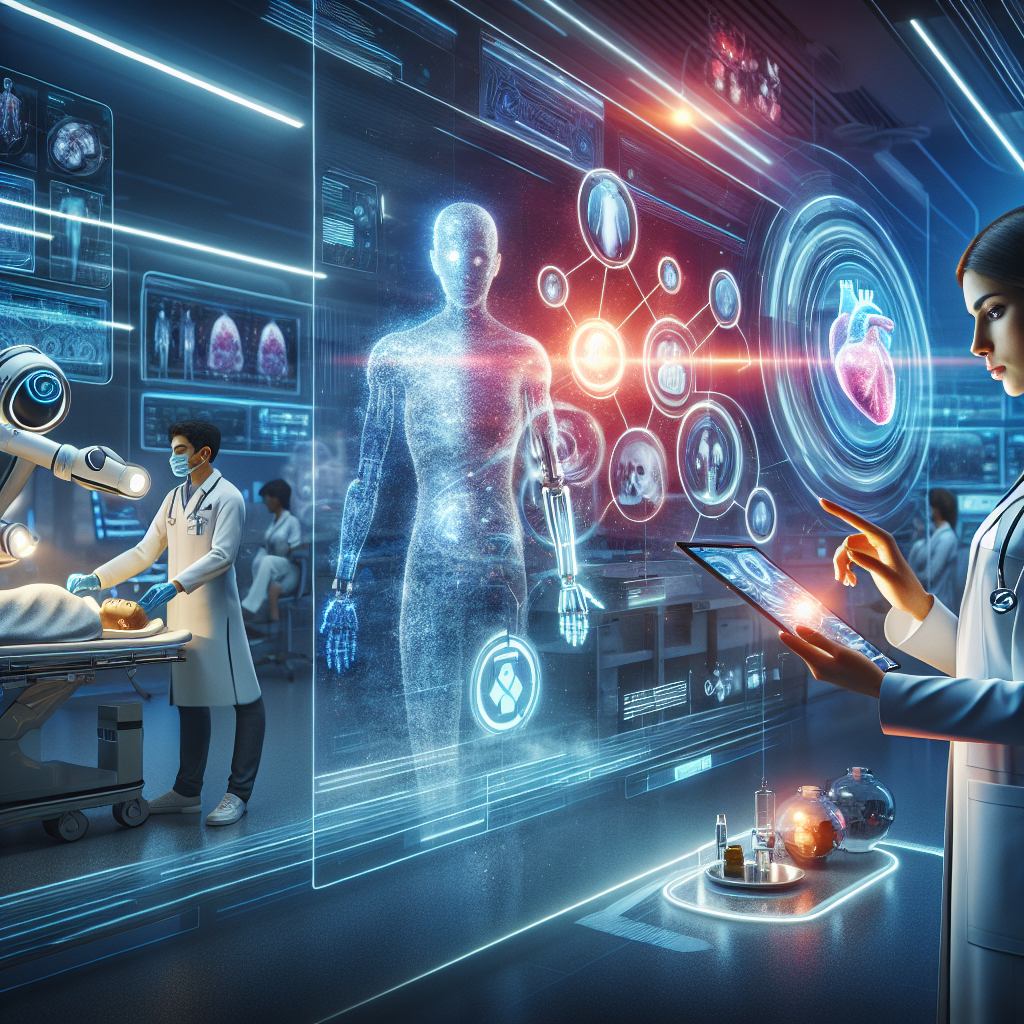
Artificial Intelligence (AI) is poised to revolutionize the healthcare industry, offering promising advancements in patient care and diagnosis. As technology continues to evolve, the integration of AI tools in healthcare is increasingly becoming a focal point for improved outcomes. This article delves deeply into how AI is transforming patient care, enhancing diagnostic accuracy, enhancing operational efficiency, and more.
The Emergence of AI in Healthcare
Understanding AI in Healthcare
AI refers to the simulation of human intelligence in machines programmed to think and learn. In healthcare, AI encompasses a variety of technologies including machine learning, natural language processing, and robotics. These components work together to process complex medical data, aiding healthcare professionals in making informed decisions.
Historical Context
The journey of AI in healthcare began in the early days with simple rule-based systems. However, with advancements in computational power and data availability, we have entered a new era. From IBM’s Watson to Google’s DeepMind, various technologies have showcased the potential of AI in diagnosing diseases and recommending treatments.
Enhancing Patient Care
Precision Medicine
AI has enabled the rise of precision medicine—an approach that tailors treatment to individual characteristics of each patient. By analyzing vast datasets, including genetic information, AI algorithms can predict how patients will respond to specific treatments, thereby minimizing the trial-and-error approach traditionally used in healthcare.
Patient Monitoring and Management
Wearable devices equipped with AI technologies are gaining traction, allowing real-time patient monitoring. These devices collect crucial health indicators like heart rate, glucose levels, and more. AI algorithms analyze this data to identify irregularities and alert healthcare providers, facilitating timely interventions.
Personalized Treatment Plans
Using AI, healthcare providers can develop personalized treatment plans based on a patient’s unique medical history, genetic information, and current health status. This is especially beneficial in chronic disease management, where tailored strategies can improve patient adherence and outcomes.
Transforming Diagnosis
AI in Medical Imaging
One of the most significant strides AI has made in healthcare is in the field of medical imaging. Algorithms trained on millions of images can detect abnormalities with remarkable accuracy. For instance, studies have shown that AI can identify tumors in mammograms more accurately than radiologists.
Case Studies
-
Stanford University: AI models developed here demonstrated a higher success rate in diagnosing skin cancer through dermatoscopic images.
-
Google Health: Successfully implemented an AI algorithm that outperformed human radiologists in breast cancer detection, showcasing the potential of AI in reducing false positives.
Natural Language Processing (NLP)
NLP enables machines to understand and process human language. In healthcare, it allows for the efficient extraction of vital information from unstructured data like clinical notes and research papers. This not only improves the accuracy of diagnosis but also streamlines clinical workflows.
Operational Efficiency in Healthcare Delivery
Streamlining Administrative Tasks
AI can significantly reduce the burden of administrative tasks such as appointment scheduling, billing, and claims processing. Automated systems can manage these tasks efficiently, allowing healthcare professionals to focus more on patient care.
Enhancing Clinical Decision Support Systems
AI-driven Clinical Decision Support Systems (CDSS) analyze data from various sources, providing healthcare professionals with evidence-based recommendations. This ensures better-informed decisions, leading to improved patient outcomes.
The Role of AI in Drug Discovery
Accelerating Drug Development
AI has the potential to revolutionize drug discovery by analyzing vast data sets to identify potential drug candidates more rapidly than traditional methods. By simulating how different compounds will interact with biological systems, AI can save time and reduce costs in the drug development process.
Success Stories
-
Atomwise: This AI startup uses deep learning to predict how molecules will interact, thereby speeding up the drug discovery process.
-
Insilico Medicine: Developed an AI model that successfully identified a new drug candidate for fibrosis, demonstrating AI’s capability in understanding complex biological processes.
Challenges and Limitations
Data Privacy and Security
As healthcare increasingly relies on AI, concerns regarding data privacy and security cannot be overlooked. Safeguarding patient data is paramount, and healthcare providers must ensure compliance with regulations like HIPAA (Health Insurance Portability and Accountability Act).
Integration with Existing Systems
Integrating AI technologies into existing healthcare systems presents significant challenges. Many healthcare facilities still operate on legacy systems that may not support AI implementation smoothly.
Ethical Considerations
The use of AI raises ethical questions around responsibility and accountability. Who is responsible if an AI system makes a mistake? Establishing ethical guidelines and frameworks is essential to address these concerns.
Future Prospects of AI in Healthcare
Ongoing Research and Development
Research is ongoing, focusing on enhancing the capabilities of AI in healthcare. As machine learning algorithms become more sophisticated, the accuracy of predictions and diagnoses will improve.
The Role of Human Interaction
While AI can augment patient care, it cannot replace the human touch. The future will likely see a hybrid model where AI supports healthcare providers, thus allowing them to spend more time on patient interaction and care.
Conclusion
AI in healthcare represents a paradigm shift in how we approach patient care and diagnosis. From enhancing operational efficiencies to personalizing treatment plans, AI is already making a substantial impact. However, it’s crucial to navigate the challenges that accompany this transformational technology thoughtfully. The future of healthcare holds exciting possibilities, and with responsible implementation, AI can truly revolutionize patient care.
Frequently Asked Questions (FAQs)
1. How is AI currently used in healthcare?
AI is used in various applications, including medical imaging, predictive analytics, patient monitoring, and personalized medicine.
2. What are the benefits of AI in patient care?
AI enhances diagnostic accuracy, personalizes treatment plans, and facilitates real-time monitoring.
3. Are there ethical concerns related to AI in healthcare?
Yes, concerns include data privacy, accountability in decision-making, and the potential for bias in algorithms.
4. How can AI improve drug discovery?
AI accelerates the drug discovery process by analyzing large data sets to predict drug interactions, thus identifying potential candidates more rapidly.
5. What is the future of AI in healthcare?
The future holds promises of increased accuracy in diagnostics, enhanced patient care models, and a focus on human interaction alongside technological advancements.
Related SEO Keywords
- AI healthcare technology
- Artificial intelligence in medicine
- AI diagnostic tools
- Machine learning in healthcare
- Patient care solutions AI
This article was crafted to provide an in-depth understanding of AI in healthcare while ensuring SEO optimization for better search visibility. Always remember that the integration of AI in healthcare should be pursued responsibly, ensuring ethical practices and patient safety are prioritized.