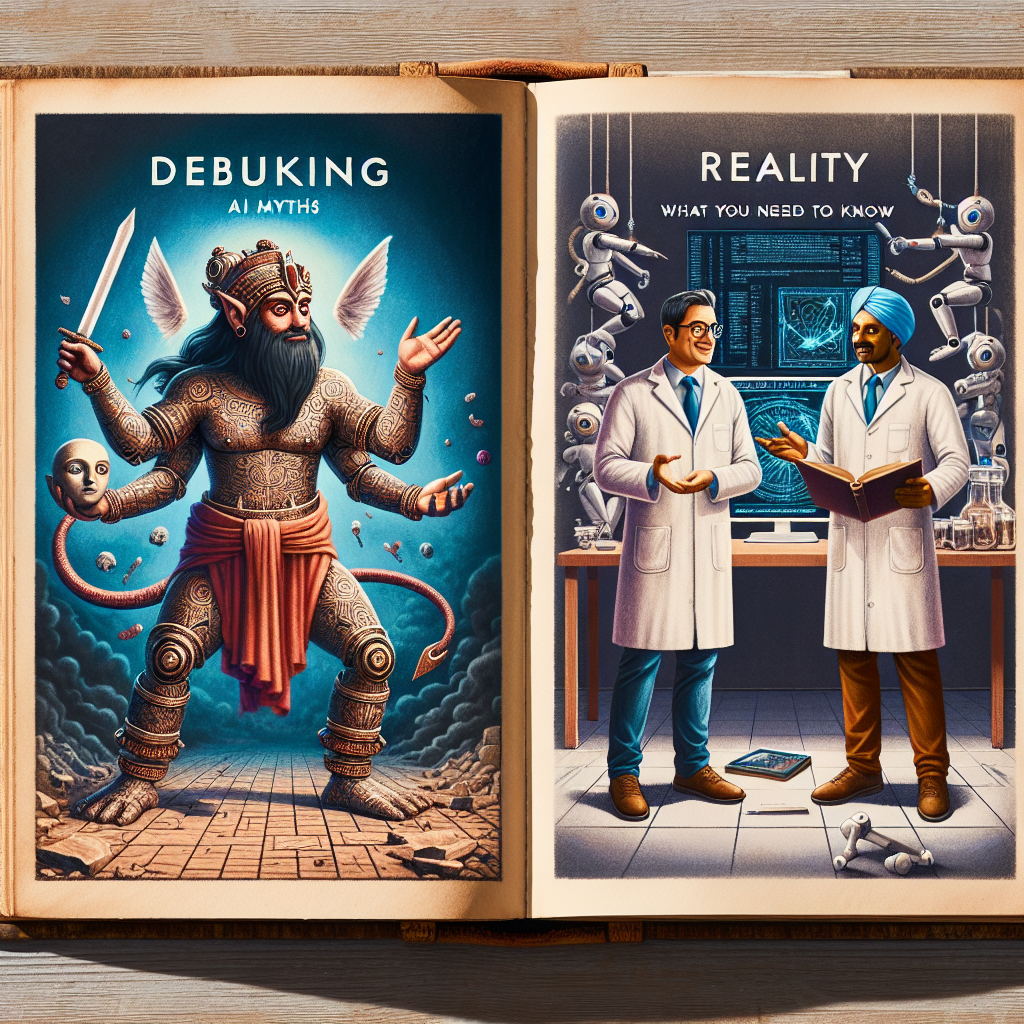
Artificial Intelligence (AI) has become one of the most captivating and contentious topics in technology today. As it continues to evolve, so too do the myths and misconceptions surrounding it. This article aims to debunk prevalent AI myths while providing a comprehensive understanding of what AI truly entails.
Table of Contents
- Introduction to AI
- Myth 1: AI Can Think Like a Human
- Myth 2: AI Will Replace All Jobs
- Myth 3: AI is Infallible
- Myth 4: AI Requires Huge Amounts of Data
- Myth 5: AI is Only for Big Companies
- Myth 6: AI Operates Independently
- Myth 7: AI Can’t Make Mistakes
- The Future of AI: What Lies Ahead
- Conclusion: Navigating the Truth About AI
1. Introduction to AI
Artificial Intelligence refers to computer systems that can perform tasks typically requiring human intelligence. These tasks include problem-solving, understanding language, recognizing patterns, and learning. The rise of AI has led to an explosion of capabilities and applications, but with this has come a plethora of misconceptions.
As industries increasingly integrate AI technologies, understanding the realities versus the myths becomes essential for businesses and individuals alike.
2. Myth 1: AI Can Think Like a Human
One of the most common myths surrounding AI is that it possesses human-like thinking capabilities. While AI can learn patterns and make decisions based on data, it does not have emotions, consciousness, or self-awareness.
H3: The Mechanism behind AI Decision-Making
AI operates through algorithms and machine learning techniques, where it analyzes data to identify patterns and make predictions. Unlike humans, AI’s decision-making process lacks intuition and emotional context, which are critical in true human thinking.
H3: The Reality of AI Intelligence
AI excels in specific areas, such as data processing and recognition tasks, but its “intelligence” is fundamentally quantitative, devoid of the qualitative aspects that human intelligence encompasses.
3. Myth 2: AI Will Replace All Jobs
The fear of job extinction due to AI has surged, leading many to believe that automation will render a vast number of jobs obsolete.
H3: The Job Evolution Perspective
While certain jobs may be automated, AI is likely to augment rather than wholly replace human labor. Historical technological advancements have shown that new technologies create new roles even as they eliminate others.
H3: Jobs That AI Cannot Replace
Many occupations requiring emotional intelligence, complex problem-solving, and creativity resist automation. Roles in healthcare, education, and creative arts rely on human attributes that AI cannot replicate, ensuring that these jobs remain vital.
4. Myth 3: AI is Infallible
It is a grave misconception that AI systems are infallible and can provide accurate results without bias or error.
H3: Understanding Bias in AI
AI systems learn from historical data, which may contain biases. If this data is not carefully managed, AI can perpetuate and even amplify these biases, leading to unjust outcomes in decision-making processes such as hiring or law enforcement.
H3: The Importance of Human Oversight
Human oversight remains crucial in validating AI outputs. Combining human intuition with AI capabilities can lead to more robust and equitable decision-making.
5. Myth 4: AI Requires Huge Amounts of Data
While data is essential for AI to function optimally, the belief that AI cannot operate with smaller datasets is a misconception.
H3: Small Data AI Solutions
Techniques such as transfer learning enable AI to apply knowledge from one context to another, reducing the amount of data required. AI can also employ strategies like data augmentation to make the most out of limited datasets.
H3: Practical Applications in Small Data Scenarios
Small businesses can leverage AI without vast databases. Tools like chatbots or customer interaction analysis can be implemented with minimal data, providing significant benefits.
6. Myth 5: AI is Only for Big Companies
Many believe that the resources and expertise needed for effective AI implementation are only available to large corporations.
H3: Accessibility of AI Tools
The landscape of AI has changed dramatically over the years. Many affordable tools and platforms offer scalable AI solutions for small and medium-sized enterprises (SMEs).
H3: Success Stories of Small Businesses
Numerous SMEs have successfully adopted AI technologies, enhancing customer service, optimizing inventory, and improving marketing strategies without needing the extensive budgets of larger firms.
7. Myth 6: AI Operates Independently
Another prevalent myth is that AI systems can function entirely independently without human intervention.
H3: The Collaborative Nature of AI
While AI can automate various tasks, it typically requires initial setup, human oversight, and periodic updates for optimal performance. Humans are crucial in defining the objectives and parameters of AI tasks.
H3: Importance of Continuous Monitoring
Ongoing monitoring and maintenance of AI systems ensure they adapt to changing conditions and remain effective in their designated roles, further emphasizing the need for human involvement.
8. Myth 7: AI Can’t Make Mistakes
Assuming that AI is error-free can lead to significant issues, especially in critical applications such as healthcare or autonomous driving.
H3: Understanding AI Limitations
AI systems may fail to recognize outlier cases or misinterpret data, leading to erroneous conclusions. Rigorous testing and validation processes are essential to mitigate risks associated with AI errors.
H3: Real-World Implications of AI Mistakes
Disregarding the potential for AI mistakes can have dire consequences, underscoring the importance of maintaining accountability and a thorough review process.
9. The Future of AI: What Lies Ahead
As we explore the future of AI technology, several trends point toward enhanced collaboration between humans and machines.
H3: Ethical Considerations in AI Development
The responsible development of AI will require ongoing dialogue about ethics, bias, and transparency. Implementing regulations and guidelines will help ensure technology serves the public good.
H3: The Integration of AI in Various Sectors
From healthcare to finance, AI will transform industries by improving efficiency and innovation. However, its integration must prioritize human welfare and ethical considerations.
10. Conclusion: Navigating the Truth About AI
With so much misinformation surrounding AI, it is crucial for individuals and organizations to have a clear understanding of what AI can and cannot do.
By debunking prevalent myths, we can cultivate a more informed conversation about the potential and limitations of AI technologies. As we move forward, balancing innovation with ethical considerations will be essential in harnessing AI’s capabilities for beneficial outcomes.
Keywords for SEO:
- Artificial Intelligence
- AI Myths
- Machine Learning
- AI in Business
- Data in AI
- AI Ethics
- Future of AI
By using relevant keywords throughout the content and ensuring structured readability with headings, this article seeks to engage readers and enhance search engine visibility.
Ensure that the content is regularly updated to reflect the fast-evolving nature of AI technology, keeping readers informed and engaged.