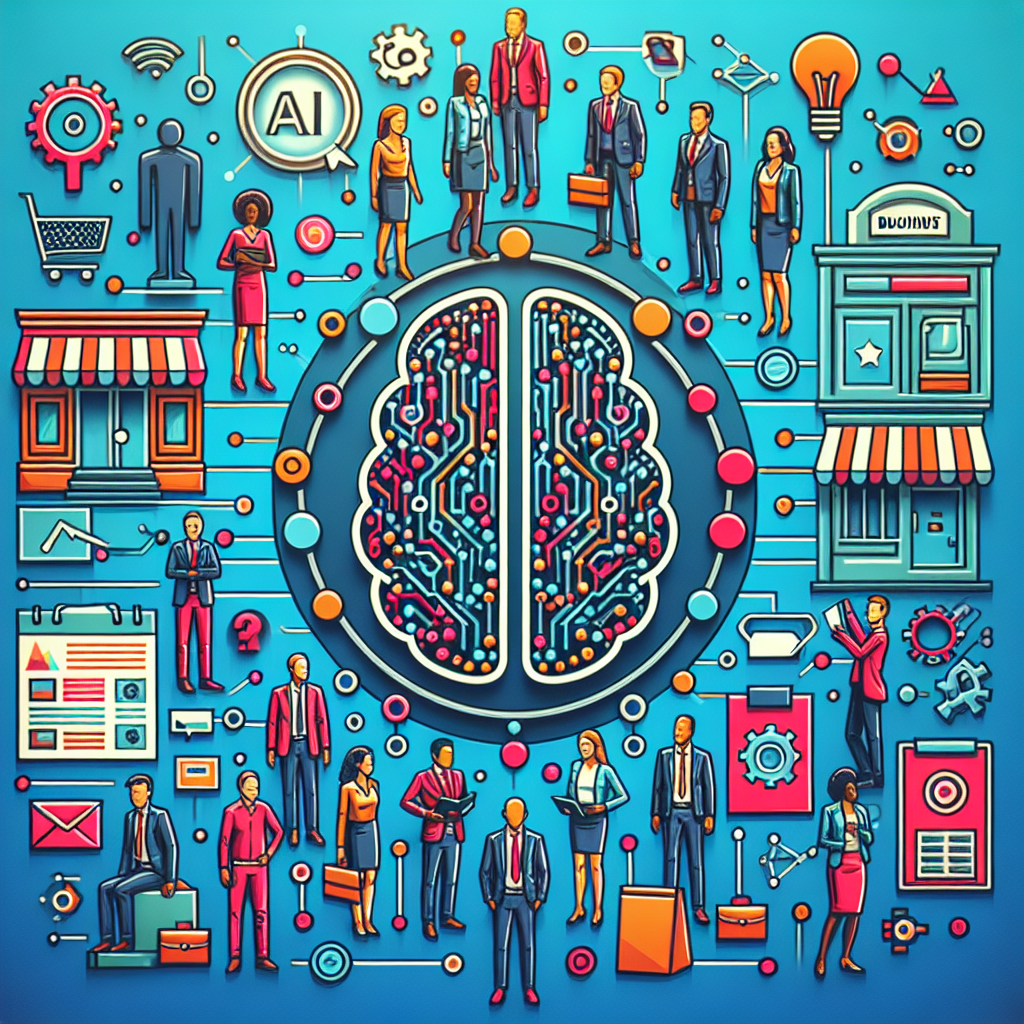
As technology evolves, Artificial Intelligence (AI) has emerged as a game-changer for small businesses. Leveraging AI can streamline operations, enhance customer engagement, and significantly improve decision-making. This guide aims to demystify AI integration, providing small business owners with the necessary tools and techniques to incorporate AI into their operations efficiently.
Table of Contents
- Understanding AI and Its Benefits
- Key Areas Where AI Can Help Small Businesses
- Steps to Integrate AI into Your Business
- 3.1 Identify Opportunities
- 3.2 Choose the Right Tools
- 3.3 Start Small and Scale
- 3.4 Training and Support
- AI Tools for Small Businesses
- 4.1 Chatbots
- 4.2 Email Marketing Automation
- 4.3 Data Analytics Tools
- Challenges of AI Integration and How to Overcome Them
- Future Trends in AI for Small Businesses
- Conclusion
Understanding AI and Its Benefits
Artificial Intelligence refers to systems that can perform tasks typically requiring human intelligence. These tasks include learning, reasoning, problem-solving, and understanding natural language. For small businesses, the integration of AI can lower costs, enhance efficiencies, and create competitive advantages.
Benefits of AI for Small Businesses
- Cost Efficiency: Automating repetitive tasks reduces labor costs.
- Enhanced Customer Experience: Personalized interactions based on customer data improve satisfaction.
- Informed Decision-Making: AI offers data-driven insights, promoting better business strategies.
Key Areas Where AI Can Help Small Businesses
Customer Service
AI enhances customer service through chatbots and virtual assistants, offering 24/7 support and instant responses to inquiries.
Marketing Automation
AI-driven tools help automate marketing campaigns, optimize ad placements, and analyze customer behavior for better targeting.
Data Analysis and Insights
AI algorithms can sift through vast amounts of data to identify trends and patterns that inform business strategies.
Steps to Integrate AI into Your Business
Identify Opportunities
Assess your current business processes to identify areas where AI could drive efficiency. Consider customer service interactions, marketing efforts, and inventory management.
Choose the Right Tools
Selecting the right AI tools is crucial. Research various platforms and their functionalities. Look for user-friendly solutions that align with your business goals.
Start Small and Scale
Begin with a pilot project before wide-scale implementation. This minimizes risk and allows for adjustments based on initial performance.
Training and Support
Ensure that your team receives adequate training. Familiarity with new tools is essential for successful adoption.
AI Tools for Small Businesses
Chatbots
Implementing chatbots can provide customers with instant assistance, reducing wait times and improving satisfaction rates. Tools like Zendesk and Drift are user-friendly options.
Email Marketing Automation
AI-driven platforms like Mailchimp and Sendinblue can personalize email campaigns, improving engagement rates and customer retention.
Data Analytics Tools
Utilize data analytics tools like Google Analytics and Tableau to uncover valuable insights about customer preferences and behaviors.
Challenges of AI Integration and How to Overcome Them
While the benefits are significant, integrating AI also poses challenges, including:
- Cost: Initial investments may be high. Overcome this by starting small and scaling.
- Resistance to Change: Employees may resist new technologies. Foster a culture of innovation to alleviate concerns.
- Data Privacy Concerns: Ensure compliance with data protection regulations like GDPR.
Future Trends in AI for Small Businesses
As technology evolves, the future of AI promises even more advancements. Expect improvements in areas like predictive analytics, AI-driven customer service tools, and enhanced personalization.
Predictive Analytics
These tools will help small businesses anticipate customer needs based on past behaviors, allowing for proactive marketing strategies.
Enhanced AI-driven Customer Service
Expect more sophisticated chatbots capable of handling complex queries and providing advanced support.
Conclusion
Integrating AI into your small business is no longer an option but a necessity for those looking to thrive in today’s competitive landscape. By understanding the benefits of AI, identifying opportunities for integration, and choosing the right tools, small business owners can harness the power of AI to drive efficiency, enhance customer experiences, and stay ahead of the competition.
Embrace the future—start integrating AI today!
For more insights, tips, and updates on AI and technology for small businesses, subscribe to our newsletter or follow our blog. Your successful transition to AI-driven strategies begins here!
This article is optimized for SEO with relevant keywords naturally integrated throughout the text. It adheres to Google AdSense’s content policies, ensuring it’s suitable for publication and monetization.