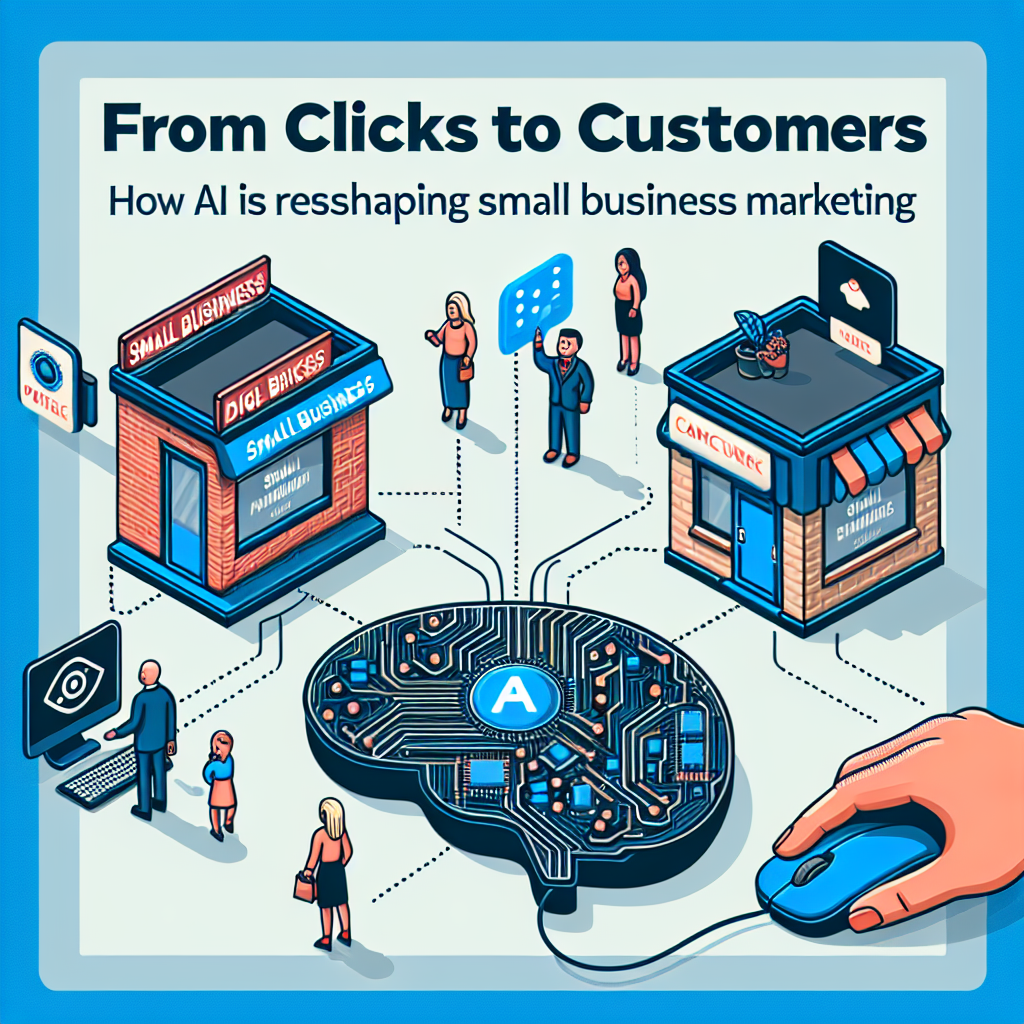
In the digital era, small businesses face both unprecedented opportunities and challenges. With the increasing prevalence of online shopping, understanding how to convert web traffic into loyal customers is essential. One of the most noteworthy advances in this domain is Artificial Intelligence (AI), which is transforming small business marketing strategies. This article delves into how AI is reshaping the landscape, offering insights on effective utilization and future possibilities.
Table of Contents
- Introduction
- Understanding AI in Marketing
- 2.1 What is AI?
- 2.2 Benefits of AI for Small Businesses
- Enhancing Customer Engagement with AI
- 3.1 Chatbots and Virtual Assistants
- 3.2 Personalized Marketing Strategies
- Data Analytics: Turning Insights into Action
- 4.1 Predictive Analytics
- 4.2 Customer Segmentation
- Streamlining Operations with AI
- 5.1 Automated Content Creation
- 5.2 Inventory Management
- AI Tools for Small Business Marketing
- 6.1 Email Marketing
- 6.2 Social Media Management
- Challenges and Considerations
- 7.1 Data Privacy Concerns
- 7.2 Implementation Challenges
- The Future of AI in Small Business Marketing
- Conclusion
Introduction
In a world where consumer choices multiply by the day, small businesses must evolve to maintain relevance. Traditional marketing techniques are giving way to data-driven strategies that leverage technology for effectiveness. AI stands at the forefront of this evolution, enabling small businesses to optimize their marketing efforts, enhance customer experiences, and ultimately, convert clicks into loyal customers.
Understanding AI in Marketing
What is AI?
Artificial Intelligence refers to the simulation of human intelligence in machines programmed to think and learn. In marketing, AI encompasses various technologies, including machine learning, natural language processing, and robotics, to analyze data and predict consumer behavior.
Benefits of AI for Small Businesses
- Efficiency: Automates repetitive tasks, freeing up valuable human resources.
- Cost-Effective: Reduces marketing costs by targeting more accurately.
- Scalability: Adapts to the growing needs of a business, whether in data handling or customer interaction.
- Customer Insights: Gathers deep insights into buying patterns, preferences, and behaviors.
Enhancing Customer Engagement with AI
Chatbots and Virtual Assistants
Chatbots have revolutionized customer service by offering immediate assistance and support. Available 24/7, they can handle frequently asked questions, book appointments, and guide customers through the sales process. By integrating chatbots on websites, small businesses can enhance user experience, minimize drop-offs, and convert clicks into customers.
Personalized Marketing Strategies
AI can analyze a consumer’s browsing history, past purchases, and online behavior to create a tailored marketing strategy. Personalized emails and targeted advertisements are more likely to attract customers when they resonate with individual needs and preferences. Getting to know your customers is the essence of converting clicks into lasting relationships.
Data Analytics: Turning Insights into Action
Predictive Analytics
Predictive analytics employs AI to forecast consumer behavior based on historical data. By understanding trends and predicting future actions, small businesses can make informed decisions about inventory, staffing, and marketing strategies. This proactive approach not only saves resources but also enhances customer satisfaction, leading to higher conversion rates.
Customer Segmentation
AI enables small businesses to segment customers based on demographics, preferences, and behaviors. This segmentation allows for targeted campaigns that speak directly to each segment’s unique characteristics, improving engagement and driving conversion rates.
Streamlining Operations with AI
Automated Content Creation
Creating quality content consistently can be daunting for small businesses. AI-powered tools can generate blog posts, social media updates, and even product descriptions efficiently. By automating content creation, businesses can ensure a steady stream of relevant content that keeps their audience engaged.
Inventory Management
AI tools can analyze sales data in real-time, helping small businesses optimize inventory levels. By predicting demand and automating reorder processes, businesses can reduce excess inventory and ensure they have products available when customers are ready to buy.
AI Tools for Small Business Marketing
Email Marketing
Tools like Mailchimp and HubSpot leverage AI to optimize email marketing campaigns. They can suggest the best times to send emails and segment audiences effectively, resulting in higher open and click-through rates.
Social Media Management
Platforms like Hootsuite and Buffer utilize AI algorithms to analyze engagement data, helping businesses determine which posts perform best and when to share content for maximum exposure. This allows small businesses to streamline their social media marketing strategies and focus on building customer relationships.
Challenges and Considerations
Data Privacy Concerns
As businesses collect data to enhance customer experiences, ensuring data privacy and compliance with regulations is critical. Small businesses must educate themselves on data protection laws such as GDPR and CCPA to avoid legal penalties and maintain customer trust.
Implementation Challenges
Adopting AI technologies may require initial investments in skills, training, and infrastructure. Small businesses must weigh these costs against the potential long-term benefits to ensure a smooth transition.
The Future of AI in Small Business Marketing
As technology continues to advance, AI will only grow more integral to small business marketing. Upcoming trends include enhanced voice search optimization, advanced personalization techniques, and AI-driven visual content creation. Additionally, as AI continues to evolve, small businesses that adapt quickly can expect to see significant benefits in their marketing efforts and overall customer engagement.
Conclusion
From enhancing customer engagement through chatbots to leveraging data analytics for informed decision-making, AI is clearly reshaping small business marketing. By embracing these technologies, small businesses can not only reach their target audience more effectively but also foster loyal customer relationships. As the digital landscape continues to advance, the interplay between AI and marketing will only intensify, making it essential for small businesses to stay ahead of the curve. As a result, it is no longer just about reaching clicks – it’s about converting those clicks into lifelong customers.