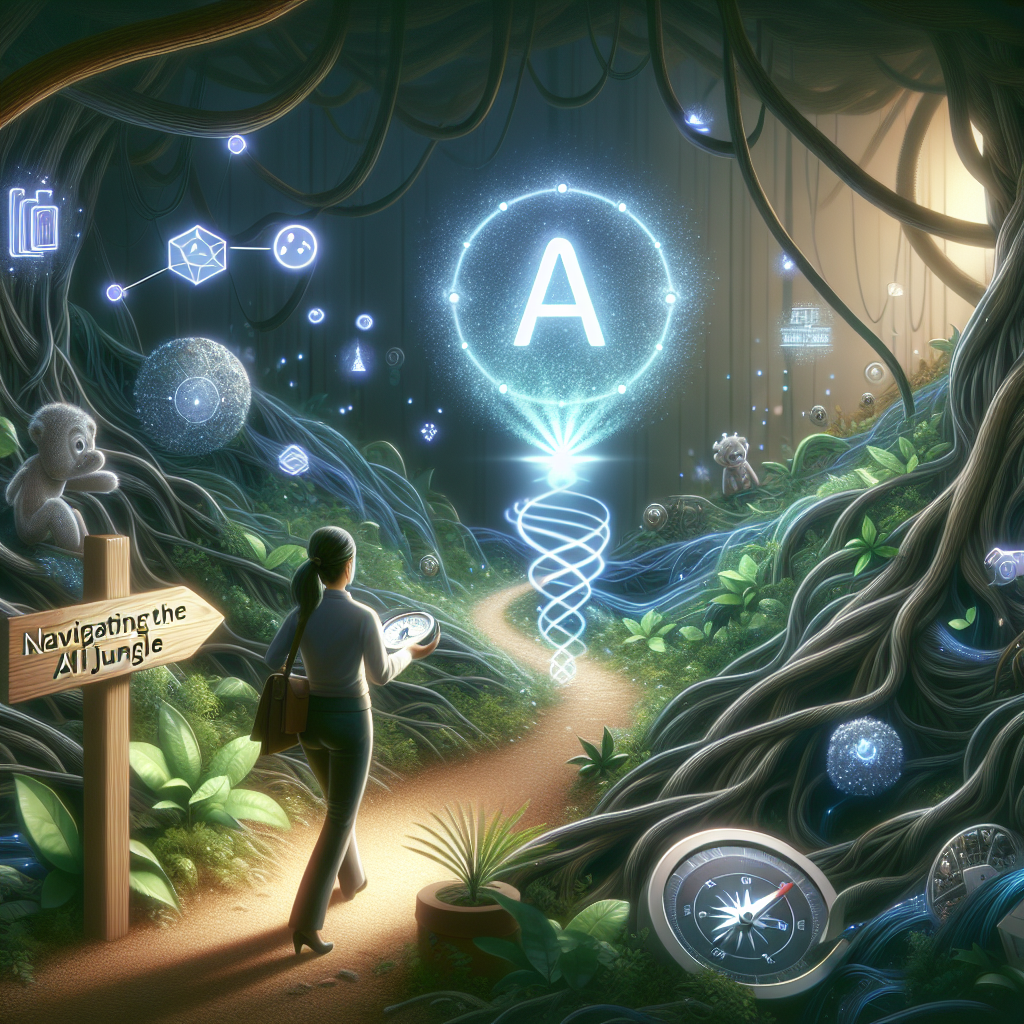
The world of artificial intelligence (AI) has transitioned from being a futuristic concept to an integral part of everyday business operations. For small business owners, the AI landscape can be daunting. However, understanding and leveraging AI tools can significantly enhance productivity, customer engagement, and overall growth. In this comprehensive guide, we’ll demystify AI for small business owners, covering its various applications, benefits, and how to implement AI strategies effectively.
Table of Contents
- Introduction to AI in Small Business
- Understanding AI: The Basics
- Benefits of AI for Small Businesses
- Key AI Applications for Small Businesses
- Customer Service Automation
- Data Analysis and Insights
- Personalized Marketing
- Inventory and Supply Chain Management
- How to Choose the Right AI Tools
- Implementing AI in Your Business
- Step 1: Define Your Objectives
- Step 2: Evaluate Available Tools
- Step 3: Train Your Team
- Step 4: Monitor and Optimize
- Overcoming Challenges in AI Adoption
- Future Trends in AI for Small Businesses
- Conclusion
Introduction to AI in Small Business
Artificial intelligence is rapidly transforming the way businesses operate. From automating mundane tasks to offering strategic insights, AI can be a game-changer for small businesses. However, the plethora of options available can lead to confusion and hesitation. This guide aims to provide a clear pathway for small business owners to navigate the AI jungle effectively.
Understanding AI: The Basics
At its core, artificial intelligence refers to the simulation of human intelligence processes by machines, particularly computer systems. These processes include learning (the acquisition of information and rules), reasoning (using the rules to reach approximate or definite conclusions), and self-correction.
Types of AI
-
Narrow AI: Designed for specific tasks, Narrow AI is the most common form of AI today (e.g., chatbots).
-
General AI: This form of AI would exhibit human-level intelligence across a broad range of tasks. Although it is largely theoretical at this point, it exemplifies the future potential of AI.
Benefits of AI for Small Businesses
-
Cost Efficiency: AI can streamline operations, reducing labor costs and increasing efficiency.
-
Enhanced Customer Experience: With AI tools, businesses can tailor customer interactions, leading to improved loyalty and satisfaction.
-
Data-Driven Decision Making: AI can gather and analyze data, providing insights that help business owners make informed decisions.
-
Scalability: AI solutions enable small businesses to scale their operations without a proportional increase in operational costs.
Key AI Applications for Small Businesses
Customer Service Automation
AI-driven chatbots can handle customer inquiries round the clock, providing instant responses and freeing up human resources for complex issues. This not only improves response times but also enhances customer satisfaction.
Data Analysis and Insights
AI tools can analyze vast datasets to uncover trends and insights that would be challenging for humans to identify. This can guide product development, marketing strategies, and customer relationship management.
Personalized Marketing
AI algorithms can process customer data to create personalized marketing campaigns. By analyzing purchasing behavior, AI can tailor offers and content to individual preferences, increasing conversion rates.
Inventory and Supply Chain Management
AI can optimize inventory levels, predict stock shortages, and manage supplier relations, leading to reduced waste and improved operational efficiency. This is crucial for small businesses looking to manage their resources effectively.
How to Choose the Right AI Tools
Assess Your Needs
Evaluate your business’s specific needs. Determine which tasks are time-consuming and could benefit from automation.
Research Available Solutions
Not all AI tools are created equal. Consider factors such as price, functionality, scalability, and support. Look for reviews and case studies relevant to your industry.
Start Small
Implement AI solutions gradually. Start with one tool and evaluate its impact before expanding your use of AI across various functions.
Implementing AI in Your Business
Step 1: Define Your Objectives
Clearly outline what you want to achieve with AI. This could range from enhancing customer engagement to improving sales forecasting.
Step 2: Evaluate Available Tools
With your objectives in mind, evaluate different AI tools that align with your goals. Consider solutions that integrate well with your existing systems for a seamless transition.
Step 3: Train Your Team
Once you have chosen an AI tool, ensure that your team is adequately trained. Understanding how to utilize these tools effectively is crucial for maximizing their benefits.
Step 4: Monitor and Optimize
After implementation, regularly monitor the performance of your AI solutions. Use analytics to gauge effectiveness and make adjustments as needed.
Overcoming Challenges in AI Adoption
-
Budget Constraints: AI solutions can vary widely in cost. Seek tools that offer scalable solutions and ROI analysis.
-
Resistance to Change: Employees might be hesitant to adopt new technologies. Foster a culture of innovation and provide training to ease the transition.
-
Data Privacy Concerns: Ensure compliance with all data protection regulations. Transparency with customers about how their data is used can build trust.
Future Trends in AI for Small Businesses
The future of AI in small business is promising. Expect advancements in natural language processing, predictive analytics, and machine learning to become integral in everyday operations. Furthermore, as AI technology becomes more accessible, more small businesses will begin to harness its potential.
Conclusion
Navigating the AI jungle may seem overwhelming, but with the right knowledge and strategies, small business owners can leverage AI to their advantage. By understanding its benefits, identifying appropriate applications, and implementing AI thoughtfully, you can elevate your business to new heights. Embrace the future—AI is no longer a luxury, but a necessity for growth and competitiveness.