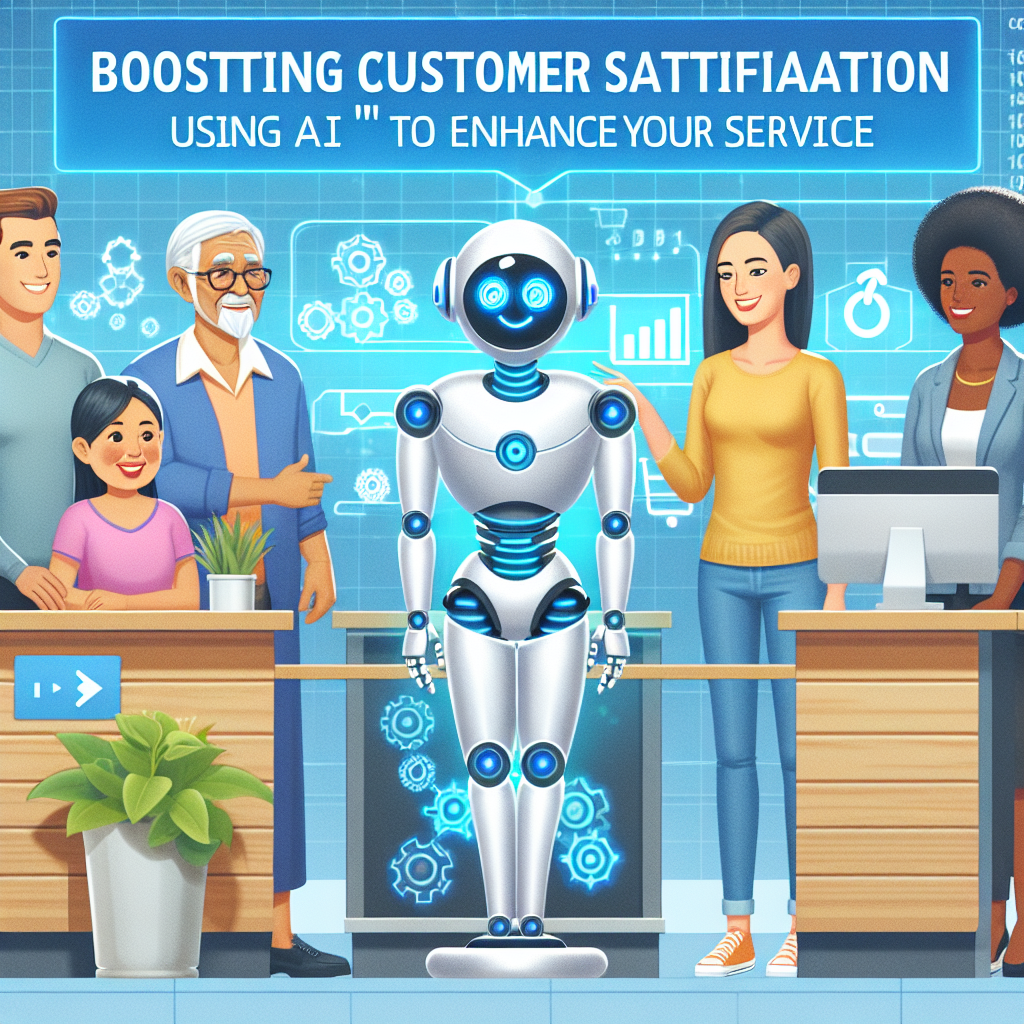
In today’s competitive business landscape, customer satisfaction stands as a pivotal element for success. With a surge in digital transformation, integrating Artificial Intelligence (AI) into customer service strategies has become essential. This article delves into how businesses can leverage AI technologies to enhance service delivery and improve customer satisfaction metrics, ultimately leading to brand loyalty and increased revenue.
Table of Contents
- Introduction
- Understanding Customer Satisfaction
- 2.1. What is Customer Satisfaction?
- 2.2. Why is Customer Satisfaction Important?
- The Role of AI in Customer Service
- 3.1. Types of AI Technologies in Use
- 3.2. How AI Transforms Customer Interactions
- Enhancing Customer Experience with AI
- 4.1. Personalized Customer Engagement
- 4.2. Chatbots and Virtual Assistants
- 4.3. Predictive Analytics
- Challenges and Considerations
- 5.1. Limitations of AI
- 5.2. Ethical Concerns and Customer Trust
- Best Practices for Implementing AI in Customer Service
- Case Studies: Successful AI Integration
- Conclusion
- FAQs
Introduction
The modern consumer is more informed than ever, and their expectations continue to rise. In this fast-paced environment, businesses are challenged to meet and exceed these expectations. Quick and efficient customer service has become a critical factor in creating a positive customer experience. With AI’s capabilities, organizations can harness data and predictive analytics to provide timely support, anticipate customer needs, and ultimately boost satisfaction.
Understanding Customer Satisfaction
2.1. What is Customer Satisfaction?
Customer satisfaction is a measure of how products and services provided by a company meet or surpass customer expectations. It encompasses several dimensions, including service quality, product quality, value for money, and overall experience with the brand.
2.2. Why is Customer Satisfaction Important?
Customer satisfaction is crucial for multiple reasons:
- Loyalty and Retention: Satisfied customers are more likely to return and make repeat purchases.
- Referral Generation: Customers who are happy with a service are likely to recommend it to others.
- Financial Performance: Higher customer satisfaction typically correlates with increased revenue.
The Role of AI in Customer Service
3.1. Types of AI Technologies in Use
AI technologies that enhance customer service include:
- Chatbots: Automated programs that provide instant responses to customer inquiries.
- Natural Language Processing (NLP): Enhances interaction between humans and machines through understanding language context and sentiment.
- Machine Learning: Enables systems to learn from customer interactions and improve over time.
3.2. How AI Transforms Customer Interactions
AI transforms customer interactions by providing quicker responses, personalized experiences, and the ability to manage large volumes of inquiries. By analyzing data from past interactions, AI can identify trends and predict future customer behavior, allowing businesses to tailor their services accordingly.
Enhancing Customer Experience with AI
4.1. Personalized Customer Engagement
Personalization is key to customer satisfaction. AI can analyze customer data to create personalized recommendations, messages, and services. Brands like Netflix and Amazon exemplify how individualized content can enhance user experience and satisfaction.
4.2. Chatbots and Virtual Assistants
Chatbots can handle common queries quickly and efficiently, ensuring that customers receive immediate assistance. For example, companies like Sephora have successfully implemented chatbots for consultation and appointment scheduling, reducing wait times and improving service quality.
4.3. Predictive Analytics
Predictive analytics allows businesses to foresee customer needs. By analyzing past purchase behavior and engagement patterns, AI can suggest products at optimal times, thereby enhancing the customer experience and increasing sales.
Challenges and Considerations
5.1. Limitations of AI
While AI offers numerous advantages, it also has limitations:
- Understanding Complex Queries: AI may struggle with nuanced questions or customer frustrations that require empathy.
- Dependence on Data Quality: AI performance is contingent upon the quality of data it receives. Poor data can lead to inaccurate predictions and responses.
5.2. Ethical Concerns and Customer Trust
Integrating AI raises ethical concerns around data privacy and security. Companies must ensure that customer data is handled with care and transparency to avoid undermining customer trust.
Best Practices for Implementing AI in Customer Service
- Start Small: Initiate with one or two AI solutions and assess their impact.
- Focus on Customer Needs: Ensure that the AI serves to enhance customer experiences rather than complicate them.
- Maintain Human Oversight: Provide customers with an easy way to transition to human agents for complex inquiries.
- Regularly Update the AI: Continuous learning and updates are critical for maintaining relevance and accuracy.
Case Studies: Successful AI Integration
Case Study 1: Starbucks
Starbucks employs an AI-driven platform called “Deep Brew,” which personalizes customer recommendations through its mobile app, enhancing customer engagement and satisfaction.
Case Study 2: H&M
H&M uses AI to optimize inventory management and personalize marketing content. By analyzing customer data, the company can provide tailored recommendations across various channels.
Conclusion
In an era where consumer expectations are continually evolving, incorporating AI into customer service is no longer optional but a necessity. Businesses that leverage AI to improve customer interactions will find themselves at a significant advantage, earning loyalty and fostering long-term relationships.
FAQs
1. What are the main benefits of using AI in customer service?
AI offers faster response times, personalized experiences, and the ability to analyze large volumes of data to predict customer needs.
2. What are the challenges associated with AI in customer service?
Challenges include understanding complex customer queries, reliance on data quality, and ethical concerns around data privacy.
3. How can businesses implement AI solutions effectively?
Start with small-scale implementations, focus on customer needs, maintain human oversight, and ensure regular updates.
4. Can AI completely replace human customer service agents?
While AI can handle many tasks, human agents still play a vital role in managing complex inquiries and providing empathy.
5. How does AI improve customer satisfaction?
By delivering quicker responses, personalized service, and anticipatory support, AI enhances the overall customer experience.
This article provides a comprehensive overview of how AI can boost customer satisfaction. By embracing these technologies while balancing ethical concerns and customer engagement, businesses can thrive in an increasingly competitive environment.