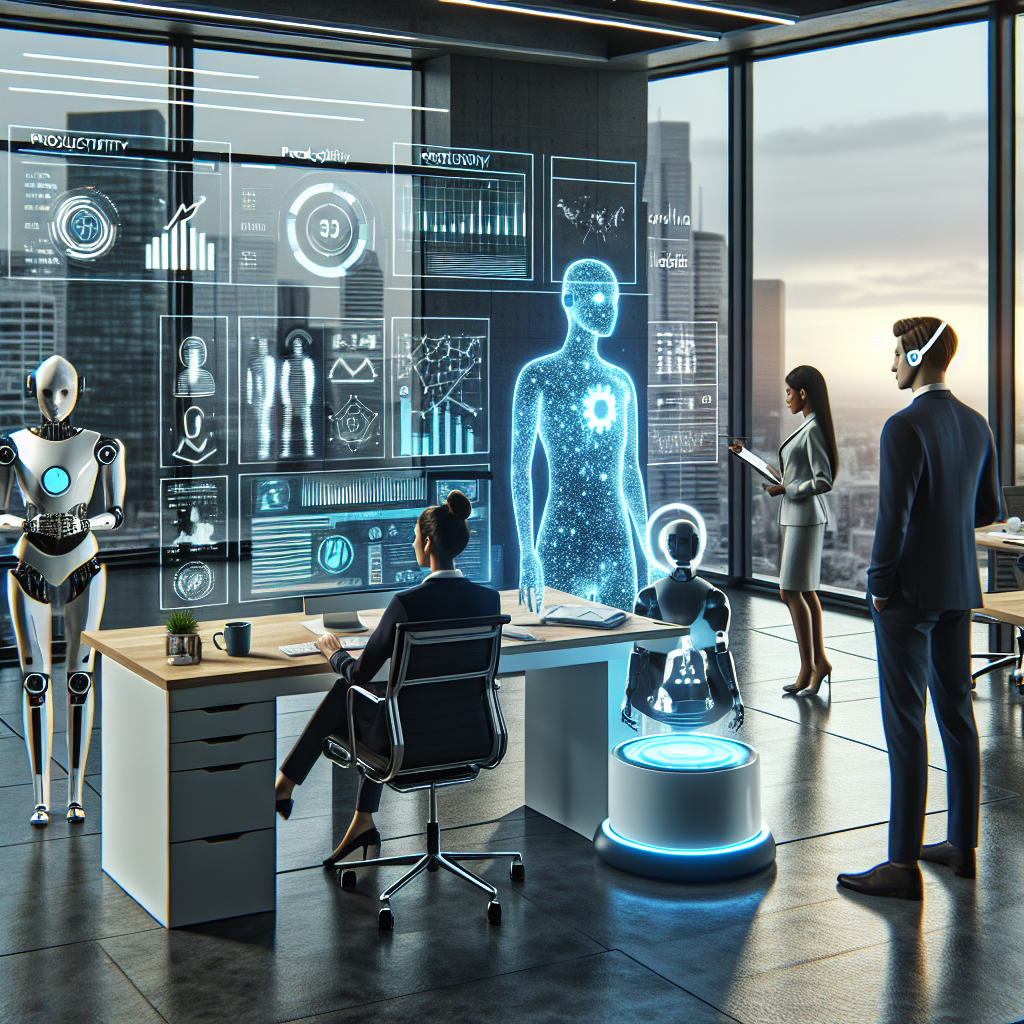
In today’s fast-paced business world, the need for increased productivity has never been more pressing. With the rapid advancements in technology, organizations are leveraging artificial intelligence (AI) to streamline operations and boost efficiency. This article explores the top AI solutions that can transform your office environment, enhance employee output, and ultimately drive success.
Table of Contents
- Understanding AI in the Workplace
- Benefits of AI Solutions for Increased Productivity
- Top AI Solutions for Office Productivity
- 3.1 AI-powered Communication Tools
- 3.2 Project Management and Automation Software
- 3.3 Virtual Assistants and Chatbots
- 3.4 Data Analytics and Decision Support Systems
- 3.5 Employee Monitoring and Performance Tracking Tools
- Implementing AI in Your Office
- Challenges and Considerations
- The Future of AI in the Workplace
- Conclusion
Understanding AI in the Workplace
Artificial Intelligence refers to the simulation of human intelligence in machines designed to think and act like humans. In the workplace, AI encompasses various technologies such as machine learning, natural language processing, and robotics. The integration of AI solutions can significantly enhance productivity by automating mundane tasks, facilitating communication, and providing insights that help organizations make informed decisions.
Benefits of AI Solutions for Increased Productivity
The benefits of incorporating AI solutions in the office are manifold:
- Time Efficiency: AI automates repetitive tasks, allowing employees to focus on higher-value activities.
- Enhanced Decision Making: With AI’s data-processing capabilities, businesses can make quicker, smarter decisions.
- Cost Reduction: Automating processes can lead to significant savings in labor costs and operational expenses.
- Improved Collaboration: AI tools facilitate seamless communication among team members, breaking down silos.
- Predictive Insights: AI can analyze trends and patterns, giving organizations the foresight to strategize effectively.
Top AI Solutions for Office Productivity
3.1 AI-powered Communication Tools
Effective communication is crucial in any workplace. AI-powered tools can enhance collaboration and information sharing among team members.
- Google Workspace: Features like Smart Compose and Assistive Tools utilize AI to improve email writing and scheduling meetings, saving time and enhancing productivity.
- Slack: With AI-driven integrations, Slack can prioritize messages, automate responses, and even analyze communication patterns to improve teamwork.
3.2 Project Management and Automation Software
Project management software infused with AI can transform the way tasks are organized and executed.
- Asana: Its AI capabilities help in task prioritization, workload management, and deadline adherence, ensuring that projects are completed efficiently.
- Trello: Integrating automation tools like Butler can streamline processes, sending reminders and automatically moving cards based on specified triggers.
3.3 Virtual Assistants and Chatbots
Virtual assistants and chatbots can handle a variety of tasks, from scheduling meetings to answering frequently asked questions.
- Microsoft Cortana: This assistant can help manage calendars, set reminders, and even conduct web searches, enhancing productivity through organization.
- Drift: Used extensively in customer service, Drift’s chatbot capabilities can handle inquiries, freeing human agents for more complex tasks.
3.4 Data Analytics and Decision Support Systems
AI-driven analytics tools help organizations gain insights from vast amounts of data, improving decision-making and strategic planning.
- Tableau: This powerful data visualization tool uses AI to generate insights and forecast trends, enabling organizations to make data-driven decisions.
- IBM Watson Analytics: It provides predictive analytics and natural language processing capabilities, allowing users to create visual reports and models with ease.
3.5 Employee Monitoring and Performance Tracking Tools
AI can help organizations track productivity and performance, providing insights for better employee engagement.
- Time Doctor: This tool monitors employee activity, offering insights into time management and productivity levels, enabling more focused work environments.
- Toggl: With its time tracking features and reporting capabilities, Toggl allows employees to understand where their time is spent, ultimately helping to enhance productivity.
Implementing AI in Your Office
Implementing AI solutions requires a strategic approach. Here are steps to consider:
- Assess Needs: Identify areas where AI could fill gaps or enhance existing processes.
- Research Solutions: Explore different AI tools available in the market to find the best fit for your needs.
- Pilot Programs: Initiate pilot programs to gauge effectiveness, allowing for adjustments before full-scale implementation.
- Training: Develop a comprehensive training program for employees to familiarize them with the new systems and tools.
- Feedback Mechanism: Implement a feedback loop to continuously assess the impact of AI solutions on productivity.
Challenges and Considerations
While the benefits of AI are significant, there are challenges to consider:
- Resistance to Change: Employees may be resistant to adopting new technologies. Change management strategies are essential to ease transitions.
- Data Security: With AI solutions often requiring vast amounts of data, ensuring data privacy and security is paramount.
- Dependence on Technology: Organizations may become overly reliant on AI, risking a lack of critical human judgment in decision-making processes.
- Costs of Implementation: While AI can save costs in the long run, the initial investment can be substantial, and companies must budget accordingly.
The Future of AI in the Workplace
As AI technology continues to evolve, its applications in the workplace will likely expand. We can expect:
- Increased Personalization: AI will enable more tailored experiences for employees, enhancing job satisfaction and productivity.
- Greater Integration: AI will increasingly integrate with other technologies, creating cohesive ecosystems that streamline operations.
- Focus on Ethical AI: As reliance on AI grows, ethical considerations concerning bias, transparency, and accountability in AI systems will gain prominence.
Conclusion
Integrating AI solutions into the workplace presents an exciting opportunity for organizations to innovate and boost productivity. By understanding the available tools and strategically implementing them, businesses can create more efficient and productive work environments. As technology continues to evolve, being adaptable and open to new advancements will be crucial for future success.
This article serves as an informative guide for organizations looking to leverage AI for increased productivity. Implementing the right solutions can lead to significant benefits, from time savings to enhanced decision-making capabilities, positioning businesses for long-term success. By embracing innovation, organizations can remain competitive and become leaders in their respective industries.