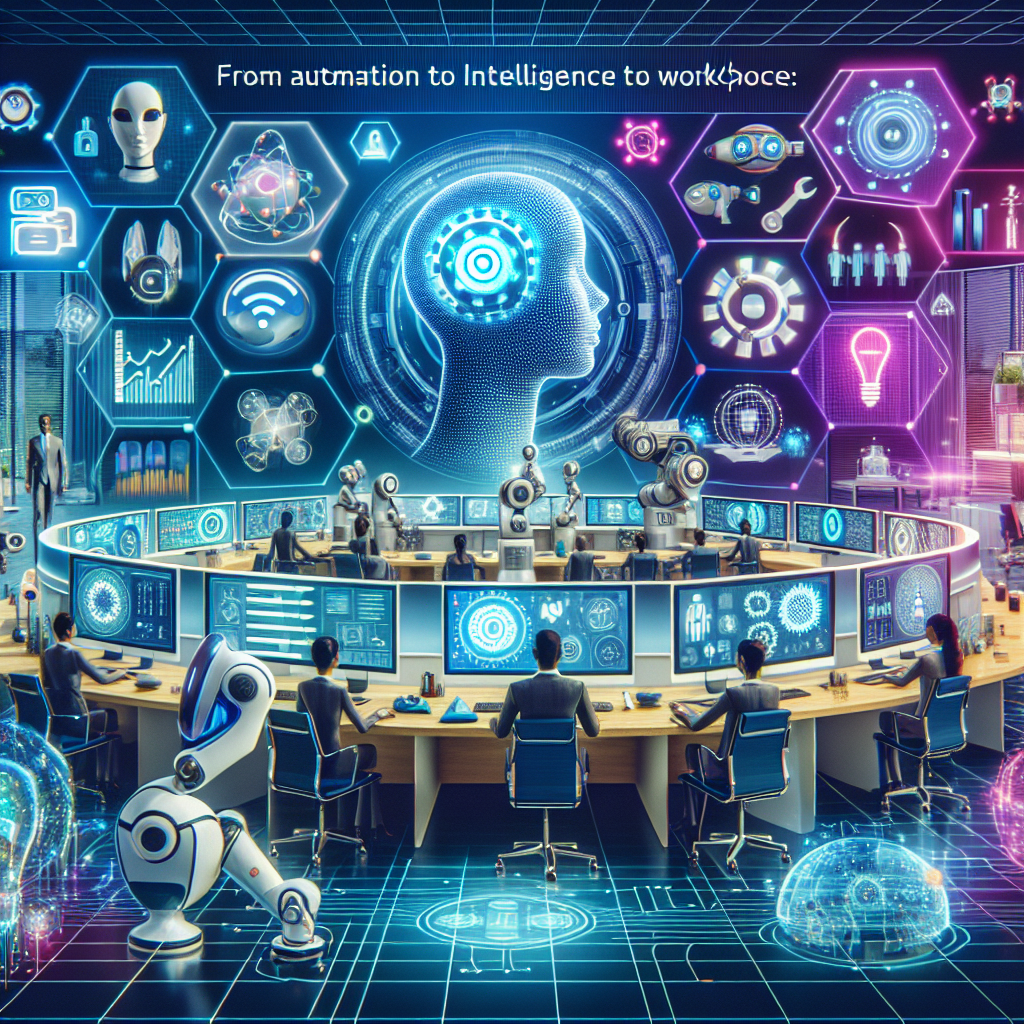
In the rapidly evolving landscape of modern businesses, the transition from traditional automation to advanced artificial intelligence (AI) has profoundly transformed workplaces. This comprehensive guide delves into the essential AI tools that are shaping contemporary work environments, enhancing productivity, and fostering innovation.
Table of Contents
- Introduction
- The Evolution of Work: From Automation to Intelligence
- The Role of AI in Modern Workplaces
- Must-Have AI Tools for Businesses
- 4.1 AI-Powered Communication Tools
- 4.2 AI in Project Management
- 4.3 Data Analytics Tools
- 4.4 Customer Relationship Management (CRM)
- 4.5 AI-Driven HR Solutions
- Implementing AI Tools: Best Practices
- Challenges of Integrating AI into Workplaces
- The Future of AI in Workplaces
- Conclusion
Introduction {#introduction}
The modern workplace is characterized by a dynamic interplay of technology and human ingenuity. As businesses strive for increased efficiency and connection, AI has emerged as a game-changer. This article explores how AI tools are not merely enhancing existing processes but are revolutionizing the way businesses operate.
The Evolution of Work: From Automation to Intelligence {#evolution-of-work}
The Dawn of Automation
Automation has long been a staple in enhancing workplace efficiency. From the first assembly lines to contemporary software solutions, automation allows for the reduction of manual tasks, minimizing human error and freeing employees for more strategic endeavors.
The Rise of Intelligence
The shift from automation to intelligence involves leveraging AI technologies to make informed decisions based on data analysis, predictive modeling, and machine learning. This emerging intelligence doesn’t just automate tasks but enhances decision-making processes, improves customer engagement, and anticipates market trends.
The Role of AI in Modern Workplaces {#role-of-ai}
AI plays a pivotal role in transforming traditional workplace paradigms. By integrating AI tools, businesses can optimize operations, bolster competitive advantages, and adapt swiftly to changing market conditions. Specifically, AI:
- Enhances Productivity: By automating routine tasks, AI allows employees to focus on higher-level projects.
- Improves Decision-Making: AI analyzes vast datasets to extract insights that guide strategic planning.
- Personalizes Customer Experiences: AI tools can tailor interactions to meet individual customer preferences.
- Streamlines Communication: AI facilitates real-time collaboration across teams, regardless of geographic locations.
Must-Have AI Tools for Businesses {#ai-tools}
1. AI-Powered Communication Tools {#ai-communication}
In an era where remote work is increasingly prevalent, AI-driven communication tools are essential for collaboration and connection.
Chatbots
Chatbots powered by AI enhance customer service by providing instant responses to frequently asked questions. They can manage queries 24/7, significantly improving customer satisfaction while reducing operational costs.
Smart Email Assistants
Tools like Grammarly and Google’s Smart Reply use AI to enhance email communication by suggesting improvements in writing or providing quick response prompts, ensuring timely and effective communication.
2. AI in Project Management {#ai-project-management}
AI-powered project management tools, such as Asana and Trello, streamline workflows and improve team collaboration.
Task Automation
These tools automate repetitive tasks like scheduling and task assignment, ensuring efficient project tracking and execution.
Predictive Analytics
AI can analyze past project performance data to forecast timeframes and potential roadblocks, enabling teams to proactively address challenges.
3. Data Analytics Tools {#data-analytics}
Data is at the heart of decision-making, and AI-driven analytics tools are indispensable for modern businesses.
Business Intelligence Solutions
Tools like Tableau and Microsoft Power BI utilize AI to visualize complex data sets, providing actionable insights for strategic planning.
Predictive Modeling
With AI, businesses can perform predictive analytics to forecast customer behavior and market trends, allowing for better inventory management and sales strategies.
4. Customer Relationship Management (CRM) {#crm}
AI-enhanced CRMs, such as Salesforce and HubSpot, transform customer interactions into a personalized experience.
Automated Lead Scoring
AI can analyze customer data to score leads automatically, guiding sales teams to focus on the most profitable opportunities.
Personalized Marketing Strategies
AI tools segment customers based on behavior and preferences, allowing for targeted marketing campaigns that resonate better with different audiences.
5. AI-Driven HR Solutions {#hr-solutions}
The integration of AI into human resources is revolutionizing recruiting and employee management.
AI for Recruiting
Tools like HireVue leverage AI to streamline the recruitment process by analyzing candidate responses in interviews to help identify the best fits.
Employee Engagement Monitoring
AI can monitor employee engagement through surveys and feedback tools, providing insights into workforce morale and productivity levels.
Implementing AI Tools: Best Practices {#best-practices}
To successfully integrate AI tools into the workplace, consider the following best practices:
- Identify Business Needs: Understand specific challenges that AI can address within your organization.
- Train Employees: Invest in training to ensure that employees are equipped to utilize new AI tools effectively.
- Start Small: Begin with pilot projects to test AI tools before full-scale implementation.
- Measure Outcomes: Regularly assess the impact of AI tools on productivity and business outcomes to adjust strategies as needed.
Challenges of Integrating AI into Workplaces {#challenges}
Despite the numerous benefits, businesses may face several challenges when integrating AI tools:
- Data Security Concerns: The use of AI often requires vast amounts of data, raising concerns about privacy and security.
- Employee Resistance: Some employees may resist changes that threaten their job security or alter traditional workflows.
- Implementation Costs: Initial investment costs for AI tools can be significant, though often justified by long-term savings.
The Future of AI in Workplaces {#future-of-ai}
Looking ahead, AI will play an even more significant role in workplaces, fostering innovation and enhancing organizational agility. Emerging trends include:
- Robo-advisors for Decision-Making: AI will assist in more complex decision-making processes, providing insights that enhance strategic planning.
- Integration with IoT: AI combined with the Internet of Things (IoT) will streamline operations across various sectors, enabling real-time monitoring and analysis.
- Expanding Role in Creative Tasks: As AI continues to evolve, it will increasingly contribute to creative processes, such as content generation and design.
Conclusion {#conclusion}
The journey from automation to intelligence marks a pivotal shift in modern workplaces. AI tools are not just enhancing productivity; they are redefining the very fabric of how businesses operate. For organizations yearning to stay competitive in an ever-evolving landscape, embracing AI tools is not merely an option; it is a necessity. Implementing these technologies strategically will not only streamline operations but also pave the way for future growth and innovation.
Incorporating AI into workplaces represents a commitment to harnessing technology to unleash human potential. As we look ahead, businesses that embrace this transformation will be better positioned to thrive in an increasingly complex world.
This optimized guide on AI tools serves as a valuable resource for businesses navigating the evolving landscape of work, ensuring they leverage technology effectively to foster growth and innovation.