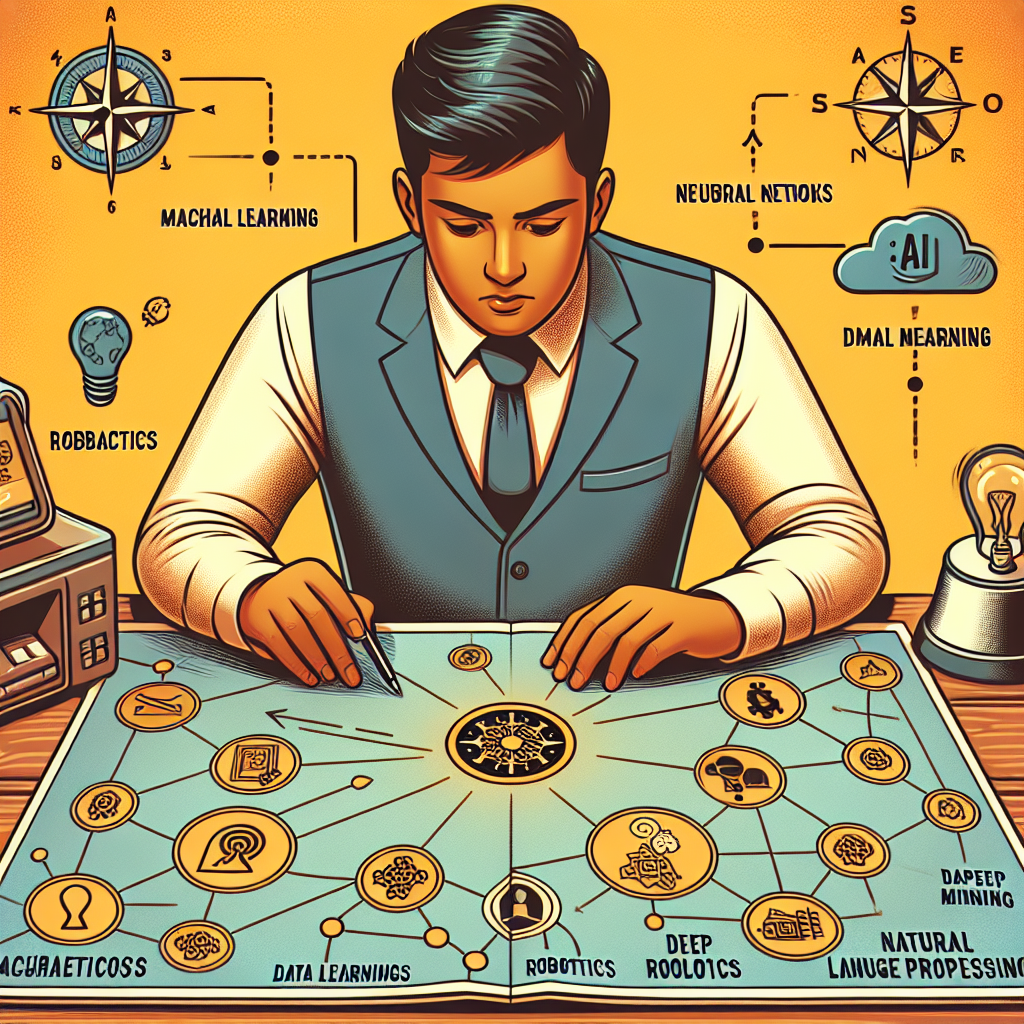
In today’s rapidly evolving technological environment, artificial intelligence (AI) has emerged as a game-changer, especially for small business owners. Understanding the AI landscape is essential for leveraging its potential to enhance efficiency, engage customers, and gain a competitive edge. This beginner’s guide aims to demystify AI, its applications, and how small businesses can harness its capabilities.
Table of Contents
- Introduction to AI
- Understanding AI: Key Concepts
- Benefits of AI for Small Businesses
- AI Applications in Small Businesses
- Choosing the Right AI Tools
- How to Implement AI in Your Business
- Challenges and Considerations
- Future Trends in AI for Small Businesses
- Conclusion
Introduction to AI
Artificial Intelligence (AI) refers to the capability of a machine to imitate intelligent human behavior. Small business owners are increasingly realizing that implementing AI can lead to significant improvements in operations, customer interaction, and data management. However, navigating the AI landscape can seem daunting for beginners.
This article will break down the complexities of AI, helping small business owners understand its potential and guiding them toward practical applications that can streamline their operations.
Understanding AI: Key Concepts
What is Artificial Intelligence?
AI encompasses various technologies that allow machines to perform tasks that typically require human intelligence. These include learning, reasoning, problem-solving, perception, and language understanding.
Types of AI
AI can be broadly classified into three categories:
- Narrow AI: Also known as weak AI, this type is designed to perform a narrow task (e.g., facial recognition).
- General AI: This refers to a system with generalized human cognitive abilities; it is still largely theoretical.
- Superintelligent AI: This AI surpasses human intelligence and is hypothetical at this point.
Machine Learning vs. Deep Learning
- Machine Learning: A subset of AI that allows systems to learn and improve from experience without being explicitly programmed.
- Deep Learning: A specialized area of machine learning that uses neural networks with many layers to analyze various data forms.
Benefits of AI for Small Businesses
AI offers numerous advantages for small business owners, including:
1. Enhanced Efficiency
AI can automate repetitive tasks, allowing employees to focus on more strategic initiatives. For example, chatbots can handle customer queries, significantly reducing the time spent on customer service.
2. Improved Decision-Making
Data-driven insights generated by AI can help business owners make informed decisions. For instance, predictive analytics can identify market trends and customer preferences.
3. Cost Reduction
By automating tasks and improving operational efficiencies, AI can significantly lower operational costs.
4. Enhanced Customer Experience
Personalization is one of the most impactful applications of AI. Businesses can analyze customer data to offer tailored recommendations, thus improving customer satisfaction.
5. Better Marketing Strategies
AI can analyze vast amounts of data to help small businesses identify target audiences, optimize campaigns, and measure effectiveness.
AI Applications in Small Businesses
The applications of AI for small businesses are vast and varied. Here are some areas where AI can make a difference:
1. Customer Service
Chatbots and Virtual Assistants: These AI tools can handle customer inquiries 24/7, ensuring that your customers receive immediate assistance. According to studies, 67% of consumers worldwide used a chatbot for customer support in the last year.
2. Personalized Marketing
AI allows businesses to segment customers based on behavior patterns, helping to deliver tailored marketing messages. Email campaigns powered by AI can lead to higher open and conversion rates.
3. Inventory Management
AI solutions can predict supply chain disruptions and optimize inventory levels, enabling businesses to maintain efficient stock levels.
4. Financial Analysis
AI-powered tools can analyze financial data to provide insights into expenditures, forecasting, and budgeting, helping business owners make better financial decisions.
5. Human Resources
From recruitment to employee engagement, AI can streamline HR processes. AI tools can screen resumes, schedule interviews, and even analyze employee sentiment through surveys.
Choosing the Right AI Tools
Assess Your Needs
The first step in choosing the right AI tools is to assess your business’s specific needs. Identify the areas where AI can add value, whether it’s marketing, customer service, or data analysis.
Research Available Tools
There are numerous AI tools available for small businesses. Some popular platforms include:
- HubSpot: For marketing automation.
- Salesforce Einstein: For CRM and predictive analytics.
- Xero: For accounting automation.
Read Reviews and Test Demos
Before making a decision, read reviews and request demos of the software. This hands-on experience can help you understand how the tool fits into your business operations.
How to Implement AI in Your Business
1. Define Your Objectives
Make sure to outline clear objectives for your AI implementation. What problems do you want to solve? What efficiencies do you aim to achieve?
2. Start Small
Rather than overhauling your entire operation, begin with one department or function. For example, implementing a chatbot for your customer service can serve as a practical starting point.
3. Train Your Team
Ensuring that your team is comfortable with the new technology is crucial. Provide training sessions to help employees adapt to the AI tools and understand how they can enhance their work.
4. Monitor Performance
Once the AI tool is in place, continuously monitor its effectiveness. Look for areas of improvement based on the data generated.
Challenges and Considerations
While AI offers numerous advantages, small business owners should be aware of some challenges:
1. High Initial Investment
Many AI solutions come with a significant price tag. It’s essential to weigh the long-term benefits against the initial costs.
2. Data Privacy and Security
The implementation of AI involves handling sensitive customer data. Ensuring compliance with regulations like GDPR is crucial for maintaining customer trust.
3. Skill Gap
Not every small business has the technical expertise to implement and manage AI tools. Training and possibly hiring new talent will be necessary.
4. Resistance to Change
Employees may resist adopting new technologies. Effective change management strategies can help ease this transition.
Future Trends in AI for Small Businesses
1. Enhanced Personalization
The future of AI will likely see even more sophisticated personalization in marketing and customer interactions, driven by advanced algorithms.
2. Integration of AI with Other Technologies
Expect to see AI increasingly integrated with technologies like blockchain and IoT (Internet of Things), creating more robust business solutions.
3. Voice Recognition and Natural Language Processing
As voice-activated devices become more ubiquitous, small businesses will need to adapt their marketing strategies to incorporate voice search optimization.
4. Ethical AI
As AI becomes more prevalent, ethical considerations will become central in its development, particularly regarding bias and transparency.
Conclusion
Navigating the AI landscape may seem overwhelming for small business owners at first. However, by understanding AI’s fundamentals, benefits, and applications, entrepreneurs can position their businesses for future success.
By starting small, investing in the right tools, training their teams, and staying informed about trends and challenges, small business owners can unlock the full potential of AI. Embracing this transformative technology today will not only enhance operational efficiency but also improve customer experiences, paving the way for sustainable growth in the competitive digital marketplace.
By following this guide, small business owners can take their first steps into the AI landscape with confidence, ensuring that they are not left behind in this rapidly changing environment.