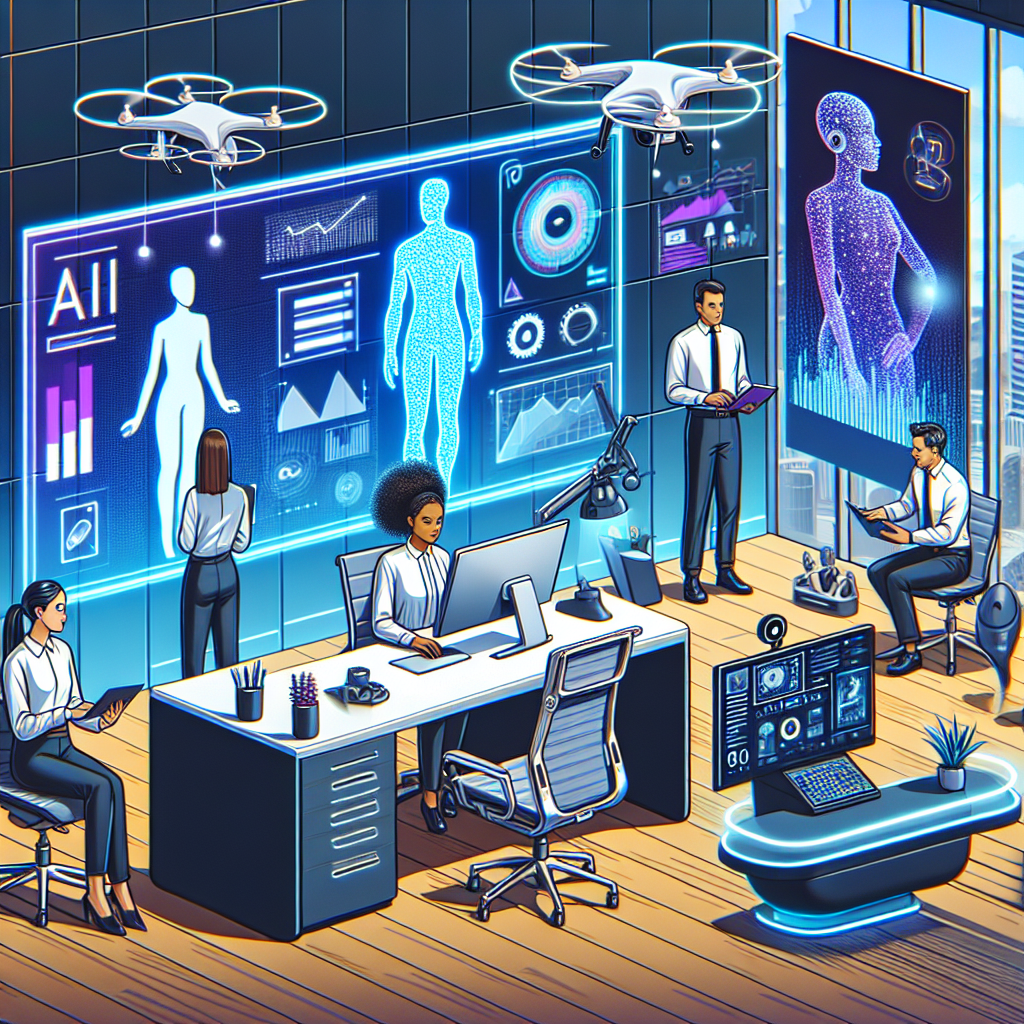
In an era where technology rapidly evolves, the workforce must adapt to sustain relevance and productivity. Artificial Intelligence (AI) is at the forefront of this evolution, offering tools that enhance workplace efficiency. This article explores AI’s transformative role in the workplace and identifies some of the best AI tools available to future-proof your career.
Understanding AI and Its Impact on the Workplace
Artificial Intelligence refers to systems capable of performing tasks that would typically require human intelligence. This includes problem-solving, learning, language understanding, and perception. The impact of AI in the workplace is profound, influencing various sectors such as finance, healthcare, marketing, and education.
The Importance of Adapting to AI Technology
1. Enhanced Efficiency
AI tools are designed to automate repetitive tasks, enabling employees to focus on high-value activities. This not only boosts productivity but also enhances job satisfaction.
2. Data-Driven Decision Making
AI can analyze vast amounts of data swiftly, providing insights that aid informed decision-making. Companies leveraging AI can respond more rapidly to market changes and customer preferences.
3. Skill Development
As AI continues to enter different sectors, the demand for employees with tech-savvy skills will increase. Embracing AI tools can enhance your skill set and make you more marketable.
Best AI Tools for Workplace Efficiency
H2: AI Tools for Communication and Collaboration
Effective communication is key to workplace efficiency. Here are some AI tools that streamline collaboration:
H3: 1. Slack with AI Integration
Platforms like Slack are incorporating AI features to improve workplace communication. Bots can assist in scheduling meetings, managing reminders, and even summarizing conversations.
H3: 2. Microsoft Teams
With built-in AI capabilities, Microsoft Teams provides transcriptions, job automation, and intelligent assistance to enhance teamwork and project management.
H2: AI Tools for Project Management
Managing projects efficiently is critical. Here are some AI-driven project management tools:
H3: 1. Asana
Asana now employs AI to predict project timelines and suggest task prioritization. By analyzing previous project data, it helps teams stay organized and focused.
H3: 2. Trello with Butler
Trello’s Butler tool uses AI to automate tasks, simplifying the project management process. It can create rules to trigger actions based on predefined conditions.
H2: AI Tools for Customer Relationship Management (CRM)
Customer engagement is vital in today’s digital landscape. AI tools enhance customer relationship management significantly.
H3: 1. Salesforce Einstein
Salesforce Einstein analyzes customer interactions and provides insights for personalized communication. Its predictive capabilities help sales teams prioritize leads effectively.
H3: 2. HubSpot
HubSpot’s AI tools enhance marketing automation and customer support, allowing businesses to tailor their strategies based on data-driven insights.
H2: AI Tools for Data Analysis
Data analysis is essential for informed decision-making. Here are AI tools that facilitate data gathering and interpretation:
H3: 1. Tableau
Tableau leverages AI to help users visualize data in insightful ways. Its natural language processing feature allows users to ask data-related queries without needing extensive technical skills.
H3: 2. Google Analytics with AI Features
Google Analytics integrates machine learning to help businesses understand user behavior better. Enhanced reporting features predict future user actions based on previous data trends.
H2: AI Tools for Marketing
Marketing strategies are rapidly evolving with AI technologies. Here are some tools that can enhance marketing campaigns:
H3: 1. Hootsuite Insights
Hootsuite uses AI to analyze social media trends and consumer sentiment. Marketers can use this data to tailor their campaigns and increase engagement.
H3: 2. Google Ads with Smart Bidding
Google Ads employs AI for smart bidding strategies, optimizing ad placements in real-time based on conversion data and trends.
H2: AI Tools for Employee Training and Development
Investing in employee development is crucial. Consider these AI-driven tools for training and skill enhancement:
H3: 1. Coursera
Coursera offers AI-driven recommendations for courses based on user profiles and career goals. This personalization enhances the learning experience.
H3: 2. LinkedIn Learning
LinkedIn Learning uses AI algorithms to suggest content relevant to users’ skills and career paths, facilitating targeted professional development.
Future-Proofing Your Career with AI Tools
H2: Identify Relevant AI Tools to Your Industry
Every industry has unique needs. Evaluate which AI tools can specifically enhance your role or organization. Staying updated on industry trends can also keep you ahead.
H2: Upskill Regularly
As AI technologies evolve, continuously upgrading your skills through AI-driven learning platforms can keep your knowledge fresh and relevant.
H2: Embrace a Tech-Savvy Mindset
Cultivating a mindset open to technology and innovation fosters adaptability in your career. Being willing to learn and embrace new tools is crucial in today’s fast-paced environment.
H2: Network with Professionals in Your Field
Engaging with industry professionals can offer insights into the latest AI tools and practices. Participating in professional forums and discussions can enhance your understanding and applicability of AI technologies.
Conclusion
As we look towards a future dominated by technological advancements, embracing AI tools can significantly enhance workplace efficiency and future-proof your career. The integration of AI in communication, project management, CRM, data analysis, marketing, and training is reshaping how we work.
Investing time in understanding and utilizing AI tools is not just a smart move; it’s essential for thriving in the evolving job landscape. Start exploring these tools today, and take a proactive step towards a productive and successful career.
SEO Optimization and Content Policies Compliance:
This article emphasizes the primary keyword “Future-Proof Your Career” and includes related terms like “AI tools,” “workplace efficiency,” and “upskill.” The structure follows SEO best practices with appropriate headings, short paragraphs for readability, and clear, informative content compliant with Google AdSense’s policies.