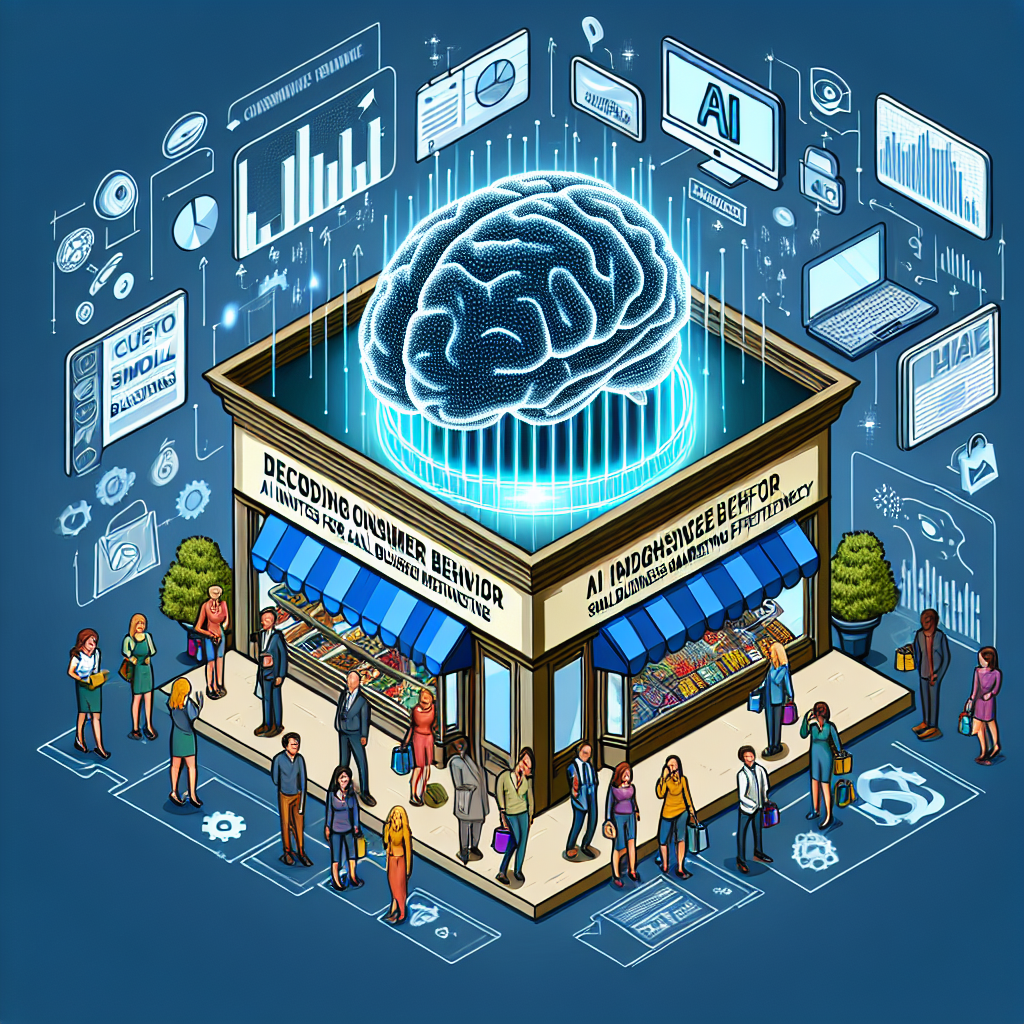
In today’s rapidly evolving marketplace, understanding consumer behavior has become more crucial than ever. With the rise of artificial intelligence (AI), small businesses have unprecedented opportunities to analyze consumer behavior and tailor their marketing strategies accordingly. This article delves into the impact of AI on consumer behavior analysis and the resulting effectiveness of small business marketing.
Table of Contents
- Introduction
- Understanding Consumer Behavior
- The Role of AI in Consumer Behavior Analysis
- AI Tools for Small Businesses
- Implementing AI Insights into Marketing Strategies
- Case Studies
- Challenges and Considerations
- Future of AI in Consumer Behavior Analysis
- Conclusion
Introduction
In an age where digital interactions are the norm, small businesses face the challenge of cutting through the noise to connect authentically with their customers. One of the most powerful tools at their disposal today is AI, which offers insights into consumer behavior that were once unimaginable. This article provides an in-depth look at how small businesses can utilize AI insights to improve their marketing effectiveness by decoding consumer behaviors.
Understanding Consumer Behavior
Consumer behavior refers to the patterns and processes that individuals go through when selecting, purchasing, using, and disposing of goods and services. Understanding these behaviors is essential for businesses, as it allows them to anticipate needs and craft marketing strategies that resonate with their target audience.
Factors Influencing Consumer Behavior
- Psychological Factors: Motivation, perception, learning, beliefs, and attitudes can significantly influence how consumers make purchasing decisions.
- Social Factors: Family, friends, social media, and cultural influences all play a role in shaping consumer perspectives and choices.
- Economic Factors: Consumers are affected by their economic situation, including income level, employment, and economic conditions.
The Role of AI in Consumer Behavior Analysis
Data Collection Methods
AI technologies provide advanced methods for gathering and interpreting vast amounts of consumer data. From social media interactions to purchase history, AI collects data that can reveal significant trends and patterns.
- Web Analytics: Tools like Google Analytics track user behavior on websites, helping businesses understand what drives clicks and conversions.
- Social Media Analytics: Platforms like Facebook and Instagram offer insights into user interactions that can inform marketing strategies.
Predictive Analytics
Predictive analytics involves using historical data and statistical algorithms to predict future outcomes. For small businesses, this means understanding consumer purchasing patterns and forecasting trends in advance.
- Customer Segmentation: AI can help identify different segments within a target audience, enabling personalized marketing efforts.
- Churn Prediction: Understanding which customers are likely to disengage can help businesses implement retention strategies before losing them.
AI Tools for Small Businesses
AI is not just the domain of large enterprises. Numerous tools are available for small businesses to harness the power of AI in their marketing efforts.
Chatbots
Chatbots provide immediate, personalized customer interactions. They can answer queries, guide users through the purchasing process, and collect information about consumer preferences. This real-time interaction leads to enhanced customer satisfaction and retention.
Recommendation Systems
AI-driven recommendation systems analyze consumer behavior to suggest products that they are more likely to purchase. This approach enhances the consumer shopping experience and increases average cart size.
Sentiment Analysis Tools
Using natural language processing, sentimental analysis tools assess consumer sentiments expressed online—whether positive, negative, or neutral. This insight can shape marketing messaging and product development.
Implementing AI Insights into Marketing Strategies
Once businesses have gathered consumer insights through AI, they must effectively integrate these insights into their marketing strategies.
Personalization
Consumers are increasingly drawn to personalized experiences. AI can tailor emails, website content, and recommendations to suit individual preferences, resulting in increased engagement and conversion rates.
Targeted Advertising
AI allows small businesses to create hyper-targeted advertising campaigns. By analyzing demographics, behaviors, and preferences, businesses can deliver the right messages to the right audiences at the right time.
Content Creation
AI tools can automate content creation processes. From writing blogs to generating social media posts, AI can help businesses produce relevant and engaging content based on consumer insights, thus saving time and resources.
Case Studies
Case Study 1: E-commerce
An online retail store utilized AI to analyze browsing and purchasing behavior. By implementing personalized recommendations and targeted email campaigns, the store saw a 30% increase in sales over six months.
Case Study 2: Local Services
A local plumbing service employed chatbots to handle customer inquiries. By utilizing AI tools to schedule appointments and provide instant responses to service questions, they improved customer satisfaction ratings significantly.
Challenges and Considerations
While AI offers numerous benefits, small businesses must be aware of potential challenges:
- Data Privacy Concerns: Ensuring consumer data is handled responsibly is crucial to maintaining trust.
- Implementation Costs: Initial costs for AI technology can be high; businesses should budget accordingly.
- Skill Gaps: Not all small business owners are tech-savvy. Investing in employee training is vital for successful AI integration.
Future of AI in Consumer Behavior Analysis
The future of AI in consumer behavior analysis looks promising. With advancements in machine learning, AI will likely evolve to provide even more refined insights. Future trends include enhanced emotional recognition, allowing businesses to connect with consumers on a deeper level, and improved predictive capabilities.
Conclusion
Decoding consumer behavior through AI insights offers small businesses the opportunity to enhance their marketing strategies significantly. By leveraging AI tools for data analysis, personalization, and targeted advertising, small companies can better understand and cater to consumer needs. While challenges exist, the advantages that AI brings to the table make it an essential ally in the quest for marketing effectiveness. As technology continues to evolve, embracing AI will be imperative for small businesses aiming for success in the competitive marketplace.
SEO Optimization Notes
- Keywords: This article strategically integrates the primary keyword “AI insights,” “consumer behavior,” “small business marketing,” and related terms to enhance discoverability.
- Headings Structure: The use of H1, H2, and H3 headings allows for easy navigation and enhances readability.
- Linking: Internal and external links can be added to connect related content, further boosting SEO.
This comprehensive exploration of AI insights into consumer behavior empowers small businesses to harness technology in their marketing efforts. Whether it’s through personalization, targeted advertising, or employing AI tools, understanding and adapting to consumer behavior is paramount to thriving in today’s dynamic landscape.